
Ways to Increase Professional Visibility at Events
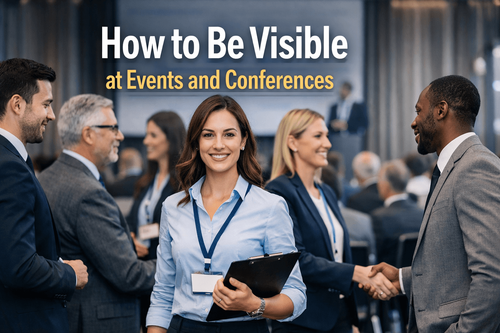

How to Be Visible at Events and Conferences for Professional Networking and Career Growth
Many professionals attend industry events, conferences,
and networking meetups hoping to expand their opportunities. Yet they often leave with a few exchanged business cards, vague conversations, and the feeling that the event did not produce meaningful results.
The problem is not the event itself. The problem is visibility.
Simply showing up does not guarantee that people will remember you. In professional environments where hundreds of attendees are present, the individuals who benefit the most are those who know how to be intentionally visible. They position themselves strategically, contribute to conversations, and follow up effectively.
Professional visibility is not about being the loudest person in the room or the most extroverted attendee. It is about showing up with a clear system for preparation, participation, and follow-up.
This guide transforms event attendance into a structured visibility strategy. By applying a repeatable framework before, during, and after each event, working professionals can turn ordinary networking moments into career-defining opportunities.
Who Is This Blog For?
This blog and the accompanying guidebook are designed for:
- Working professionals who attend industry conferences, networking events, or professional meetups
- Early and mid-career professionals looking to build stronger professional visibility
- Consultants, entrepreneurs, and specialists seeking new clients, partnerships, or collaborations
- Managers and leaders interested in expanding their professional network and industry influence
- Job seekers who want to create career opportunities through meaningful professional connections
Why This Topic Matters Today?
Many career opportunities are never publicly advertised. Instead, they emerge through conversations, introductions, and professional relationships formed in industry spaces.
Events and conferences are designed precisely for these interactions. However, most professionals attend passively. They sit through sessions, interact with familiar colleagues, and leave without forming new strategic relationships.
This approach limits the true value of professional gatherings.
Effective professionals treat events as strategic career investments rather than social obligations. With the right preparation and mindset, a single meaningful conversation at an event can lead to:
- New career opportunities
- Business partnerships
- Consulting projects
- Mentorship relationships
- Industry recognition
The difference between professionals who benefit from events and those who do not is not luck or personality. It is the presence of a clear visibility system.
Core Concept or Framework Explained
The guide introduces a structured approach to professional visibility based on three core phases:
- Before the Event: Strategic preparation
- During the Event: Intentional participation
- After the Event: Relationship follow-up and amplification
This framework ensures that every event becomes an opportunity to build meaningful connections and strengthen professional reputation.
A key principle of this system is that visibility is not a personality trait. It is a repeatable process that improves with practice. Professionals who appear naturally confident in networking environments usually follow deliberate routines that help them show up prepared and engaged.
Another foundational concept is contribution over consumption. Professionals become memorable when they contribute ideas, ask thoughtful questions, and engage meaningfully rather than simply observing sessions.
By combining preparation, contribution, and follow-up, the visibility framework transforms networking events into powerful platforms for career growth.
How This Blog and Guidebook Help You?
This blog and the accompanying guidebook provide a practical system for making professional events more valuable and productive.
They help you:
- Prepare effectively before attending any professional event
- Approach conversations with confidence and curiosity
- Stand out during sessions and networking opportunities
- Build genuine professional relationships instead of superficial contacts
- Extend your visibility beyond the event through strategic follow-up
- Use LinkedIn and professional communication to amplify your presence
When applied consistently, this framework helps professionals become more confident, more visible, and more memorable in professional environments.
Step-by-Step Breakdown
Step 1: Prepare Strategically Before the Event
Preparation is one of the most overlooked advantages in professional networking.
Most attendees arrive at events without any specific plan. They attend sessions, casually network, and hope meaningful interactions occur naturally.
Strategic professionals take a different approach. They prepare intentionally.
Key preparation actions include:
- Researching the attendee list and identifying 5 to 8 professionals worth connecting with
- Reviewing speakers and understanding their areas of expertise
- Preparing a concise 60-second professional introduction
- Setting clear intentions for the event
These intentions typically include three categories:
Connection goals
Instead of attempting to meet as many people as possible, focus on having three meaningful conversations with professionals you have not met before.
Contribution goals
Decide how you will actively participate. This may include asking questions during sessions or contributing insights in discussions.
Learning goals
Choose one specific idea or insight you want to learn during the event. This makes your conversations more focused and engaging.
Planning your visibility strategy in advance transforms an event from a passive experience into a purposeful professional activity.
Step 2: Make a Strategic Entrance
The first moments of an event often determine the tone of your experience.
Arriving early provides a major advantage. The first 20 minutes of networking sessions are usually the most accessible. Groups are smaller, conversations are easier to join, and organisers are more available.
Early arrival allows you to:
- Meet event organisers and volunteers
- Observe the environment and identify key participants
- Start conversations before large clusters form
Professionals who arrive early are often perceived as more serious, committed, and approachable.
Step 3: Start Conversations With Curiosity
One of the biggest fears professionals experience at networking events is approaching strangers.
However, effective networking does not require elaborate scripts. The most successful conversations begin with genuine curiosity.
Conversation starters may include observations about:
- The event itself
- A speaker’s presentation
- Industry trends
- Shared professional interests
A simple principle helps guide effective conversations:
Listen 80 percent of the time and speak 20 percent of the time.
Professionals who ask thoughtful questions and listen carefully are remembered as engaging and interesting conversational partners.
Step 4: Speak Up During Sessions
Many professionals attend sessions passively, even when valuable discussions are taking place.
Asking a thoughtful question during a panel discussion or keynote session is one of the most effective ways to increase professional visibility.
When you ask a question during a session:
- The speaker notices you
- Other attendees hear your perspective
- Your name becomes associated with thoughtful participation
Preparing one strong question before each session makes it much easier to participate confidently.
A good question usually includes:
- Brief context
- A reference to the speaker’s idea
- A thoughtful request for perspective or clarification
This type of engagement signals expertise, curiosity, and confidence.
Step 5: Share Insights in Real Time
Modern professional visibility extends beyond the physical room.
Sharing insights on LinkedIn during or shortly after an event multiplies your visibility across your entire professional network.
Examples of valuable content include:
- Key insights from a speaker
- A quote from a session
- Observations about industry trends discussed at the event
- Reflections on important conversations
Tagging speakers and the event organisation increases engagement and often leads to meaningful online interactions as well.
Step 6: Connect and Follow Up After the Event
The most important stage of professional visibility often happens after the event ends.
Many professionals collect contact information but never follow up. As a result, promising connections fade quickly.
Strong follow-up practices include:
- Sending personalised messages within 24 to 48 hours
- Referencing the conversation you shared
- Delivering any promised resources or introductions
- Connecting on LinkedIn with context
Maintaining notes about new contacts and scheduling follow-up reminders helps transform introductions into lasting professional relationships.
Common Mistakes or Pitfalls to Avoid
The guide highlights several common mistakes that reduce professional visibility at events.
Staying only with familiar colleagues
Many professionals spend most of their time with people they already know. While comfortable, this prevents new connections from forming.
Talking more than listening
Nervousness often leads to excessive talking. The most memorable professionals are those who ask thoughtful questions and listen attentively.
Avoiding participation in sessions
Remaining silent during discussions limits opportunities to demonstrate expertise or curiosity.
Collecting contacts without context
Exchanging cards or LinkedIn connections without remembering the conversation makes follow-up difficult.
Leaving events early
The final moments of networking events often produce the most relaxed and meaningful conversations.
Failing to follow up
Without timely follow-up, even promising introductions lose momentum quickly.
Recognising and correcting these mistakes can dramatically improve the value gained from every event.
How Should You Use This Guidebook Effectively?
The most effective way to use this guidebook is to treat it as a practical event preparation tool rather than simply a resource to read once.
A recommended workflow includes:
- Reading the guide once to understand the full visibility framework
- Using the event preparation checklist before each event
- Practising your professional introduction regularly
- Setting clear intentions for every networking opportunity
- Reviewing your performance after each event
The guide also encourages professionals to evaluate their progress using a visibility confidence assessment.
This self-assessment helps identify specific skills to improve, such as:
- Starting conversations confidently
- Asking questions during sessions
- Sharing insights on professional platforms
- Following up consistently with new contacts
With each event, your confidence and effectiveness increase.
Key Takeaways
- Professional visibility at events is a system that can be learned and improved
- Preparation before the event provides a major strategic advantage
- Contribution creates more visibility than passive attendance
- Meaningful conversations are more valuable than large numbers of superficial contacts
- Asking thoughtful questions during sessions significantly increases visibility
- Sharing insights on LinkedIn amplifies your professional presence
- Follow-up within 24 to 48 hours strengthens professional relationships
- Every event is an opportunity to practise and refine your networking strategy
Your Next Step: Accelerate Your Career with PlanetSpark
Creating an impact-driven resume is not just about landing your next job—it’s about owning your professional story and presenting it with clarity, confidence, and credibility. When your resume clearly communicates value, results, and impact, opportunities follow naturally.
At PlanetSpark, we are committed to empowering working professionals with practical, outcome-focused resources that drive real career growth. From resume building and workplace communication to leadership presence and professional writing, our programs are designed to help you succeed in today’s fast-evolving job market.
Visit https://www.planetspark.in/resources to explore:
- Career and resume-building guides
- Workplace communication and professional writing resources
- Skill-development tools curated for working professionals
Want a deeper, hands-on experience?
You can also book a free trial session to learn more about PlanetSpark’s Working Professional Courses, designed to accelerate your career through personalised coaching, real-world practice, and expert guidance.
Your career deserves more than generic advice.
It deserves clarity, confidence, and measurable impact.
Start building that advantage today—with PlanetSpark.