
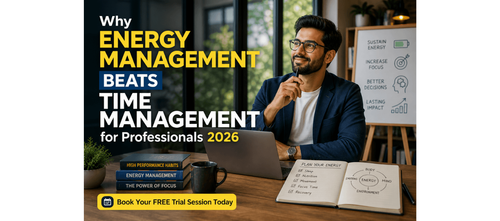
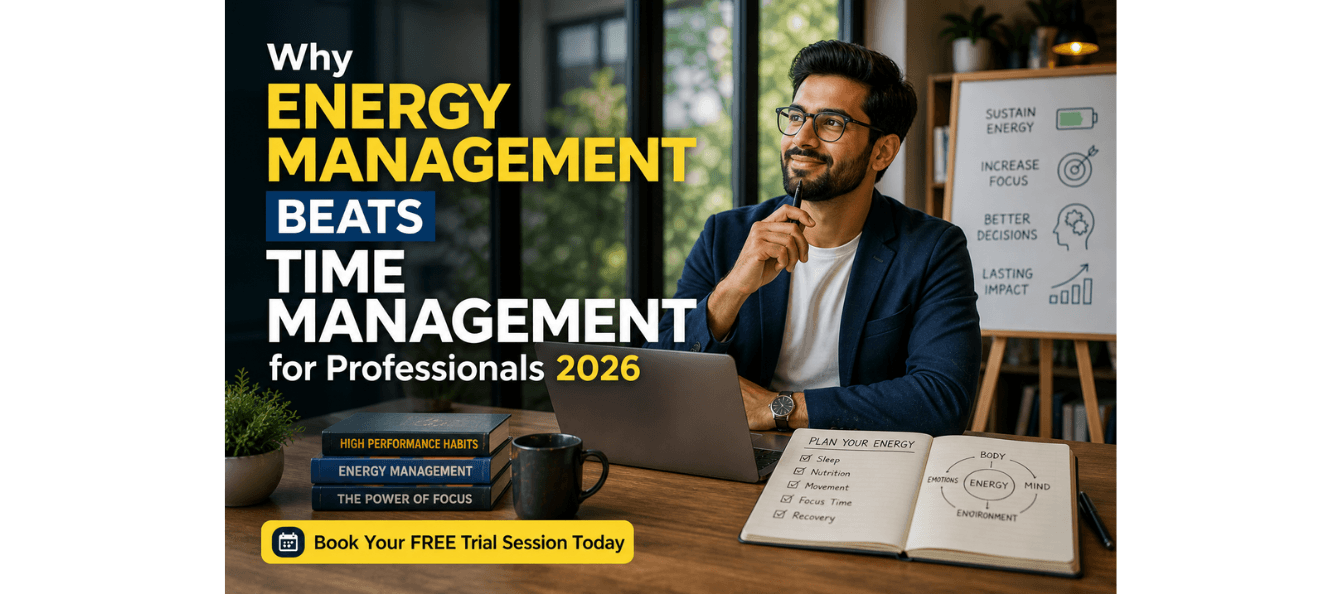
Why Energy Management Beats Time Management for Professionals 2026

How to Manage Your Energy Instead of Time for Sustainable Performance: A Guide for Professionals
In today’s high-demand professional environments, we often think that the key to success is simply managing our time better. We schedule our day, prioritize our tasks, and work long hours to accomplish more. But what if the real secret to sustainable performance lies not in managing time—but in managing energy?
Energy management, not time management, is the key to sustained high performance, creativity, and productivity. When we focus on managing our physical, mental, and emotional energy, rather than simply trying to manage time, we unlock greater efficiency, resilience, and job satisfaction.
Download these resources and apply them alongside your daily work for improved clarity, productivity, and professional growth. You can also book a free trial to gain expert guidance and optimize your performance through energy management. The materials are designed in a clear, structured format to help professionals learn efficiently and implement insights with confidence.
Who Is This Blog For?
This blog is for professionals who are seeking to improve their performance without burning out. It’s especially useful for:
- Managers and leaders who need to sustain performance under pressure
- Consultants balancing multiple clients and deadlines
- Mid-career professionals looking to avoid burnout and sustain energy over time
- Anyone feeling overwhelmed by constant tasks and looking for more sustainable work habits
Why This Topic Matters Today?
In the hustle-driven culture of today’s workplaces, it’s easy to fall into the trap of believing that more time spent working equals more productivity. However, this approach often leads to burnout, diminished creativity, and ultimately, lower productivity. Professionals may find themselves exhausted by the end of the day, despite “having enough time” to complete their work.
Energy management flips this model. By understanding your natural energy rhythms, aligning your most challenging tasks with your peak energy times, and taking care of your physical, emotional, and mental well-being, you can ensure that you have the vitality to perform consistently at a high level. Energy management, unlike time management, allows you to sustain performance over the long term without sacrificing your well-being.
Core Concept or Framework Explained
The Energy Management Framework involves understanding and harnessing the three main types of energy that impact our daily work:
1. Physical Energy: The body’s capacity to perform work, driven by nutrition, exercise, and rest.
2. Emotional Energy: The emotional resilience needed to deal with challenges, setbacks, and relationships.
3. Mental Energy: The cognitive focus and concentration required to think clearly, problem-solve, and stay productive.
By managing all three types of energy, you ensure that you’re not only getting through the day, but doing so with focus, enthusiasm, and resilience. This framework is built on understanding your natural energy rhythms and taking proactive steps to replenish and recharge throughout the day.
How This Blog and Guidebook Help You?
This guide provides you with practical strategies for managing your energy instead of simply managing your time. The benefits of energy management include:
- Increased Productivity: By working in alignment with your natural energy rhythms, you’ll find that you accomplish more in less time.
- Sustained High Performance: You can maintain a high level of performance over longer periods without the risk of burnout or fatigue.
- Better Focus and Clarity: Mental energy management helps you sharpen your focus, reduce distractions, and improve cognitive performance.
- Improved Well-Being: Emotional and physical energy management ensures that you can handle the stresses of work while maintaining a sense of balance and well-being.
By adopting an energy management mindset, you’ll be able to sustain your professional performance in a more holistic, sustainable way.
Step-by-Step Breakdown
Step 1: Understand Your Energy Rhythms
Just as we all have different circadian rhythms that dictate when we feel most awake and alert, we also have energy rhythms throughout the day. The first step in managing your energy is understanding when you are naturally at your best and when you feel most drained.
Practical Exercise:
- Track your energy levels throughout the day for a week. Record when you feel at your peak energy and when you feel most sluggish.
- Identify your Energy Peaks (high-energy moments) and Energy Dips (low-energy moments).
- Use this data to schedule your most demanding tasks during your Energy Peaks and save lower-priority or more routine tasks for when your energy dips.
By aligning your tasks with your natural energy levels, you’ll work more efficiently and feel less drained by the end of the day.
Step 2: Physical Energy Management — Fuel Your Body, Fuel Your Mind
Physical energy is the foundation for all other types of energy. Without adequate rest, exercise, and nutrition, your body will quickly deplete, and your ability to focus, think clearly, and remain resilient will suffer.
Practical Strategies for Physical Energy Management:
- Sleep: Prioritize sleep and establish a consistent bedtime. Aim for 7-9 hours per night to ensure that your body has time to recover and restore energy.
- Nutrition: Eat balanced meals that include complex carbohydrates, proteins, and healthy fats. Avoid high-sugar, low-nutrient foods that can lead to crashes in energy.
- Exercise: Incorporate physical activity into your daily routine. Even light exercise like walking can boost energy levels and enhance focus.
- Hydration: Keep hydrated throughout the day. Dehydration can lead to fatigue and reduce cognitive function.
By taking care of your physical energy, you set a strong foundation for managing mental and emotional energy as well.
Step 3: Emotional Energy Management — Build Resilience and Emotional Agility
Emotional energy refers to your ability to handle stress, manage relationships, and bounce back from setbacks. Strong emotional energy enables you to stay resilient in challenging situations and maintain a positive outlook.
Practical Strategies for Emotional Energy Management:
- Emotional Awareness: Identify when you’re feeling stressed, frustrated, or overwhelmed, and take proactive steps to address these emotions before they impact your performance.
- Stress Reduction Techniques: Practice mindfulness, deep breathing, or meditation to calm your mind and reset your emotional state. Take breaks throughout the day to step away from work.
- Support Networks: Build a strong support network of friends, family, or colleagues to help you stay grounded and connected when emotional energy is low.
- Positive Reframing: Reframe negative thoughts and challenges as opportunities for growth or learning.
By actively managing emotional energy, you can handle the stresses of work with greater ease and build emotional resilience over time.
Step 4: Mental Energy Management — Sharpen Your Focus and Cognitive Performance
Mental energy involves your ability to concentrate, think critically, and problem-solve. The better you manage your mental energy, the more effectively you can make decisions, analyze complex information, and stay engaged at work.
Practical Strategies for Mental Energy Management:
- Prioritize Your Focus: Focus on one task at a time, especially during your Energy Peaks. Use time-blocking to minimize distractions and stay fully engaged with your work.
- Breaks and Downtime: Take regular breaks to prevent cognitive fatigue. The Pomodoro Technique (25 minutes of focused work followed by a 5-minute break) is one effective approach.
- Cognitive Load Management: Limit multitasking, as it can deplete mental energy. Tackle one complex problem at a time to conserve cognitive resources.
- Mindfulness and Meditation: Regular mindfulness practices can help improve focus, reduce mental clutter, and boost overall mental energy.
By managing your mental energy, you ensure that you stay focused and sharp throughout the day, enabling better decision-making and problem-solving.
Step 5: Regular Energy Refueling — Schedule Downtime
Regular rest and recovery are essential for maintaining sustainable performance. Take time to step back from work, recharge, and re-engage with activities that replenish your energy.
Practical Tips for Regular Energy Refueling:
- Weekend Breaks: Disconnect from work during weekends or take mini-vacations to recharge.
- Daily Downtime: Ensure you have pockets of time throughout the day for mental refueling, such as lunch breaks or short walks.
- Hobbies and Passion Projects: Engage in activities outside of work that bring you joy and help you reconnect with yourself.
By making rest and recovery an intentional part of your routine, you ensure that your energy levels are always refreshed and ready for the next challenge.
Common Pitfalls and How to Avoid Them
- Overworking Without Breaks: Work in short bursts, taking regular breaks to prevent burnout and keep your focus sharp.
- Ignoring Emotional Energy: Don’t ignore your emotions—manage them proactively to prevent emotional exhaustion from impacting your work.
- Overloading Your Schedule: Don’t take on more than you can handle. Set clear boundaries around your time and energy.
- Neglecting Sleep: Sleep is the most important energy management tool. Ensure you prioritize sleep for optimal performance.
How Should You Use This Guidebook Effectively?
To make the most of this guide:
- Track Your Energy: Keep a log of your energy levels throughout the day and use the insights to optimize your work schedule.
- Integrate Practices: Start implementing one physical, emotional, and mental energy practice every week to create lasting habits.
- Review Regularly: Reflect on your energy management practices at the end of each week and make adjustments where necessary.
Key Takeaways
- Managing your energy is far more effective than managing your time when it comes to sustainable performance.
- Prioritize physical, emotional, and mental energy management to maintain high levels of focus, creativity, and resilience.
- Regular reflection and energy-refueling practices help you stay energized and productive over the long term.
Your Next Step: Accelerate Your Career with PlanetSpark
Creating an impact-driven resume is not just about landing your next job—it’s about owning your professional story and presenting it with clarity, confidence, and credibility. When your resume clearly communicates value, results, and impact, opportunities follow naturally.
At PlanetSpark, we are committed to empowering working professionals with practical, outcome-focused resources that drive real career growth. From resume building and workplace communication to leadership presence and professional writing, our programs are designed to help you succeed in today’s fast-evolving job market.
Visit https://www.planetspark.in/resources to explore:
- Career and resume-building guides
- Workplace communication and professional writing resources
- Skill-development tools curated for working professionals
Want a deeper, hands-on experience?
You can also book a free trial session to learn more about PlanetSpark’s Working Professional Courses, designed to accelerate your career through personalised coaching, real-world practice, and expert guidance.
Your career deserves more than generic advice.
It deserves clarity, confidence, and measurable impact.
Start building that advantage today—with PlanetSpark.
Personalized Communication Roadmaps
Record a video to get a AI generated personalized communication reports