
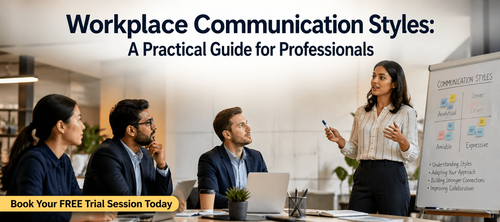
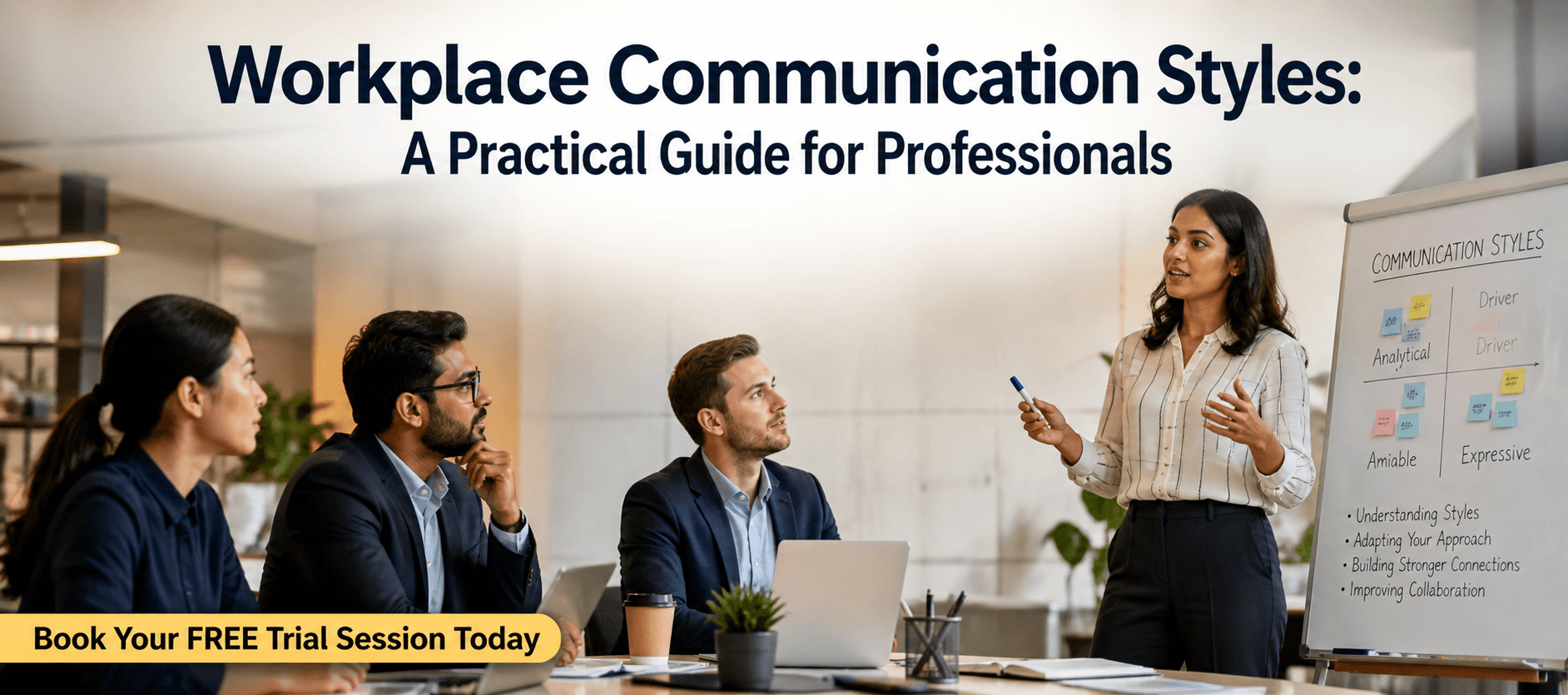
Workplace Communication Styles: A Practical Guide for Professionals

Designing Your Communication Style for Workplace Success: 10 Proven Templates to Communicate with Confidence and Impact
In today’s fast-paced workplace, your success is no longer determined by what you know alone—it’s shaped by how effectively you communicate. You may be technically brilliant, highly productive, and consistently delivering results, yet still struggle to gain visibility, influence decisions, or build strong professional relationships. Why? Because communication style—not just communication itself—plays a decisive role in how your ideas are perceived.
Consider this: a manager who delivers feedback poorly can demotivate a high-performing team, a professional who avoids difficult conversations can damage collaboration, and a talented employee who communicates poorly with leadership can miss growth opportunities. These are not skill gaps—they are communication style gaps.
The reality is simple but powerful: there is no single “perfect” communication style. What works in one situation can fail in another. Professionals who thrive are those who can adapt their tone, clarity, assertiveness, and structure based on context, audience, and stakes.
Download these resources and apply them alongside your daily work for improved clarity, productivity, and professional growth. You can also book a free trial to gain expert guidance and enhance your communication, problem-solving, and decision-making skills. The materials are designed in a clear, structured format to help professionals learn efficiently and implement insights with confidence.
Who Is This Blog For?
- Working professionals aiming to improve workplace communication and influence
- Managers and team leaders who want to deliver feedback and manage teams effectively
- Job seekers looking to tailor communication for different organisational cultures
- Freelancers and consultants handling client relationships and expectations
- Professionals navigating workplace conflict, collaboration, or cross-functional alignment
Why This Topic Matters Today?
Modern workplaces are more complex than ever—remote teams, cross-functional collaboration, and high-stakes communication have become the norm. Yet, many professionals still rely on a one-size-fits-all communication style.
This creates critical challenges:
- Using the same tone across emails, meetings, and chats reduces effectiveness
- Being too passive or overly aggressive damages credibility
- Poorly structured communication leads to confusion, delays, and missed opportunities
- Lack of clarity in high-stakes situations increases professional risk
As highlighted in the resource, communication failures are common, costly, and preventable. The professionals who stand out today are not just skilled—they are adaptable communicators who understand when to be concise, when to be assertive, and when to be collaborative.
Core Concept or Framework Explained
At the heart of this guide is a powerful idea: communication style is situational.
This means your communication should shift based on:
- Audience: Leadership, peers, clients, or teams
- Context: Feedback, conflict, collaboration, or pitching
- Stakes: Low-risk updates vs high-impact decisions
- Relationship dynamics: Authority, equality, or partnership
The resource introduces 10 scenario-specific templates, each designed for a real-world workplace situation. These templates are not generic scripts—they are structured frameworks that help you:
- Communicate with clarity and confidence
- Balance assertiveness with professionalism
- Align tone with audience expectations
- Deliver outcomes effectively
From communicating with senior leadership to de-escalating conflicts, each template is tailored with a distinct style such as formal and concise, assertive yet warm, or collaborative and precise.
How This Blog and Guidebook Help You?
This guide is designed to deliver practical, real-world impact—not just theory.
By applying these templates, you can:
- Improve decision-making influence with leadership
- Handle difficult conversations without conflict escalation
- Present ideas more persuasively and logically
- Build stronger relationships with clients and teams
- Communicate with clarity across different channels and situations
Most importantly, it helps you transition from reactive communication to intentional communication—where every message is structured, purposeful, and outcome-driven.
Step-by-Step Breakdown
Adapting Communication for Senior Leadership
When communicating with senior leaders, the key is brevity and impact. Leaders prioritise outcomes over details.
- Lead with the “so what” instead of background context
- Provide a clear recommendation
- End with a specific ask such as approval or feedback
- Avoid unnecessary introductions or filler language
This approach ensures your communication respects their time and drives faster decisions.
Setting Assertive Boundaries with Clients
When clients extend scope or expectations, professionals often hesitate to respond assertively.
The framework focuses on:
- Acknowledging the client’s request
- Clearly stating the original agreement
- Offering structured options instead of rejecting outright
- Maintaining a professional and respectful tone
This balances relationship management with professional integrity.
Navigating Difficult Peer Conversations
Handling peer conflict requires a structured, non-blaming approach.
Key steps include:
- Requesting a private conversation
- Describing the issue factually without judgment
- Explaining the impact using “I-language”
- Inviting their perspective
- Agreeing on a clear next step
This ensures accountability without triggering defensiveness.
Pitching Ideas to Sceptical Stakeholders
When presenting ideas, enthusiasm alone is not enough—logic and structure matter.
The template focuses on:
- Starting with a problem stakeholders already recognise
- Presenting a clear, concise proposal
- Supporting with evidence or examples
- Addressing objections proactively
- Asking for a small, low-risk commitment
This approach increases buy-in and reduces resistance.
Delivering Constructive Feedback
Effective feedback drives growth—not fear or confusion.
The four-step framework includes:
- Observe: Share factual behaviour
- Impact: Explain consequences
- Explore: Understand their perspective
- Agree: Define clear improvement actions
This ensures feedback is actionable, respectful, and development-focused.
Managing Up Effectively
Raising concerns with your manager requires ownership, not complaints.
Instead of highlighting problems alone:
- Present the issue clearly
- Explain potential risks
- Share what you’ve already tried
- Offer multiple solutions
- Ask for guidance on specific decisions
This positions you as a proactive professional.
Aligning Across Teams
Cross-functional communication often fails due to unclear ownership.
To improve alignment:
- Clearly define shared goals
- Specify responsibilities and deadlines
- Identify risks and dependencies
- Document agreements to avoid confusion
This reduces friction and ensures accountability.
Onboarding as a Freelancer or Consultant
Early communication sets expectations for the entire engagement.
Best practices include:
- Defining communication channels and response times
- Setting expectations for briefs and feedback
- Clarifying scope and change processes
- Establishing a professional tone from the start
This prevents misunderstandings and scope creep.
De-escalating Conflict in Meetings
When tensions rise, communication can either resolve or worsen the situation.
The framework includes:
- Pause the conversation calmly
- Acknowledge all perspectives neutrally
- Redirect focus to the shared goal
- Resolve or defer the discussion appropriately
This maintains professionalism and restores productive dialogue.
Adapting Communication for Job Applications
Job seekers often make the mistake of using the same tone for every employer.
Instead:
- Analyse the job description for tone cues
- Match your communication style accordingly
- Highlight measurable achievements
- Demonstrate cultural alignment
- End with a confident, clear ask
This increases your chances of making a strong first impression.
Common Mistakes or Pitfalls to Avoid
- Using the same communication style across all situations
- Over-explaining or under-explaining key messages
- Avoiding difficult conversations instead of addressing them
- Failing to provide clear action points or next steps
- Communicating reactively rather than proactively
These mistakes reduce clarity, credibility, and professional impact.
How Should You Use This Guidebook Effectively?
To get the most value from this resource:
- Identify the situation before choosing a communication style
- Select the relevant template based on context
- Customize the language to match your voice and audience
- Practice repeatedly until the structure becomes natural
- Use templates for high-stakes communication or recurring scenarios
The guide is designed for ongoing use—communication mastery develops through consistent practice, not one-time learning.
Key Takeaways
- Communication style—not just content—determines professional success
- There is no universal communication approach; context matters
- Structured templates help reduce ambiguity and improve clarity
- Effective communication balances assertiveness, clarity, and empathy
- Professionals who adapt their communication style gain influence and credibility
- Consistent practice turns structured communication into instinctive behaviour
Your Next Step: Accelerate Your Career with PlanetSpark
Creating an impact-driven resume is not just about landing your next job—it’s about owning your professional story and presenting it with clarity, confidence, and credibility. When your resume clearly communicates value, results, and impact, opportunities follow naturally.
At PlanetSpark, we are committed to empowering working professionals with practical, outcome-focused resources that drive real career growth. From resume building and workplace communication to leadership presence and professional writing, our programs are designed to help you succeed in today’s fast-evolving job market.
Visit https://www.planetspark.in/resources to explore:
- Career and resume-building guides
- Workplace communication and professional writing resources
- Skill-development tools curated for working professionals
Want a deeper, hands-on experience?
You can also book a free trial session to learn more about PlanetSpark’s Working Professional Courses, designed to accelerate your career through personalised coaching, real-world practice, and expert guidance.
Your career deserves more than generic advice.
It deserves clarity, confidence, and measurable impact.
Personalized Communication Roadmaps
Record a video to get a AI generated personalized communication reports