
Breaking the Cycle of High Performance Followed by Burnout

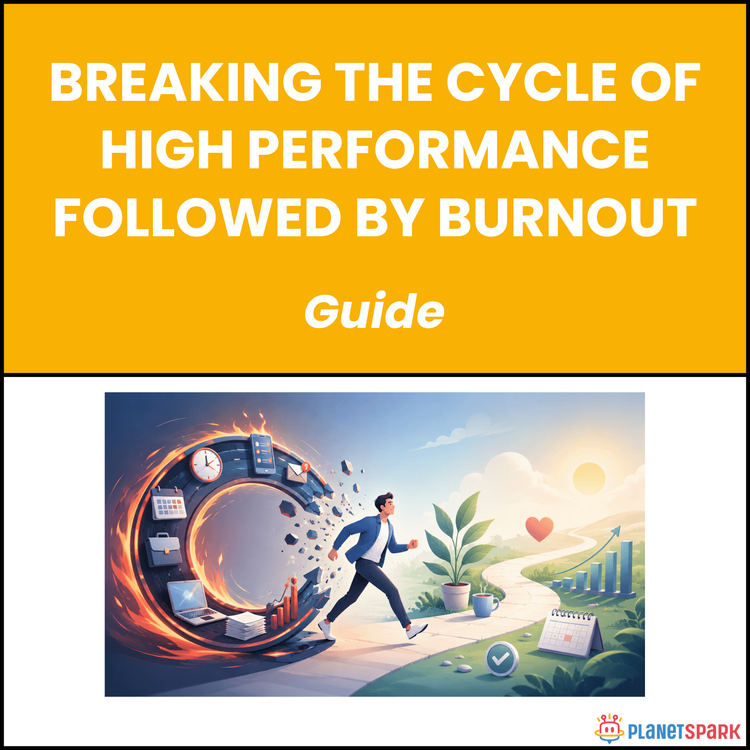
Breaking the Cycle of High Performance Followed by Burnout
Breaking the Cycle of High Performance Followed by Burnout: A Practical Guide for Sustainable Success
High performers are often praised for doing more, delivering faster, and staying reliable under pressure. They hit big goals, take ownership, support others, and push through difficult seasons.
But over time, the same pattern can become dangerous.
You perform at a high level. You overextend. You skip recovery. You keep going because people depend on you. Then, eventually, your energy drops, your motivation fades, and the work that once excited you starts to feel heavy.
This is the high performance–burnout cycle.
The resource “Breaking the Cycle of High Performance Followed by Burnout” is designed for professionals who want to succeed without sacrificing their health, relationships, energy, or long-term career sustainability. It helps you understand why burnout keeps repeating, how to identify where you are in the cycle, and how to build a healthier system for sustained performance.
Who Is This Resource For?
This resource is useful for working professionals who are ambitious, responsible, and often relied on by others.
It is especially helpful for:
* High-performing employees who often take on more than they can realistically sustain
* Managers and team leads responsible for both results and people
* Consultants and client-facing professionals working under deadline pressure
* Career switchers trying to prove themselves in a new field
* Early- and mid-career professionals who feel pressure to constantly overdeliver
* Professionals who recover briefly, then return to the same exhausting pattern
* Anyone who wants to perform well without living in a constant state of overload
If you often think, **“I just need to get through this week,”** this guide is especially relevant for you.
What Does This Resource Contain?
A clear explanation of the burnout cycle
The guide explains that burnout does not usually happen suddenly. It follows a predictable cycle:
* Ignition: You feel motivated, excited, and ready to push hard
* Peak Overload: Output is high, but recovery is being skipped
* Crash: Exhaustion, cynicism, poor sleep, low motivation, or emotional detachment appear
* Recovery: You rest temporarily, but may return to the same pattern again
This section helps readers understand that burnout is not a personal failure. It is often the result of an unsustainable work system.
A diagnostic to identify where you are now
The resource includes a simple diagnostic worksheet to help you identify your current stage in the cycle.
It asks you to reflect on signs such as:
* Saying yes to more than you can handle
* Feeling unable to stop because others depend on you
* Sleeping poorly or waking up tired
* Feeling detached from work that once energized you
* Resting but dreading the return to full workload
This helps you catch the pattern earlier instead of waiting for a full crash.
The five root causes of the cycle
The guide explains five deeper causes that often keep high performers stuck:
* Identity fusion: When your self-worth becomes tied to your output
* Recovery debt: When skipped rest builds up over time
* Validation loop: When praise and recognition reward overwork
* Structural ambiguity: When unclear expectations make it hard to know when work is “done”
* Heroic narrative: When workplace culture celebrates overwork as commitment
This section is valuable because it goes beyond surface-level advice like “take a break.” It helps readers understand what is actually driving the burnout pattern.
Reflection worksheet for personal drivers
The guide includes reflection prompts to help readers identify which root causes are most active in their own life.
The prompts explore:
* How you feel when you are not productive
* Whether your rest is truly restful or guilt-driven
* What behaviors earn praise at work
* Whether your role has clear finish lines
* What story your workplace tells about “good” professionals
This makes the resource personal and practical.
Weekly Energy Audit
The guide introduces a simple weekly practice to track energy, not just output.
Each week, readers are asked to reflect on:
* Their average energy level
* Their highest-energy activity
* Their biggest energy drain
* Whether they are entering the next week with surplus, neutral, or deficit energy
This helps professionals spot patterns before they become serious.
Weekly Energy Tracker
The resource includes an 8-week tracker to monitor energy levels, energy sources, energy drains, early warning signals, and actions taken.
This is useful because burnout prevention requires visibility. You cannot improve what you are not tracking.
Real-time intervention process
The guide gives a clear process for responding when overload signals appear.
The steps are:
1. Notice two or more warning signals
2. Pause and name the state: **“I am in overload. This is not an emergency. This is information.”**
3. Audit current commitments
4. Create a recovery block within the next 48 hours
This process helps professionals interrupt the burnout cycle before it reaches the crash stage.
The Energy Budget Framework
The resource introduces a practical framework for managing energy like a limited professional resource.
Tasks are grouped into four categories:
* Invest: High-return, energizing work such as strategy and key relationships
* Delegate: Tasks others can do
* Protect: Necessary routine work that should be batched and time-boxed
* Eliminate: High-drain, low-return work such as reactive email or toxic dynamics
This framework helps readers make better decisions about where their energy should go.
Sustainable Performance Architecture
The guide explains how to redesign work so high performance becomes sustainable.
It focuses on four areas:
* Designing a weekly rhythm of sprint and recovery
* Defining non-negotiable recovery habits
* Renegotiating invisible expectations around workload and availability
* Shifting identity from “always delivers” to “delivers sustainably”
This section helps readers move from short-term fixes to long-term change.
Sustainable Performance Blueprint
The resource includes a worksheet for building a personal sustainability plan.
Readers define:
* Peak performance hours
* Non-negotiable recovery activities
* Early warning signals
* A 48-hour response plan
* One invisible contract to renegotiate
* One task to eliminate
* One task to delegate
* A new professional identity statement
This blueprint turns reflection into an actionable plan.
Boundary Playbook
The guide provides practical language for setting limits without damaging relationships.
It includes scripts for:
* Redirecting a request
* Explaining trade-offs
* Setting a boundary with context
* Having an honest capacity check-in
This is especially useful for high performers who struggle to say no because they fear looking less committed.
Recovery That Actually Works
The guide explains that recovery is not just the absence of work. Different types of depletion need different recovery methods.
It identifies five depletion types:
* Cognitive depletion: Overthinking and decision fatigue
* Emotional depletion: People-heavy roles and conflict
* Motivational depletion: Repetitive work or lack of progress
* Physical depletion: Poor sleep, sedentary work, low energy
* Social depletion: Constant visibility and performance pressure
This helps readers choose recovery that actually matches what drained them.
Weekly Recovery Checklist
The resource includes a checklist covering physical, cognitive, emotional, and motivational recovery.
It encourages readers to review whether they slept enough, moved their body, had screen-free time, connected with energizing people, processed difficult emotions, and noticed what they did well.
This makes recovery measurable and repeatable.
Real-world case study
The guide includes the case of Arjun, a high-performing project manager who had been working 60–70 hours per week, skipping exercise, checking email during holidays, and feeling Sunday anxiety.
After applying the guide’s tools, he completed a commitment audit, delegated tasks, renegotiated after-hours expectations, protected recovery, and improved both his energy and performance.
This example shows that sustainable performance does not mean lowering standards. It means creating better systems.
Common mistakes and fixes
The resource also explains common mistakes professionals make when trying to break the cycle.
These include:
* Treating rest as a reward
* Making major life changes during a crash
* Confusing busy with productive
* Trying to fix everything at once
* Not communicating limits to anyone
Each mistake is paired with a practical fix.
Guidance for leaders
For managers, the guide explains how leadership behavior shapes team culture.
It encourages leaders to:
* Model energy management visibly
* Ask about energy in one-on-one meetings
* Reward sustainable delivery
* Build structural supports around workload, response times, and meeting norms
This makes the guide valuable for both individuals and teams.
Quick-reference toolkit
The final toolkit summarizes the major tools in one place, including:
* Cycle Diagnostic
* Weekly Energy Audit
* Energy Budget Framework
* 48-Hour Rule
* Boundary Language Scripts
* Depletion Type Profiler
* Weekly Recovery Checklist
* Sustainable Performance Blueprint
* Common Mistakes Guide
This makes it easy to return to the guide whenever old patterns start to reappear.
Summary of the Resource
“Breaking the Cycle of High Performance Followed by Burnout” is a practical guide for professionals who want to perform well without falling into repeated exhaustion.
It helps readers understand the four-stage burnout cycle, identify personal burnout drivers, track energy patterns, intervene early, communicate boundaries, and design a more sustainable way of working.
The main message is simple: **high performance is not the problem. Unsustainable systems are the problem.**
This resource gives professionals a structured way to keep their ambition while protecting their energy, health, and long-term career growth.
How Will This Resource Be Useful?
It helps you recognize burnout earlier
Many professionals only notice burnout when they crash. This guide helps you identify early warning signals so you can act before things become serious.
It helps you understand your personal pattern
The worksheets and reflection prompts help you see what drives your cycle. For some people, it may be identity. For others, it may be unclear boundaries, poor recovery, validation, or workplace culture.
It helps you make better workload decisions
The Energy Budget Framework helps you decide what to invest in, delegate, protect, or eliminate. This makes your workload more intentional.
It helps you set boundaries professionally
The Boundary Playbook gives you clear language to communicate limits without sounding negative or uncommitted.
It helps you recover in the right way
Instead of assuming all rest is the same, the guide helps you match recovery to the type of depletion you are experiencing.
It helps you build sustainable habits
The weekly audit, energy tracker, recovery checklist, and blueprint help you turn awareness into repeatable routines.
It supports better leadership
For managers, the guide helps create healthier team norms around energy, workload, communication, and sustainable delivery.
How Should You Use This Resource?
Read it once for full context
Start by reading the guide from beginning to end. This will help you understand the full burnout cycle and how each tool connects.
Complete the diagnostic honestly
Use the cycle diagnostic to identify whether you are in Ignition, Peak Overload, Crash, or Recovery.
Be honest with yourself. The goal is not to judge your performance. The goal is to understand your current state.
Identify your root causes
Spend time with the reflection worksheet. Look closely at what may be driving your cycle.
Ask yourself:
* Is my self-worth tied to my output?
* Am I carrying recovery debt?
* Am I overworking because praise reinforces it?
* Are expectations unclear?
* Am I following a heroic work story that is costing me?
Start the Weekly Energy Audit
Use the audit every Friday for the next 8 weeks. Track your energy level, top energy source, top energy drain, warning signals, and action taken.
This will help you see patterns clearly.
Use the 48-Hour Rule
When you notice two or more overload signals, act within 48 hours.
Do not wait until the next quarter or after the next big deadline. Pause, name the state, audit commitments, and schedule recovery.
Apply the Energy Budget Framework
Look at your current tasks and place them into four categories:
* Invest
* Delegate
* Protect
* Eliminate
Then choose one task to delegate or eliminate first.
Build your Sustainable Performance Blueprint
Use the blueprint worksheet to define your peak hours, recovery habits, warning signals, workload changes, and identity statement.
Review it every 90 days.
Practice one boundary script
Choose one script from the Boundary Playbook and use it in a real conversation.
Start with a low-risk situation if needed. The more you practice, the easier professional boundaries become.
Choose recovery based on depletion type
Identify whether your main depletion is cognitive, emotional, motivational, physical, or social.
Then choose recovery activities that actually match that need.
Action Steps
After accessing this resource, take these steps:
1. Complete the cycle diagnostic.
2. Identify your current stage: Ignition, Peak Overload, Crash, or Recovery.
3. Write down your top three early warning signals.
4. Start the Weekly Energy Audit this Friday.
5. List your current commitments and categorize them as must-do, defer, delegate, or drop.
6. Choose one recovery block in the next 48 hours.
7. Complete the Energy Budget Framework for your current workload.
8. Identify one thing to eliminate and one thing to delegate.
9. Choose one boundary script and prepare to use it.
10. Complete your Sustainable Performance Blueprint.
11. Review your progress after 21 days.
12. Revisit the blueprint every 90 days.
Burnout is not proof that you are weak. It is often proof that your system has been asking too much from you for too long.
This resource helps you step out of the repeated pattern of sprinting, crashing, recovering, and starting over again.
You do not have to give up ambition to protect your energy. You do not have to lower your standards to work sustainably. You need better rhythms, clearer boundaries, stronger recovery, and a more honest relationship with your workload.
Start with one change. Track your energy. Protect one recovery block. Set one boundary. Delegate one task. Eliminate one unnecessary drain.
Sustainable performance is not built in one weekend. It is built through repeated, practical choices that help you perform well without losing yourself in the process.