
Building a Personal Recovery Flywheel for Continuous Career Rebound

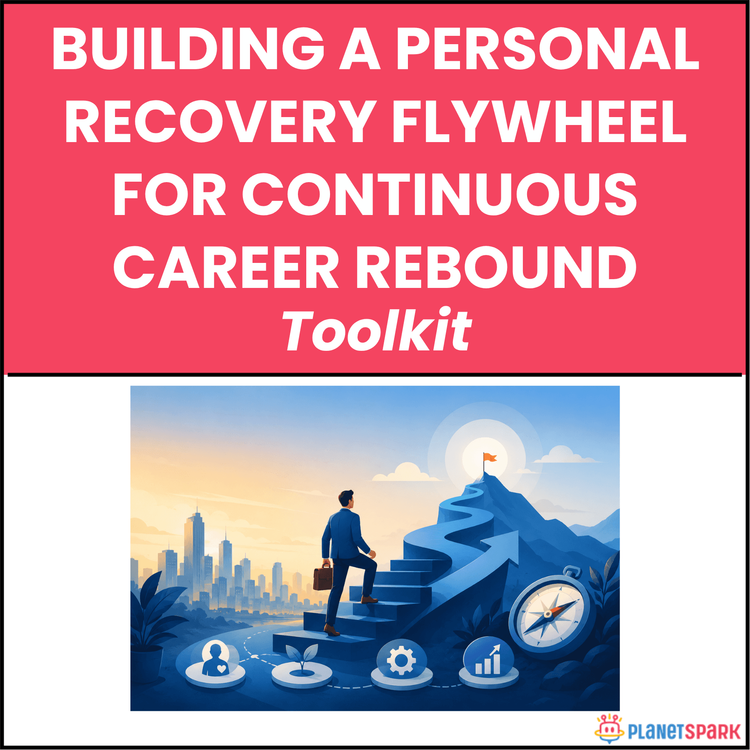
Building a Personal Recovery Flywheel for Continuous Career Rebound
Creating Self-Reinforcing Systems That Help You Recover Faster From Career Setbacks and Maintain Long-Term Momentum
Career setbacks are more common than most professionals admit. A missed promotion, an unexpected layoff, a failed project, or a career pivot that didn’t go as planned can leave even highly capable professionals feeling uncertain about what comes next.
The real challenge is not just recovering from the setback itself. It’s rebuilding momentum without losing confidence, direction, or energy in the process.
That’s exactly why the resource “Building a Personal Recovery Flywheel for Continuous Career Rebound” was created. Instead of offering generic career advice, this practical toolkit helps professionals build a repeatable recovery system that creates long-term resilience, clarity, and forward momentum.
Whether you’re navigating a difficult transition, restarting after burnout, or simply preparing yourself for future career uncertainty, this guide helps you recover faster and move forward more strategically.
Who Is This Resource For?
This resource is especially valuable if you are:
- A working professional with 0–15 years of experience
- A job seeker recovering from layoffs, rejection, or career stagnation
- A career switcher trying to rebuild confidence and direction
- A consultant or freelancer managing periods of uncertainty
- A manager or leader navigating organisational changes
- Someone feeling stuck, overwhelmed, or unsure about their next professional move
- A professional who wants a sustainable system for career resilience rather than temporary motivation
If you want practical structure instead of vague inspiration, this toolkit is designed for you.
What Does This Resource Contain?
This is not a motivational career guide filled with generic advice. It’s a structured recovery framework designed for real-world application.
Inside the resource, you’ll find:
- A complete explanation of what a “career recovery flywheel” is and why it matters
- A phased recovery system to help professionals process setbacks productively
- Reflection exercises to separate emotional reactions from practical next steps
- A structured acknowledgement framework for career disruptions
- The “Five Flywheel Spokes” system covering:
- Identity Anchor
- Skills Inventory
- Network Activation
- Visibility Engine
- Energy Management
- Worksheets and guided prompts to help you rebuild clarity and confidence
- A weekly momentum-building system focused on consistency over intensity
- The REBOUND Framework for making smarter career decisions during uncertainty
- A 30-day career recovery sprint checklist
- Weekly self-evaluation tools and reflection questions
- Real-world case studies showing how professionals applied the framework successfully
- Common recovery mistakes and practical ways to avoid them
Everything inside the toolkit is designed to help professionals move from reaction to recovery with structure and momentum.
Summary of the Resource
“Building a Personal Recovery Flywheel for Continuous Career Rebound” is a practical, action-oriented toolkit that helps professionals recover from career setbacks through systems, habits, and structured momentum-building strategies.
Rather than focusing only on resumes, interviews, or job applications, this resource helps you build the underlying recovery infrastructure that supports long-term career resilience.
It teaches professionals how to:
- Process setbacks without getting stuck emotionally
- Rebuild confidence through clarity and structure
- Activate networks strategically
- Create visible professional momentum
- Make better career decisions under pressure
- Sustain energy during difficult transitions
If you want a practical roadmap for rebuilding your career with confidence and consistency, this resource provides exactly that.
How Will This Resource Be Useful?
One of the biggest mistakes professionals make after a setback is treating recovery as a short-term emergency instead of a long-term system.
This resource helps you create a repeatable process for navigating uncertainty more effectively.
You’ll gain:
- Greater emotional clarity during difficult career phases
- A structured recovery process instead of reactive decision-making
- Improved confidence through skills and identity clarity
- Better networking and visibility strategies
- More consistent professional momentum
- Stronger decision-making during career crossroads
- Reduced burnout during job searches or transitions
- A healthier, more sustainable approach to career growth
Most importantly, this toolkit helps you stop relying on motivation alone and start building systems that support long-term resilience.
How Should You Use This Resource?
To get maximum value from this toolkit, approach it in phases rather than rushing through it all at once.
Start by reading the full guide once to understand the overall flywheel concept and recovery framework. This gives you clarity on how the different sections connect together.
Next, begin with Phase 1 and complete the acknowledgement exercises honestly. Avoid skipping this step, even if you feel impatient to move forward. The guide strongly emphasises that emotional clarity creates better long-term decisions.
After that, work through the Five Flywheel Spokes one by one:
- Build your professional identity statement
- Create your skills inventory
- Activate warm networks
- Increase professional visibility
- Design an energy management rhythm
Then move into the weekly momentum systems, recovery checklist, and REBOUND decision-making framework.
The resource is especially powerful when revisited regularly during:
- Career transitions
- Job searches
- Professional burnout recovery
- Promotion preparation
- Leadership growth
- Major career decisions
Treat this toolkit as an ongoing operating system for career resilience, not a one-time read.
Action Steps
After accessing this resource, take these steps immediately:
1. Set aside 2–3 focused hours to work through the first sections
2. Complete the Phase 1 Reflection Worksheet honestly
3. Write your 3-sentence professional identity statement
4. List your key skills with measurable outcomes attached
5. Identify at least 20 warm professional contacts
6. Choose one visibility platform to engage with consistently
7. Build your first weekly recovery rhythm
8. Use the REBOUND Framework for your next major career decision
9. Complete the 30-day recovery sprint checklist
10. Review your flywheel health weekly and adjust where needed
Small, consistent actions create momentum faster than occasional bursts of effort.
Career setbacks do not define your future. What matters most is the system you build to recover, adapt, and move forward. Professionals who rebound successfully are not always the most talented or the most connected — they are the ones who build sustainable momentum through clarity, consistency, and action.
This resource helps you create exactly that kind of system.
Use it not just to recover from one difficult phase, but to build a stronger, more resilient career foundation for the long term.
Book your free session today!