
Building a Pre-Mortem System to Anticipate Decision Failures

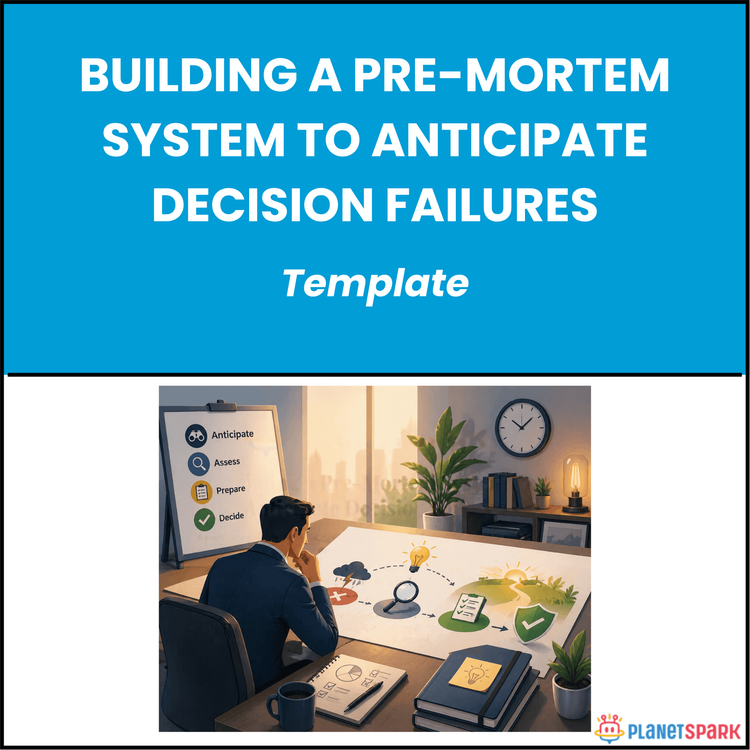
Building a Pre-Mortem System to Anticipate Decision Failures
Creating a Pre-Mortem Strategy to Predict Decision Failures: A Guide to Smarter Decision-Making
As professionals, we are constantly faced with decisions—big and small—that can shape the trajectory of our careers, teams, or organizations. But what if the decisions we are making are already doomed to fail? What if we could identify the risks before they happen? Enter the pre-mortem: a powerful tool that allows us to anticipate potential failure points before committing to a course of action. In the fast-paced world of business, decision-making is key, and having a pre-mortem system in place can save time, resources, and credibility.
Who Is This Resource For?
This resource is for professionals at various stages of their careers who are ready to enhance their decision-making process. It is ideal for:
- Early to mid-career professionals and team leads
- Consultants, managers, and decision-makers working with high-stakes decisions daily
- Professionals seeking to improve their strategic decision-making abilities
- Anyone looking to create a culture of proactive risk identification
If you're managing teams, leading projects, or facing high-pressure decisions, this guide is built for you.
What Does This Resource Contain?
Inside this guide, you'll find:
- A repeatable 5-step pre-mortem framework to identify risks before they happen
- Detailed worksheets and checklists to guide you through the process
- A framework to apply in team settings, one-on-one sessions, or solo reflection
- Real-world case studies and examples to show how pre-mortems work in practice
- Common mistakes in pre-mortem facilitation and how to avoid them
- A facilitation checklist to ensure you run effective pre-mortems consistently
This isn’t just another decision-making framework. It’s a complete system to proactively guard against costly failures.
Summary of the Resource
"Building a Pre-Mortem System to Anticipate Decision Failures" is a strategic guide that helps professionals think through decisions from a risk-centric perspective. Instead of waiting for things to go wrong, it encourages you to assume failure has already happened and work backward to uncover what could have caused it. By using this framework, you'll be able to:
- Identify risks that may not be immediately obvious
- Engage your team in meaningful conversations about failure prevention
- Make better, more informed decisions with reduced overconfidence and bias
How Will This Resource Be Useful?
This pre-mortem system is designed to:
- Increase Decision Confidence: By preemptively identifying risks, you gain confidence in your decision-making process.
- Prevent Failure: This system helps you surface blind spots and risks before they become critical.
- Streamline Team Collaboration: Encourages active participation and diverse viewpoints, reducing the risks of groupthink and overconfidence.
- Improve Project Outcomes: Helps you avoid common decision-making pitfalls and reduce the likelihood of costly mistakes.
Whether you are a manager running a team or a consultant advising clients, the pre-mortem system will help you make more informed, confident decisions.
How Should You Use This Resource?
To get the most out of this resource, follow these steps:
1. Read the Full Guide: Absorb the entire framework to understand the pre-mortem process and its application.
2. Use the Worksheets: Complete the pre-mortem worksheets individually or with your team. Focus on writing down assumptions and potential risks that could affect your decision.
3. Facilitate the Process: If working with a team, follow the facilitation guide to ensure everyone is involved in the process.
4. Act on What You Discover: Use the insights gained to revise your decision-making approach, update project plans, and assign action items to mitigate risks.
By following this process, you’ll be prepared to make well-thought-out decisions with greater certainty.
Action Steps
1. Block 45–90 minutes in your calendar to conduct a pre-mortem for your next big decision.
2. Write down the decision statement and include key assumptions, outcomes, and timeframe.
3. Engage in a 5–7 minute silent reflection phase to identify potential failure scenarios.
4. Surface all risks and prioritize them using the Impact × Likelihood matrix.
5. Develop at least one pre-emptive action for each high-priority failure.
6. Revisit the pre-mortem output regularly as you approach key milestones in your decision-making process.
Closing Thoughts
Taking time for a pre-mortem before making significant decisions ensures you are prepared for what could go wrong. By shifting the mindset from "how can we make this work?" to "what if this fails?", you can identify blind spots and reduce the likelihood of costly mistakes. This approach doesn’t just prevent failure—it helps you make smarter, more calculated decisions, and drive better outcomes for your team or organization.
By incorporating the pre-mortem process into your decision-making strategy, you’ll build a culture of proactive risk management, resulting in more successful decisions with less fallout.