
Building A Second Brain System Guide

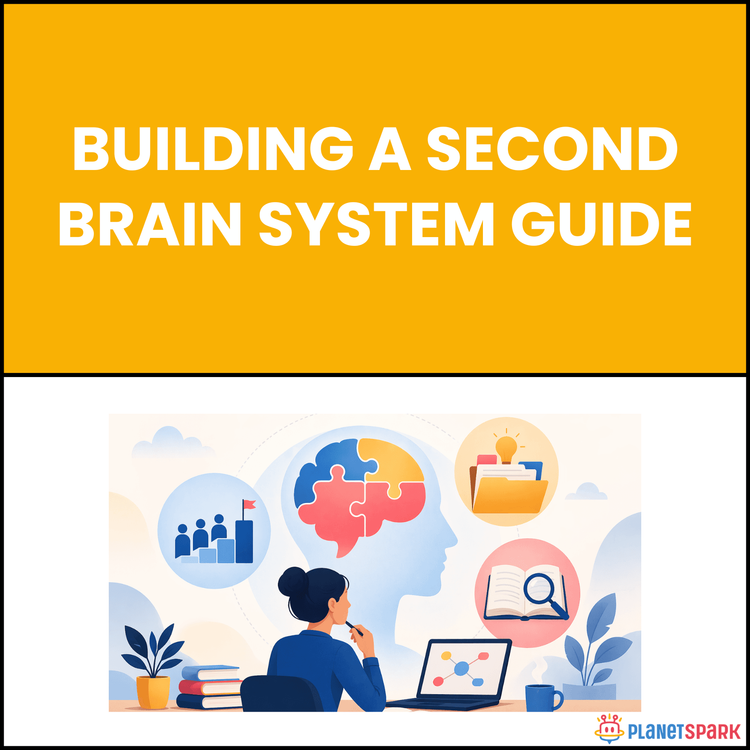
Building A Second Brain System Guide
How to Build a Personal Knowledge System That Actually Works for Busy Professionals
Every day, you consume information—articles, meetings, podcasts, ideas—but how much of it do you actually use?
If you’ve ever re-read something you already saved, struggled to find an important note, or felt like your ideas slip away too quickly, you’re not alone. Most working professionals aren’t short on information—they’re overwhelmed by it.
The real problem isn’t learning more. It’s managing what you already know.
That’s exactly where this resource comes in. The guide “Building a Second Brain System” is designed to help you stop losing valuable insights and start turning information into clear thinking, better decisions, and consistent output. :contentReference[oaicite:0]{index=0}
Who Is This Resource For?
This resource is ideal for:
- Working professionals with 0–15 years of experience
- Career switchers managing new learning curves
- Consultants handling multiple clients and information streams
- Managers juggling meetings, decisions, and documentation
- Knowledge workers who consume a lot but struggle to retain and use it
- Anyone who feels mentally overloaded or disorganised in their work
If your work depends on thinking, learning, and creating—this system is built for you.
What Does This Resource Contain?
This is not a theoretical productivity guide. It is a structured, practical system you can implement step by step.
Inside the resource, you’ll find:
- The CODE framework (Capture, Organise, Distil, Express) that forms the foundation of a personal knowledge system
- A clear method to capture ideas without creating information overload
- The PARA system (Projects, Areas, Resources, Archives) to organise everything efficiently
- A powerful distillation technique called Progressive Summarisation to make notes actually usable
- Practical guidance on turning knowledge into real-world outputs (presentations, reports, decisions)
- Tool recommendations for building your system without overcomplication
- A 30-day step-by-step setup checklist for implementation
- Reflection worksheets to design a system tailored to your workflow
- Weekly review framework to maintain and improve your system consistently
- Real-world case study showing how professionals apply this system successfully
- Common mistakes and how to avoid them
- Templates for meetings, notes, projects, and reviews
Everything is designed to move you from scattered information to structured thinking.
Summary of the Resource
This guide is a complete operating system for managing your knowledge.
It helps you capture what matters, organise it for easy access, refine it into insights, and use it to produce meaningful work. Instead of constantly starting from scratch, you build a system that supports you over time.
In simple terms, it transforms information into action.
How Will This Resource Be Useful?
This resource creates real, tangible improvements in how you work.
You’ll be able to:
- Stop losing ideas and important information
- Reduce mental overload by externalising your thinking
- Find what you need quickly without searching across multiple apps
- Turn notes into actionable insights instead of passive storage
- Prepare faster for meetings, projects, and deliverables
- Improve the quality of your thinking and decision-making
- Create outputs (presentations, reports, strategies) with more clarity and confidence
Most importantly, it helps you actually use what you learn—something most professionals struggle with.
How Should You Use This Resource?
To get the best results, follow a structured approach:
Start by reading the guide once from beginning to end. This gives you a complete understanding of the system before you start building anything.
Next, begin with the first step—capture. Focus only on saving ideas consistently without worrying about organisation.
Then gradually implement the other stages:
- Organise your notes using the PARA structure
- Distil key insights using progressive summarisation
- Express your knowledge through real outputs in your work
Use the included checklists and templates as you go. Don’t try to implement everything at once—build one habit at a time.
Finally, schedule a weekly review to maintain and refine your system. This is what ensures long-term success.
Action Steps
Once you access this resource, take these steps immediately:
1. Choose one note-taking tool you will stick with
2. Create four folders: Projects, Areas, Resources, Archives
3. Capture at least 3 ideas or insights today
4. Set aside 20–30 minutes this week for your first system review
5. Implement one stage of the system (Capture → Organise → Distil → Express)
6. Use one template (meeting notes or project plan) in your next task
Small actions here will quickly build a system that compounds over time.
The reality is simple: your brain is excellent at thinking, but not at storing information. :contentReference
When you build a reliable system outside your mind, everything changes. You think more clearly, work more efficiently, and create with more confidence.
This resource is not about doing more—it’s about working smarter with what you already know.