
Building Communication Resilience in High-Conflict Situations

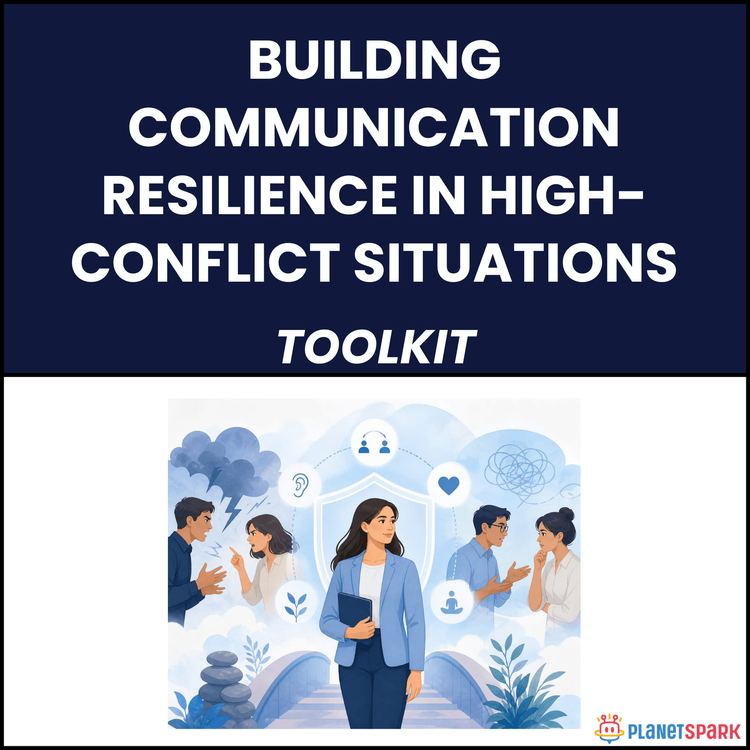
Building Communication Resilience in High-Conflict Situations
Resilience in High-Conflict Situations: A Toolkit for Professionals
In high-stakes professional environments, the ability to navigate difficult conversations with clarity, composure, and credibility is invaluable. Whether you're facing a tense client meeting, addressing team conflicts, or handling tough feedback, communication resilience is key to maintaining your professional relationships and achieving your desired outcomes. Yet, many professionals struggle when conversations become heated or emotionally charged, often resorting to defensive behaviors or shutting down. This toolkit provides you with a structured approach to stay clear, calm, and credible during high-conflict situations, helping you manage tough conversations with confidence and strategic thinking.
Who Is This Resource For?
This resource is ideal for professionals who want to build resilience in difficult conversations:
- Managers and team leaders who need to handle performance reviews, conflict resolution, or pushback from stakeholders.
- Client-facing professionals who need to maintain relationships while addressing challenging or unrealistic demands.
- Early-career professionals who want to learn how to advocate for themselves and manage sensitive conversations.
- Anyone facing high-stakes or emotionally charged conversations and looking to improve their ability to respond intentionally, not reactively.
If you're looking to increase your ability to navigate complex, high-conflict situations without losing your cool, this toolkit is for you.
What Does This Resource Contain?
This toolkit is designed to provide a structured, repeatable system for managing high-conflict situations. Here's what you'll find:
- Preparation Tools: How to get clear on your emotional triggers, objectives, and the other person's perspective before engaging in a difficult conversation.
- The CLEAR Framework: A five-step structure (Calm, Listen, Empathize, Assert, Resolve) that helps you stay engaged and respectful during tense exchanges.
- Techniques for Handling Escalation: How to manage conversations when they start to spiral out of control, with actionable Pattern Interrupts.
- Post-Conversation Strategies: How to reflect, repair relationships, and reset after a tough conversation, ensuring continuous growth.
- Practical Worksheets and Checklists: Tools to help you reflect on your conversations, track your growth, and prepare for future ones.
This resource will guide you step-by-step to develop the resilience needed to handle tough conversations effectively.
Summary of the Resource
Building Communication Resilience in High-Conflict Situations offers a comprehensive approach to navigating difficult conversations with clarity and composure. Through the CLEAR Framework and a focus on pre- and post-conversation strategies, this toolkit helps you prepare for conflict, engage strategically, and rebuild relationships afterward. Whether you're facing conflict for the first time or refining your approach to difficult discussions, this resource provides the tools to communicate effectively under pressure.
How Will This Resource Be Useful?
This toolkit will help you:
- Stay calm under pressure: Learn techniques to regulate your emotional state and think clearly when emotions are running high.
- Communicate with precision: Use the CLEAR Framework to structure your conversations and steer them toward productive outcomes.
- Rebuild trust: By following the post-conversation strategies, you'll repair any damaged relationships and maintain credibility.
- Increase confidence: As you apply the tools and frameworks provided, you'll feel more capable in navigating high-conflict situations.
By practicing the tools and techniques in this playbook, you'll improve your communication resilience, ensuring that you handle tough conversations with professionalism and poise.
How Should You Use This Resource?
To make the most out of this toolkit, follow these steps:
1. Prepare for the Conversation: Use the pre-conversation checklist to understand your emotional triggers, clarify your goals, and anticipate the other person’s perspective.
2. Apply the CLEAR Framework: During the conversation, use this framework to remain calm, listen, empathize, assert your position, and resolve the conflict productively.
3. Handle Escalation: Recognize when a conversation is escalating and use the provided Pattern Interrupts to regain control and prevent further conflict.
4. Reflect After the Conversation: Use the post-conversation reflection tools to evaluate your performance, learn from the conversation, and rebuild any damaged relationships.
5. Track Your Progress: Regularly assess your skills using the self-evaluation tool, and focus on improving specific areas where you score the lowest.
By following this structure, you’ll be able to handle even the most challenging conversations effectively, preserving relationships and achieving desired outcomes.
Action Steps
Ready to strengthen your communication resilience? Start with these steps:
1. Complete the Pre-Conversation Checklist: Before your next difficult conversation, fill out the checklist to prepare your mind and emotions.
2. Use the CLEAR Framework: Apply the framework in your next high-conflict conversation to guide the interaction toward a productive resolution.
3. Practice Pattern Interrupts: If the conversation starts to escalate, use one of the Pattern Interrupt techniques to de-escalate and regain control.
4. Debrief Yourself: After the conversation, complete the post-conversation reflection checklist to assess what went well and what you could improve.
5. Track Your Progress: Regularly assess your skills using the self-evaluation tool, and focus on improving specific areas where you score the lowest.
By completing these actions, you'll begin building resilience in your communication, ensuring you remain composed, confident, and effective in any high-conflict situation.
Conflict in the workplace is inevitable, but how you respond makes all the difference. By using the tools and strategies outlined in this toolkit, you can navigate difficult conversations with clarity and composure, preserving relationships and maintaining your credibility. The key to success lies in preparation, practice, and reflection.
Start using these frameworks today and improve your ability to handle high-conflict situations with confidence.