
Building Emotional Awareness To Navigate Workplace Relationships

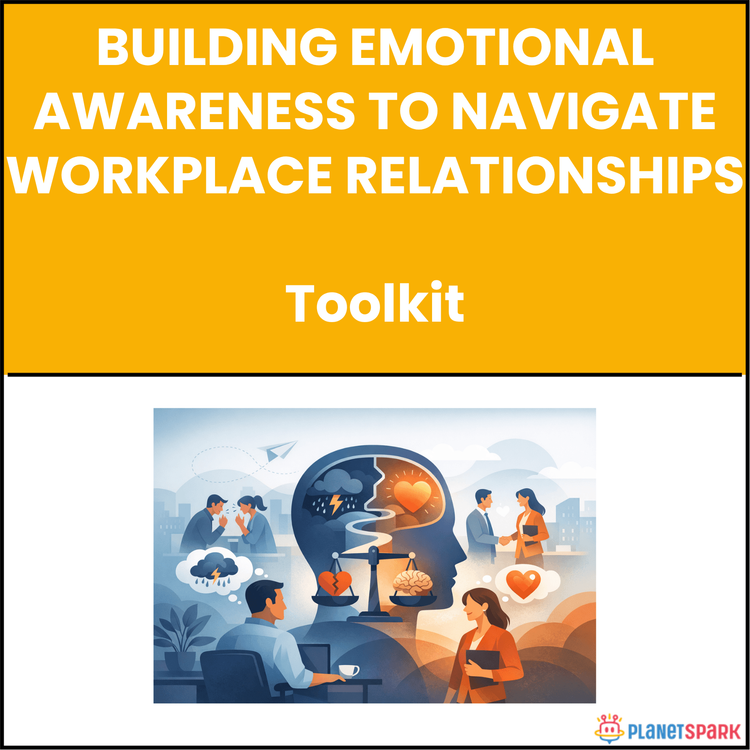
Building Emotional Awareness To Navigate Workplace Relationships
Building Emotional Awareness to Navigate Workplace Relationships: A Practical Toolkit
Emotional awareness is the hidden accelerator of career growth. The “Emotional Awareness Toolkit” helps professionals turn emotional insight into a genuine workplace advantage.
Who Is This Resource For?
This toolkit is designed for:
- Career switchers needing stronger relational skills
- Early-to-mid career professionals (0–15 years experience)
- Consultants navigating client dynamics
- Managers preparing for leadership roles
- Anyone struggling with workplace relationships or perception gaps
If you want to build trust, navigate conflict, and lead with empathy, this resource is built for you.
What Does This Resource Contain?
Inside the toolkit, you’ll find:
- Introduction: Why emotional awareness is underrated
- Module 1: Foundation of emotional awareness (self-awareness, social awareness, regulation, empathic accuracy)
- Module 2: Emotional trigger audit and vocabulary building
- Module 3: Reading the room (signals, check-in questions)
- Module 4: The Pause Protocol for regulation
- Module 5: Navigating difficult relationships with the CLEAR framework
- Worksheets and reflection tools (weekly checklist, debrief, intention setter)
- Case study showing transformation through emotional navigation
- Key takeaways and next steps
Summary of the Resource
The “Emotional Awareness Toolkit” is a structured system that reframes emotional intelligence as a practical skill. It ensures professionals can build awareness, regulate responses, and strengthen workplace relationships deliberately.
How Will This Resource Be Useful?
By applying this toolkit, you’ll gain:
- Clarity on your emotional triggers
- Confidence in naming and regulating emotions
- Awareness of others’ emotional signals
- Tools to navigate conflict constructively
- Strategies to build trust and credibility
- Long-term resilience through consistent emotional practice
How Should You Use This Resource?
Follow a phased approach:
1. Complete the Emotional Trigger Audit.
2. Expand your emotion vocabulary deliberately.
3. Practise reading non-verbal signals in meetings.
4. Apply the Pause Protocol in low-stakes situations.
5. Use the CLEAR framework in difficult relationships.
6. Reflect weekly with the Emotional Awareness Checklist.
Action Steps
After accessing this resource, take these immediate steps:
1. Keep a one-week emotional log to identify triggers.
2. Add three new emotion words to your vocabulary.
3. Write one genuine check-in question before your next 1-on-1.
4. Practise the Pause Protocol in your next meeting.
5. Approach one difficult colleague with curiosity instead of defensiveness.
6. Use the After-Conversation Debrief after your next challenging interaction.
Emotional awareness is not soft—it’s strategic. With this toolkit, you can move from reactive to intentional, ensuring your career trajectory reflects both competence and emotional intelligence.
Book your free session today!