
Building Energy Discipline for Consistent Daily Performance

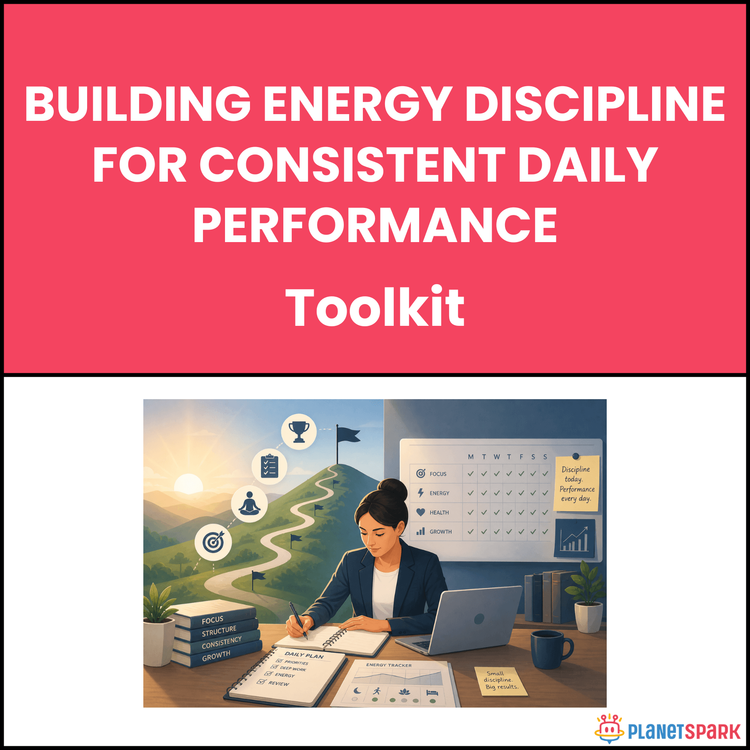
Building Energy Discipline for Consistent Daily Performance
Building Energy Discipline for Consistent Daily Performance: A Practical Guide for Working Professionals
If you often end your workday feeling exhausted but unsure where your energy actually went, you’re not alone.
Most professionals try to improve productivity by managing time better—optimising calendars, creating to-do lists, and working longer hours. But despite all this effort, focus drops, fatigue builds up, and performance becomes inconsistent.
The real issue isn’t time. It’s energy.
That’s exactly why the resource “Building Energy Discipline for Consistent Daily Performance” exists. It helps you understand how your energy works, where it gets depleted, and how to build simple, repeatable systems that allow you to perform consistently—without burnout.
Who Is This Resource For?
This resource is especially valuable if you are:
- A working professional with 0–15 years of experience
- Someone experiencing inconsistent focus or daily energy crashes
- A manager or consultant handling cognitively demanding work
- A high performer who feels busy but not consistently effective
- A professional struggling with burnout, fatigue, or mental overload
- Someone who wants sustainable productivity—not just short bursts of performance
If you feel like your output doesn’t reflect your true capability, this guide is built for you.
What Does This Resource Contain?
This is not a generic productivity guide. It’s a structured system built around how energy actually drives performance.
Inside the resource, you’ll find:
- A clear explanation of why energy—not time—is your most critical professional resource
- The Four Pillars of Energy Framework:
- Physical Energy
- Mental Energy
- Emotional Energy
- Purpose Energy
- A diagnostic Energy Audit to assess where you’re currently losing capacity
- The Five Non-Negotiables for daily energy discipline:
- Sleep architecture (7–8 hours with consistent timing)
- Morning activation routine
- Daily movement minimum
- Strategic midday recovery
- Evening shutdown ritual
- A complete system to align your work schedule with your natural energy rhythm
- A toolkit of micro-recovery practices you can apply in 2–5 minutes:
- Breathing resets
- Focus resets
- Short movement breaks
- Brain dump techniques
- Hydration and light exposure adjustments
- A real-world case study showing how energy discipline improved performance without increasing work hours
- A Personal Energy Blueprint worksheet to design your own system
- A structured 30-day implementation cycle (Audit → Design → Execute → Review)
- A week-by-week implementation checklist for building consistency
- Common mistakes that reduce energy (and how to fix them)
- A summary framework to help you sustain long-term performance
Everything is designed for real-world application—not theory.
Summary of the Resource
“Building Energy Discipline for Consistent Daily Performance” is a practical, structured guide that helps you improve how you work by improving how you manage your energy.
It shows you how to:
- Identify your biggest energy drains
- Build simple daily practices that protect your focus
- Recover quickly when energy drops
- Align your work with your natural rhythm
- Create a repeatable system for consistent performance
If you want better results without working longer hours, this resource gives you a clear path.
How Will This Resource Be Useful?
This resource helps you move from inconsistent effort to reliable performance.
You’ll gain:
- Clear visibility into how your energy actually fluctuates
- Better focus during high-priority work
- Reduced fatigue across the day and week
- Faster recovery from stress, meetings, and cognitive overload
- A structured system to maintain performance even during busy periods
- Greater control over how you feel and perform at work
Most importantly, it helps you stop relying on willpower—and start building a system that supports you.
How Should You Use This Resource?
To get the best results, follow a phased approach:
Start by understanding your current state:
- Complete the Energy Audit across the four pillars
- Identify your lowest-scoring area
Next, build your foundation:
- Implement the Five Non-Negotiables one by one
- Focus on consistency rather than perfection
Then optimise your workday:
- Map your natural energy rhythm over a few days
- Align deep work with peak energy windows
- Schedule recovery before you feel exhausted
Add recovery systems:
- Use micro-practices (2–5 minutes) when energy dips
- Replace ineffective habits (like scrolling) with real resets
Finally, build your personal system:
- Fill in your Energy Blueprint
- Run a 30-day experiment with one change at a time
- Review and refine based on results
This resource works best when used actively—not just read once.
Action Steps
After accessing this resource, take these steps immediately:
1. Block 45–60 minutes to complete the Energy Audit
2. Identify your lowest energy pillar
3. Implement one non-negotiable today (start small)
4. Track your energy levels across one full workday
5. Add one micro-recovery practice during a low-energy moment
6. Protect one 60–90 minute deep work window this week
7. Schedule a weekly 10-minute review to track improvement
Small, consistent actions here can significantly improve how you perform every day.
Most professionals try to solve performance problems by working harder. But sustainable success doesn’t come from more effort—it comes from better energy management.
When you protect your energy, align your work with your natural rhythm, and build simple recovery systems, your output improves—without increasing your hours.
Use this resource to build that system.
Because the goal isn’t to be at your best occasionally—it’s to be consistently effective, every single day.
Book your free session today!