
Building Judgment Through Reflection on Past Decisions

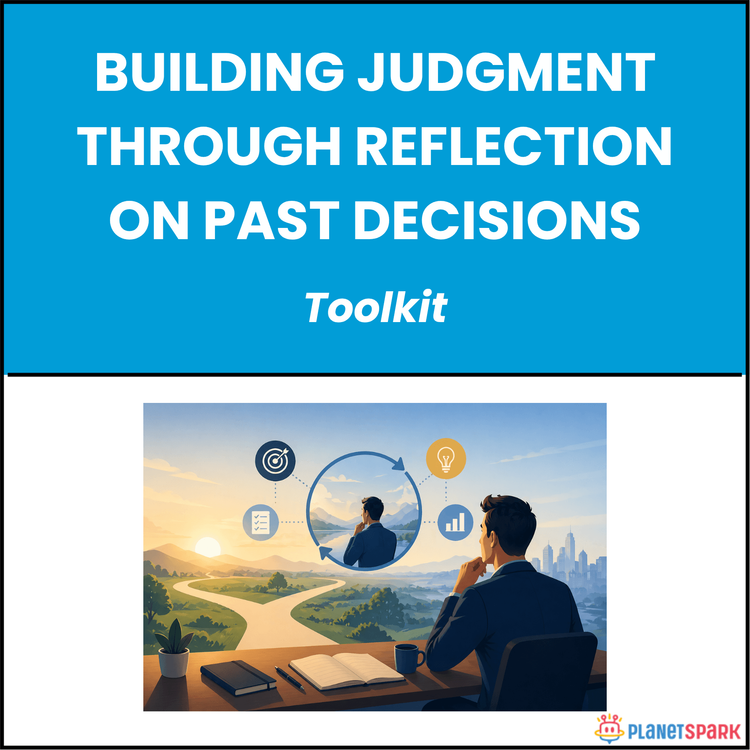
Building Judgment Through Reflection on Past Decisions
Developing Better Judgment Through Reflection: A Practical Guide to Strengthening Your Decision-Making Skills
Every professional, at some point in their career, has made a decision that didn’t go as planned. While many brush off these decisions as failures, others see them as an opportunity to grow. The key to leveraging these experiences? Reflection. This resource, Building Judgment Through Reflection on Past Decisions, is designed to help working professionals, especially those transitioning careers or moving up the corporate ladder, improve their judgment through structured reflection. If you’re tired of repeating mistakes and want to sharpen your decision-making skills, this toolkit is for you.
Who Is This Resource For?
This toolkit is ideal for:
- Career Changers who need to enhance their decision-making to prove their value.
- Early-to-Mid Career Professionals looking to refine their judgment and avoid costly mistakes.
- Consultants and Managers wanting to make smarter, more strategic decisions.
- Professionals in Transition who are reassessing past decisions and preparing for future roles.
- Anyone who knows the importance of good judgment but hasn’t yet developed a structured way to hone it.
What Does This Resource Contain?
The Building Judgment Through Reflection on Past Decisions toolkit isn’t just about abstract concepts. It’s a highly practical guide that walks you through actionable steps to improve your decision-making. Here’s what’s included:
- The J.U.D.G.E. Framework: A five-stage process (Journal, Unpack, Diagnose, Generalise, Embed) to guide you through reflective practice.
- Decision Autopsy Template: A tool to deconstruct significant decisions and learn from them.
- Bias Spotter Checklist: A pre-reflection checklist to ensure you're not influenced by cognitive biases.
- Deep Reflection Questions: Prompts to help you look at decisions across time and understand recurring patterns.
- Real-World Application: Case studies and examples that show how others have applied this framework to real decisions.
- Action Elements: A toolkit with worksheets designed to help you reflect on and document your decisions in 20–30 minutes.
Summary of the Resource
The toolkit provides you with a structured method to review your past decisions and improve future ones. It’s a short, but powerful framework that doesn’t require hours of reflection time. Even 20–30 minutes of honest journaling can unlock valuable insights that help you make smarter decisions moving forward.
If you’re someone who wants to stop repeating costly mistakes, this toolkit is the key to transforming your judgment from good to great.
How Will This Resource Be Useful?
By applying the methods in this toolkit, you’ll start to:
- Identify your own judgment patterns: Understand where your decision-making goes wrong, and how to fix it.
- Avoid repeating costly mistakes: Recognize the biases and flaws in your thinking before they influence major decisions.
- Sharpen your instincts: Build better decision-making muscles through a structured process of reflection.
- Increase your confidence: Make decisions more quickly and confidently, knowing you’ve learned from past experiences.
How Should You Use This Resource?
To get the most out of this resource:
1. Start by journaling: Whenever you make a significant decision, capture it in the Decision Autopsy Template right away. This keeps hindsight bias at bay and ensures you’re documenting your decision while it’s still fresh.
2. Reflect and unpack: After the outcome is clear, revisit your decision journal and take time to unpack the context around the decision.
3. Diagnose the outcome: Use the 2×2 matrix to assess whether your decision was a good one or if it was influenced by luck or bias.
4. Identify patterns: Look for recurring patterns in your decision-making and generalize them into actionable principles.
5. Embed the learning: Write personal decision principles in a “When / I will / Because” format, and make these principles a part of your decision-making process moving forward.
You’ll find that as you go through this reflection process, you start applying these insights in real time, making better decisions more confidently and faster.
Action Steps
To get started with this toolkit, follow these simple steps:
1. Choose one recent significant decision: Reflect on a decision you made in the last 30 days.
2. Complete the Decision Autopsy Template: Write down the details of the decision, including your confidence level, the options you considered, and the outcome.
3. Run the Bias Spotter Checklist: Check whether any cognitive biases might have influenced your decision.
4. Write one personal principle: Use the “When / I will / Because” format to create a personal decision principle.
5. Schedule your first monthly Decision Review: Set aside 25 minutes each month to review your decisions and apply what you've learned.
Small, focused actions like these can compound over time, giving you the judgment needed to navigate complex decisions in your career with confidence.
Great judgment is not about never making mistakes — it’s about learning from them. By incorporating structured reflection into your routine, you’ll stop wasting valuable lessons and start building a judgment profile that enhances every decision you make. Take the first step today, and see how this process can impact your career.