
Building Judgment Through Scenario-Based Thinking

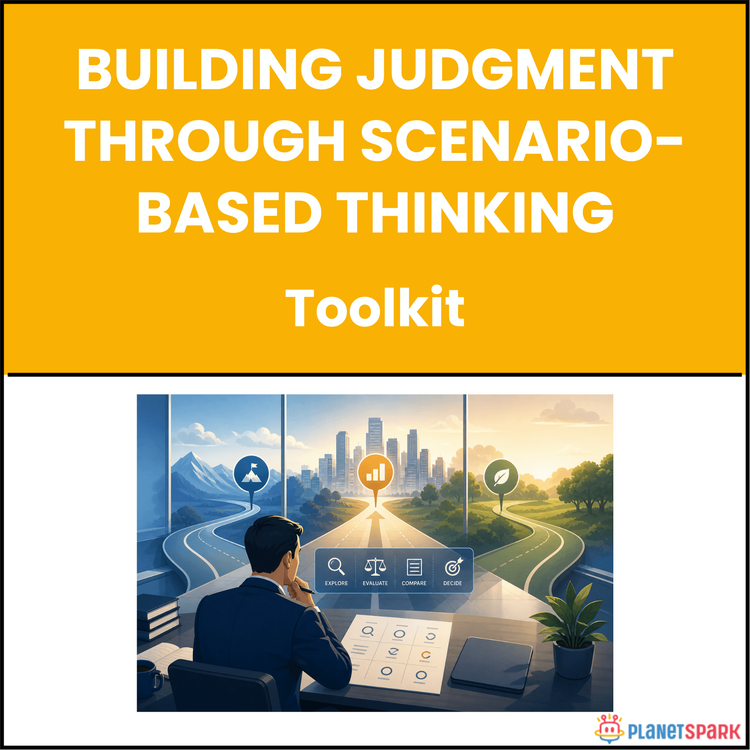
Building Judgment Through Scenario-Based Thinking
Developing Better Judgment with Scenario-Based Thinking: A Toolkit for Faster, Smarter Decisions
In today's fast-paced work environments, making sharp, confident decisions under pressure is essential. Professionals often face complex situations with incomplete information and conflicting inputs, which can lead to decision paralysis or reactive, emotional choices. Scenario-based thinking offers a systematic approach to help you build sound judgment that is reliable, fast, and informed. This toolkit provides you with the tools to approach any decision with clarity, no matter the context.
Who Is This Resource For?
This resource is perfect for professionals who need to improve their decision-making abilities:
- Career switchers looking to navigate new industries and roles with confidence
- Managers balancing multiple perspectives and high-stakes decisions
- Consultants advising clients with limited information and pressure
- Early- to mid-career professionals who want to sharpen their judgment and make quicker, more confident decisions
If you often find yourself struggling with decisions under uncertainty, or if you need a practical approach to handling complex scenarios, this resource is designed to build your decision-making muscle.
What Does This Resource Contain?
The toolkit is structured around the Judgment Stack framework, designed to guide you through every step of making well-informed decisions. Key sections include:
1. Situational Awareness: Learn to accurately read and observe the situation before jumping to conclusions.
2. Assumption Mapping: Surface your hidden assumptions and test them to prevent costly decision mistakes.
3. Scenario Construction: Practice imagining plausible future outcomes to prepare your responses in advance.
4. Stakeholder Sensing: Understand the human factors and communication strategies necessary for successful decision implementation.
5. Confident Commitment: Learn to make and commit to decisions, backed by thorough analysis and stakeholder alignment.
Additionally, you’ll find worksheets, practice prompts, and real-world case examples to help you apply these frameworks immediately.
Summary of the Resource
This toolkit is all about building your judgment. By working through each layer of the Judgment Stack, you will develop the ability to make better decisions more quickly, with clarity and confidence. The resource doesn’t just teach you how to think — it helps you practice the thinking process, so it becomes natural, even in high-pressure situations. The exercises and frameworks are practical and designed to be applied directly to your real-world challenges.
How Will This Resource Be Useful?
- Sharpen Decision-Making: By following the structured steps, you’ll be able to make decisions faster and more effectively, reducing the hesitation that often leads to poor outcomes.
- Build Confidence: The scenarios and exercises will help you practice judgment in a variety of contexts, increasing your confidence in handling uncertainty.
- Improve Communication: Learn how to assess your stakeholders, anticipate their reactions, and communicate your decisions more clearly to gain buy-in.
- Develop Long-Term Judgment Skills: The more you practice using this toolkit, the better your judgment will become, providing you with a powerful skill set for leadership and high-impact decisions.
How Should You Use This Resource?
1. Read Through Once: Familiarize yourself with the Judgment Stack framework and its five layers to get a solid understanding of the process.
2. Apply the Situational Awareness Step: In any new or complex situation, take 60 seconds to observe and record the facts, separating them from your assumptions.
3. Use Assumption Mapping: Regularly assess the assumptions that inform your decisions, particularly the low-confidence ones, and create contingencies for them.
4. Build Scenarios: Use the Pre-mortem technique to imagine various future scenarios, from best-case to worst-case, and decide on your most likely response.
5. Stakeholder Mapping: Before making decisions, use the Stakeholder Sensing Grid to understand who will be impacted and how best to communicate with them.
6. Make Confident Commitments: Once you’ve assessed the situation and considered all angles, commit to a decision with clarity and document your reasoning for future learning.
Action Steps
- Step 1: Identify a current decision that you're facing. Use the Assumption Audit to list out all the assumptions you're relying on, especially those you're less confident about.
- Step 2: Practice one of the scenarios provided in the toolkit (e.g., the Promotion Dilemma or Data vs. Gut Call) and work through all five layers of the Judgment Stack.
- Step 3: Apply the Stakeholder Sensing Grid to a decision you're currently navigating, ensuring that you're accounting for all relevant stakeholders and their interests.
- Step 4: After making a major decision, run a post-decision review. Write down what went well, what could have been improved, and what assumptions you missed. This reflection will strengthen your future judgment.
Building judgment through scenario-based thinking is a long-term process, but with consistent practice, it will become second nature. By applying these frameworks to everyday decisions, you’ll develop the mental muscle to handle any challenge that comes your way with confidence. Take action now and start practicing with real scenarios today.
Book your free session today!