Building Trust In Professional Relationships Guide

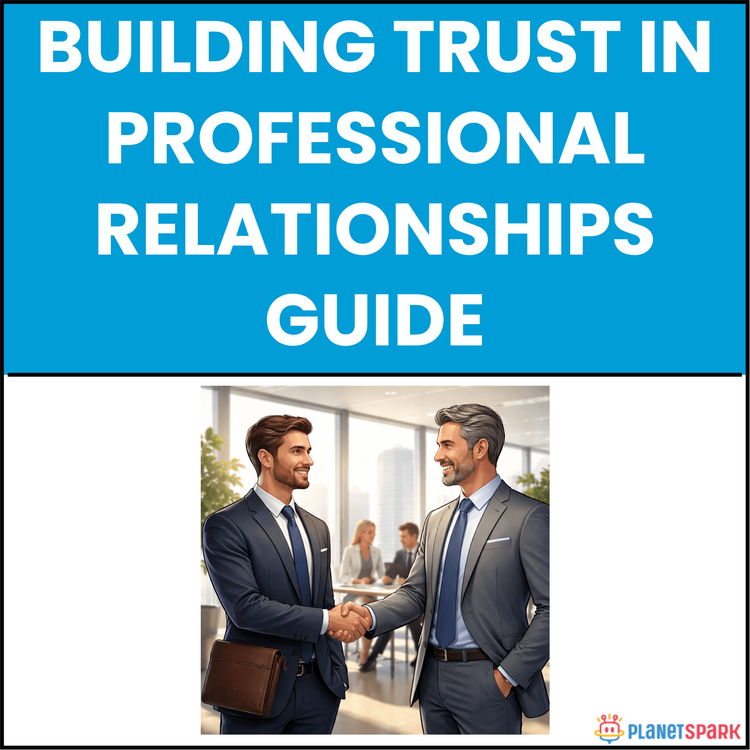
Building Trust In Professional Relationships Guide
How to Build Trust in Professional Relationships: A Practical Guide for Career Growth and Influence
You can have the best skills, the strongest résumé, and the most impressive ideas—but if people don’t trust you, none of it fully translates into opportunity.
Trust is the invisible factor behind promotions, client wins, leadership opportunities, and career growth. Yet most professionals are never taught how to build it deliberately. They assume it will develop over time, or worse, leave it to chance.
This Building Trust in Professional Relationships Guide is designed to change that. It gives you a clear, structured system to build credibility, strengthen relationships, and increase your influence—whether you're stepping into a new role, managing a team, or working with clients.
If you’ve ever felt overlooked despite doing good work, struggled to gain buy-in, or found it hard to build strong professional relationships, this resource is built for you.
Who Is This Resource For?
This guide is especially useful for:
- Early to mid-career professionals looking to build credibility quickly
- Career switchers entering new industries or roles
- Managers who want to earn trust from their teams and stakeholders
- Consultants and freelancers who need to build client confidence
- Professionals working in cross-functional teams without direct authority
If your growth depends on how others perceive, trust, and rely on you—this resource is highly relevant.
What Does This Resource Contain?
This guidebook breaks down trust into practical, actionable components and shows you how to build it step by step.
Here’s what you’ll find inside:
- The Trust Equation framework explaining the four core components: credibility, reliability, intimacy, and self-orientation
- A credibility-building system focused on communication clarity, preparation, and intellectual honesty
- A reliability framework with daily and weekly habits to build a strong professional reputation
- The SPACE framework to create psychological safety and deepen professional relationships
- A self-orientation model to help you shift from self-focused to value-focused interactions
- The trust lifecycle model to understand how relationships evolve over time
- A practical guide to repairing trust when things go wrong
- Context-specific strategies for trust-building in roles like managers, consultants, and career changers
- A self-evaluation tool to assess your current trust profile
- A structured 30-60-90 day action plan to build trust consistently
Each section combines frameworks, checklists, and real-world applications to make trust-building practical—not abstract.
Summary of the Resource
This guide gives you a complete system to build and sustain trust in professional relationships.
Instead of generic advice like “communicate better” or “be reliable,” it shows you exactly:
- What trust is made of
- How it is built through daily actions
- Where most professionals go wrong
- How to fix trust gaps quickly and effectively
It helps you move from being technically competent to being consistently trusted—a shift that directly impacts your career trajectory.
How Will This Resource Be Useful?
The impact of this guide goes beyond understanding—it drives real professional outcomes.
By applying this resource, you will:
- Build stronger credibility in meetings and decision-making situations
- Become known as someone reliable and dependable
- Improve how people respond to your ideas and inputs
- Create deeper, more open professional relationships
- Increase your influence without relying on authority
- Navigate difficult conversations and repair trust effectively
- Position yourself for more opportunities, visibility, and leadership roles
In practical terms, you become someone people trust to deliver, collaborate with, and rely on—consistently.
How Should You Use This Resource?
To get the most value, approach this guide as a working system, not just a read.
1. Start with a quick overview
Skim the sections to understand the key frameworks and flow.
2. Complete the self-evaluation early
Identify your weakest trust dimension—this becomes your focus area.
3. Focus on one dimension at a time
Start with credibility or reliability, then move to intimacy and self-orientation.
4. Apply frameworks in real situations
Use the SPACE framework in meetings, the reliability checklist in daily work, and the communication examples in conversations.
5. Follow the 30-60-90 day plan
Use it to build consistent habits instead of trying to change everything at once.
6. Revisit monthly
Trust builds through consistency. Reassess your progress and refine your approach regularly.
This resource is most powerful when applied consistently over time.
Action Steps
If you want to start immediately, follow these steps:
1. Complete the trust self-evaluation honestly
2. Identify your lowest-scoring dimension (credibility, reliability, intimacy, or self-orientation)
3. Choose one professional relationship that matters most right now
4. Take one focused action this week (e.g., prepare better, follow up, ask deeper questions)
5. Apply the 24-hour rule for communication responsiveness
6. Use the SPACE framework in your next 2–3 important conversations
7. Review your progress after 30 days and adjust
These small, consistent actions will start changing how others perceive and trust you.
Trust is not built through big moments—it’s built through small, repeated behaviours that signal reliability, clarity, and genuine intent.
When you become intentional about how you show up in every interaction, your professional relationships—and your opportunities—begin to change.
Book your free session today!