
Building Trust Within Teams Guide

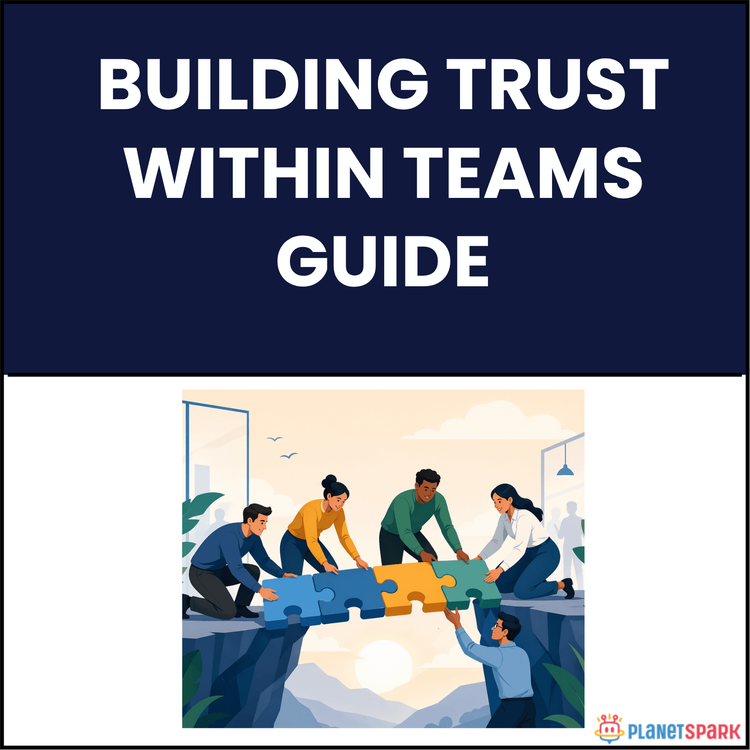
Building Trust Within Teams Guide
Building Trust Within Teams: A Practical Guide for Managers and Professionals.
Trust is not built through team-building activities alone. It shows up in everyday interactions—how feedback is given, how decisions are made, and whether people feel safe to speak up. Yet, for many professionals and managers, trust remains an invisible gap: teams collaborate, but don’t fully align; communicate, but don’t fully open up.
This is exactly where the Building Trust Within Teams Guide becomes essential. It translates a vague concept like trust into clear, actionable steps that professionals can apply immediately in real work environments.
Who Is This Resource For?
This guide is especially useful for:
- First-time managers trying to build credibility with their teams
- Mid-level leaders managing cross-functional or hybrid teams
- Professionals who feel their team lacks openness or psychological safety
- Team leads dealing with low engagement, miscommunication, or conflict
- Consultants or project managers working with new or rotating teams
If you’ve ever felt that your team is “working together but not really connected,” this resource is designed for you.
What Does This Resource Contain?
The guide is structured to move from understanding trust to actively building it in daily work. Inside, you’ll find:
- A clear breakdown of what trust actually means in a professional setting
- Core pillars of team trust such as reliability, transparency, and accountability
- Practical behaviors that build or break trust in teams
- Reflection prompts to assess current trust levels within your team
- Real-world scenarios showing common trust breakdowns and how to address them
- Actionable frameworks for improving communication, feedback, and alignment
- Simple routines and habits that reinforce trust over time
Each section is designed to be practical, not theoretical—something you can apply immediately in your next meeting or interaction.
Summary of the Resource
This guide helps you move from “trust is important” to “this is exactly how I build it.”
Instead of abstract advice, it gives you a structured way to:
- Diagnose trust gaps in your team
- Understand the root causes behind them
- Apply small, consistent actions that strengthen team relationships
For time-poor professionals, it acts as both a quick reference and a repeatable playbook.
How Will This Resource Be Useful?
When applied consistently, this guide helps you:
- Build stronger team alignment and reduce misunderstandings
- Create a safe environment where team members speak up openly
- Improve collaboration across roles and functions
- Handle conflicts more constructively instead of avoiding them
- Increase accountability without micromanaging
In simple terms, it helps your team move from surface-level coordination to genuine collaboration.
Growth comes from within—and in teams, that growth starts with trust.
How Should You Use This Resource?
To get the most value, don’t just read the guide once and move on. Use it actively:
Step 1: Start with Self-Assessment
Read the trust pillars and reflect honestly on your current team dynamics.
Step 2: Identify One or Two Gaps
Focus on specific areas—communication, reliability, or openness—rather than trying to fix everything at once.
Step 3: Apply One Behavior at a Time
Choose a small action (e.g., clearer expectations, better follow-ups, more transparent updates) and implement it consistently.
Step 4: Use Scenarios as Practice
Relate the examples in the guide to real situations in your team and adapt the suggested responses.
Step 5: Revisit Regularly
Trust is not a one-time effort. Revisit the guide every few weeks to reinforce and refine your approach.
Action Steps
If you’re ready to start building trust in your team, here’s what you can do immediately:
1. Identify one recent situation where trust felt low
2. Pinpoint what caused it—lack of clarity, follow-through, or openness
3. Choose one small behavior to improve in your next interaction
4. Communicate expectations clearly in your next team discussion
5. Follow through consistently—this is where trust actually builds
Small, consistent actions matter more than big one-time efforts.
Trust doesn’t require perfection. It requires consistency, honesty, and intent. When you begin to show up differently—even in small ways—your team notices, responds, and gradually opens up.
The “Building Trust Within Teams Guide” gives you a clear starting point and a practical system to keep improving. Use it not as a one-time read, but as a working tool you return to as your team evolves.
Book your free session today!