
Building Trust within Your Team

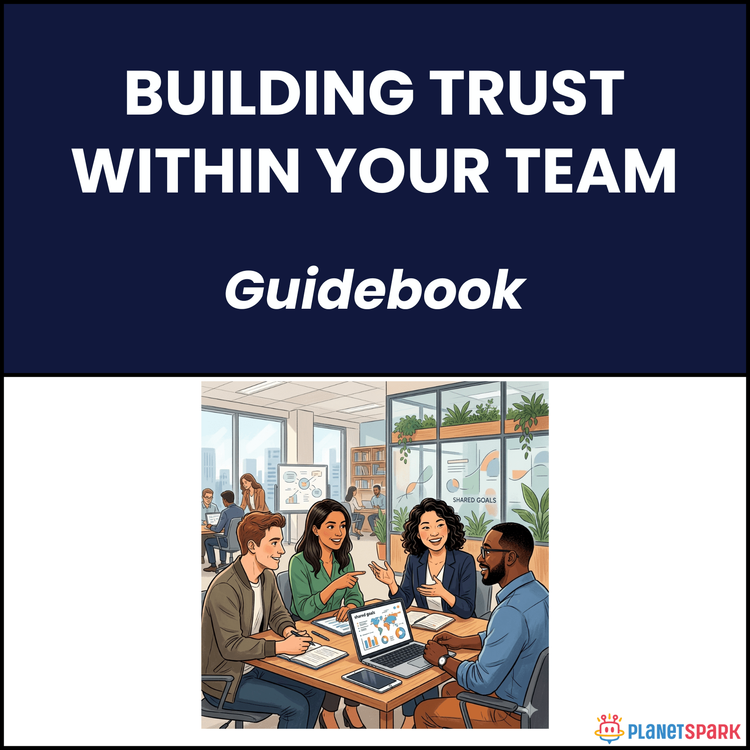
Building Trust within Your Team
Building Trust Within Your Team: A Practical Guide to Strengthening Team Performance and Collaboration
Trust is not built in offsites, team lunches, or motivational speeches. It is built—or broken—every single day through small actions, decisions, and interactions at work.
Yet, most professionals only realise the importance of trust when it’s already missing. Miscommunication increases, accountability drops, feedback becomes uncomfortable, and performance starts to decline. Teams become slower, more cautious, and less willing to take ownership.
That’s exactly why the resource “Building Trust Within Your Team” exists. It provides a clear, structured, and practical approach to help working professionals intentionally build, strengthen, and sustain trust within their teams—without relying on vague advice or theory.
Who Is This Resource For?
This resource is especially valuable if you are:
- A working professional with 0–15 years of experience working in team environments
- A manager or team lead responsible for team performance and culture
- A consultant or project manager coordinating across stakeholders
- A new leader trying to establish credibility and trust quickly
- A mid-career professional aiming to improve collaboration and influence
- Someone working in a team where communication gaps or low trust are affecting outcomes
If you want to build stronger relationships, improve team performance, and create a more open and accountable work environment, this guide is built for you.
What Does This Resource Contain?
This is not a generic guide on “being nice” or “communicating better.” It is a structured system that breaks trust into actionable components.
Inside the resource, you’ll find:
- A clear explanation of what trust actually means in a professional setting
- The core pillars of trust such as reliability, transparency, competence, and intent
- A trust diagnostic framework to assess current team dynamics
- Practical exercises to identify trust gaps within your team
- Real-world scenarios showing how trust breaks down—and how to fix it
- Communication techniques that build clarity and reduce misunderstandings
- Structured feedback approaches that encourage openness instead of defensiveness
- Methods to improve accountability without creating pressure or fear
- Tools to handle conflict constructively while preserving relationships
- Daily and weekly habits that reinforce trust over time
- A team reflection worksheet to align expectations and behaviours
- A personal self-assessment to evaluate your own trust-building style
- Actionable checklists to consistently apply trust-building behaviours
- A step-by-step approach to rebuild trust when it has been damaged
Everything is designed to be practical, repeatable, and immediately usable.
Summary of the Resource
“Building Trust Within Your Team” is a practical, behaviour-focused guide that helps professionals create stronger, more effective teams by focusing on the fundamentals of trust.
It breaks trust down into clear, actionable elements and provides tools, frameworks, and exercises to help you assess, build, and sustain it over time.
Whether you are leading a team or contributing as a member, this resource gives you a structured way to improve collaboration, communication, and performance.
How Will This Resource Be Useful?
This resource helps you move from unclear team dynamics to strong, reliable collaboration.
You’ll gain:
- Clear understanding of what builds and breaks trust at work
- Improved communication and fewer misunderstandings
- Stronger accountability within teams
- Greater openness to feedback and ideas
- Better conflict resolution without damaging relationships
- Increased team alignment and shared ownership
- Higher overall team performance and efficiency
Most importantly, it helps you create an environment where people feel safe to contribute, take ownership, and perform at their best.
How Should You Use This Resource?
To get the most value, follow a structured approach:
Start by reading the guide fully to understand the key pillars of trust and how they apply to your role.
Next, use the trust diagnostic and self-assessment tools to evaluate your current situation. This step builds awareness and highlights gaps.
Then, work through the exercises and frameworks to address specific issues—whether it’s communication, accountability, or feedback.
Apply the suggested communication and feedback techniques in your daily interactions. Focus on consistency rather than perfection.
Use the checklists and reflection tools weekly to reinforce trust-building behaviours across your team.
If trust has been damaged, follow the step-by-step rebuilding approach provided in the guide.
You can revisit this resource whenever you:
- Join a new team or organisation
- Step into a leadership role
- Face communication breakdowns or conflict
- Want to improve collaboration and performance
Action Steps
After accessing this resource, take these steps immediately:
1. Block 45–60 minutes for a trust assessment
2. Complete the team diagnostic and personal self-assessment
3. Identify 2–3 key trust gaps affecting your team
4. Apply one communication or feedback technique in your next interaction
5. Have one structured conversation to clarify expectations with a team member
6. Introduce one weekly habit that reinforces trust (e.g., check-ins, feedback loops)
7. Review progress at the end of the week
Small, consistent actions build trust faster than occasional large efforts.
Trust is not a soft skill—it is a performance multiplier. Teams with high trust move faster, communicate better, and handle challenges more effectively.
When you intentionally invest in building trust, you are not just improving relationships—you are improving results.
Use this resource to take control of how trust is built within your team, and turn it into a consistent, reliable advantage in your professional journey.
Book your free session today!