
Career Transition After Health Recovery

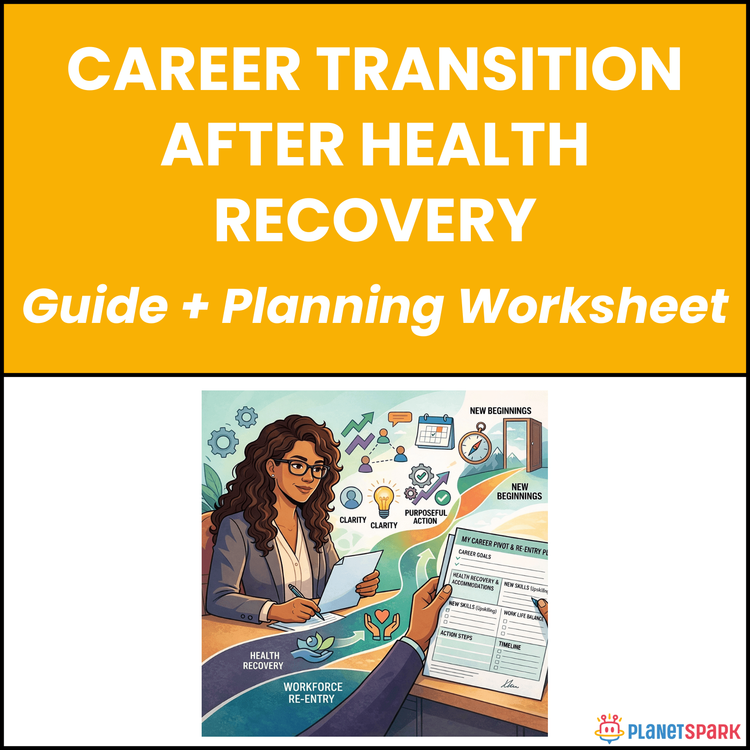
Career Transition After Health Recovery
Career Transition After Health Recovery: Your Guide to Returning to the Workforce with Confidence
Returning to work after a health recovery—whether from a serious illness, surgery, burnout, or a long-term condition—is one of the most challenging career transitions that many professionals face. Unlike the traditional job search, this transition is layered with unique considerations, such as rebuilding your professional identity, managing health limitations, and deciding whether to return to your previous role or pivot to something new. If you're ready to move forward with clarity, this practical guide and worksheet will provide the structured support you need to navigate this journey.
Who Is This Resource For?
This guide is designed for working professionals with 0-15 years of experience who are either job seekers, career changers, consultants, or managers. Specifically, it’s for those who are in the midst of health recovery and are considering reentering the workforce or making a career shift. You’ll find it valuable if:
- You are recovering from a health condition and looking to return to work.
- You are unsure whether to re-enter your previous field or pursue a new direction.
- You want to make a smooth transition without overextending your health or energy.
This resource is tailored for professionals who are time-poor and outcome-oriented, needing actionable steps to confidently re-engage with their careers.
What Does This Resource Contain?
This guide offers a combination of practical advice, reflection prompts, and action-oriented worksheets, including:
- Reality Snapshot: A worksheet that helps you assess your current physical, cognitive, emotional, and financial readiness.
- Skills Audit & Identity Mapping: Exercises to identify transferable skills, your non-negotiables for a new role, and a strategy for talking about your health gap confidently.
- Path Decision Matrix: A framework to help you decide whether to return to your previous field, pivot to a new one, or take a hybrid approach.
- Job Search Tracker: A simple template to track applications and networking efforts, ensuring you stay organized throughout the job search process.
- Interview Readiness: A checklist to help you prepare for interviews, manage interview anxiety, and handle questions about your health gap.
The guide emphasizes a structured approach, moving step-by-step from honest self-assessment to the final job offer, ensuring you don’t rush and remain aligned with your needs and energy levels.
Summary of the Resource
This resource serves as both a guidebook and a worksheet that helps you prepare for a successful career transition after health recovery. It includes the following key components:
- Honest Self-Assessment: A clear understanding of your current capabilities, including energy levels, cognitive capacity, and financial runway.
- Skills Audit: Tools to identify your strengths and transferable skills, helping you position yourself confidently to employers.
- Path Decision Framework: A thoughtful process to determine whether to return to your old field, pivot, or take a hybrid approach based on your energy, financial situation, and career goals.
- Targeted Job Search: Actionable steps to approach the job market strategically, from updating your résumé to networking intentionally.
- Interview and Offer Negotiation Tips: Guidance on presenting your gap confidently and negotiating offers to ensure they align with your new work-life balance needs.
How Will This Resource Be Useful?
This guide provides not only clarity but also the tools needed to build a strong, actionable plan that respects your recovery journey. Here’s how this resource will be useful:
- Confident Transitioning: By addressing your current situation with honesty, you’ll gain the confidence needed to re-enter the job market on your own terms.
- Clarity and Focus: The worksheets and frameworks keep you focused on what truly matters, ensuring you make well-informed decisions about your next steps.
- Health Considerations: It’s designed to help you navigate your career search while maintaining energy and avoiding burnout, ensuring your recovery remains a priority.
- Practical Tools: With job search trackers, résumé updates, and interview readiness checklists, this guide keeps you organized and focused on quality over volume.
How Should You Use This Resource?
This resource is meant to be used at your own pace. Here’s how to approach it:
1. Start with the Reality Snapshot: Document your current physical, emotional, and financial state, using the worksheet to assess your readiness. This is a foundation you’ll revisit monthly as you progress.
2. Complete the Skills Audit: Identify your transferable skills and what you’ve learned during your recovery. This will help inform your résumé and LinkedIn profile.
3. Decide Your Path: Use the Path Decision Matrix to evaluate whether returning to your field, pivoting, or taking a hybrid approach aligns best with your current situation.
4. Build Your Foundation: Update your résumé and LinkedIn, reconnect with your network, and prepare for a focused job search.
5. Execute with Intention: Begin your job search by targeting specific companies and roles that align with your new values and goals, keeping a sustainable pace.
Action Steps
To get started, take the following immediate steps:
1. Complete Worksheet 1 — Your Current Reality Snapshot: This will help you assess where you stand today and plan for a sustainable career transition.
2. Complete Worksheet 2 — Skills Audit & Identity Mapping: Reflect on your strengths and the skills you’ve gained through recovery.
3. Update Your LinkedIn and Résumé: Incorporate your gap narrative confidently and ensure both documents align with your current goals.
4. Reach Out to Your Network: Start reconnecting with key contacts for advice, informational interviews, and potential opportunities.
5. Create a Job Search Plan: Set aside time daily to apply for targeted jobs and track your progress using the Job Search Tracker.
Closing
Remember, your health recovery doesn’t define your professional potential—it enhances your resilience, adaptability, and depth of experience. Taking the time to plan your career transition with this guide will not only support your professional growth but also protect your well-being. The first step toward your next chapter begins with a thoughtful, deliberate plan.