
Communicating Under Pressure Guide

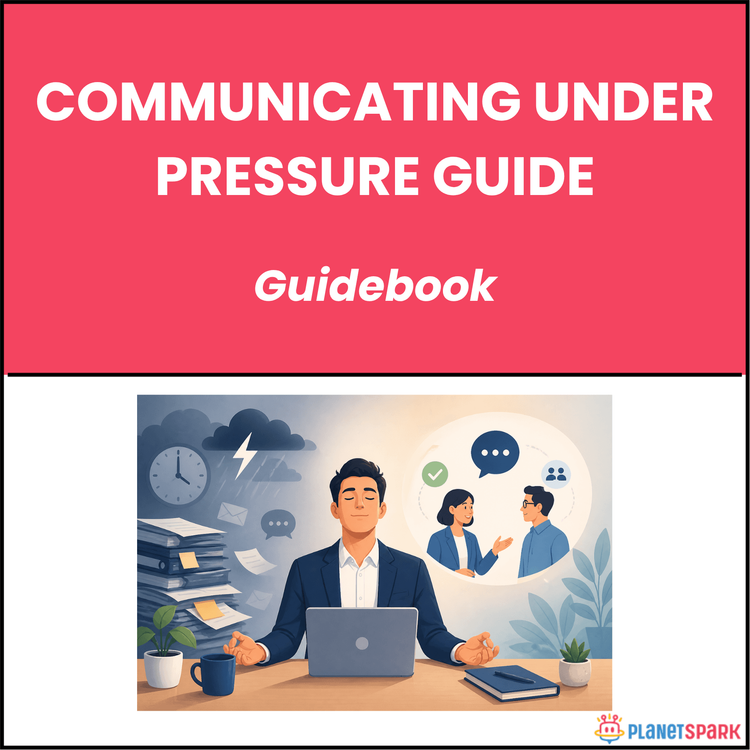
Communicating Under Pressure Guide
How to Improve Communication Skills and Stay Calm Under Pressure in Professional Situations
Professional life is full of high-pressure moments that demand clarity, composure, and confident communication. Whether you're navigating a difficult client call, a last-minute presentation to senior leadership, or a high-stakes team meeting, how you communicate under pressure can significantly impact your success. If you’ve ever found yourself going blank during a critical conversation or rambling in the face of tough questions, you’re not alone.
"Communicating Under Pressure: A Practical Guide for Working Professionals" is designed to help you stay clear, calm, and credible, even in the most challenging situations. This resource provides you with a proven framework, actionable tools, and a structured approach to improving your communication in high-pressure environments.
Who Is This Resource For?
This guide is perfect for working professionals who find themselves in high-stakes situations and need to communicate effectively, including:
Career Switchers: Communicate your transferable skills clearly during interviews and meetings.
Managers and Consultants: Lead with clarity, especially during tense client or team discussions.
Early to Mid-Career Professionals (0–15 years of experience): Build your confidence in communicating with senior leaders, peers, or external stakeholders.
Anyone Facing Pressure: If you’re often caught off guard in high-pressure interactions, this guide will help you stay composed.
If you’re someone who values clarity, composure, and practical communication techniques under pressure, this resource will guide you step by step to mastering this critical skill.
What Does This Resource Contain?
This guide is more than just theoretical advice. It’s a comprehensive toolkit that equips you with concrete strategies for communicating under pressure. Here's what you can expect:
Understanding Pressure and Its Impact on Communication: Learn how stress affects your brain and communication style and how to overcome it.
The CALM Framework: A four-step system (Centre, Acknowledge, Lead, Move Forward) that helps you manage pressure in real-time conversations.
Power Phrases: Pre-loaded language that works in high-pressure situations like handling conflict, redirecting questions, and closing conversations strongly.
Practical Worksheets: Tools to help you prepare before meetings, debrief after challenging conversations, and identify areas of improvement.
Case Studies and Real-World Examples: Learn from professionals who’ve applied these frameworks in real situations, like handling an unexpected question during a presentation or resolving conflicts with a colleague.
Summary of the Resource
"Communicating Under Pressure" is a hands-on, results-focused guide designed for busy professionals who want to improve their communication in critical moments. You’ll walk away with a solid framework, strategies for emotional regulation, and practical techniques that help you handle pressure with confidence. Whether you need to manage a tough client or lead a high-stakes team discussion, this guide ensures you communicate effectively under stress.
How Will This Resource Be Useful?
This guide is essential for professionals looking to:
Stay Composed Under Pressure: Learn to recognize common communication pitfalls like over-explaining, becoming defensive, or freezing during tough situations.
Improve Decision-Making: Clear communication leads to better outcomes, whether you’re delivering bad news or defending your recommendations.
Boost Credibility and Confidence: Effectively handle criticism, avoid mistakes like over-apologizing, and remain assertive when your expertise is questioned.
Enhance Emotional Regulation: Rather than reacting impulsively, you’ll learn how to choose your response thoughtfully and maintain professionalism.
By applying this resource, you’ll increase your chances of making a positive impression, even when the pressure is on.
How Should You Use This Resource?
To get the best results from this guide, follow these steps:
1. Start with Preparation: Before any high-stakes conversation, review the “Pre-Pressure Preparation Worksheet” to clarify your core message and anticipate challenges.
2. Use the CALM Framework: In the moment, apply the Centre → Acknowledge → Lead → Move Forward steps to manage your thoughts and responses during tough situations.
3. Practice with Scenarios: Use the “Scenario Practice Worksheet” to rehearse how you would respond to common pressure situations such as a surprise question or a heated conflict.
4. Reflect and Recover: After any difficult interaction, take time to debrief using the "Post-Pressure Debrief Worksheet" to learn from the experience and recalibrate your approach.
By practicing these tools consistently, you’ll build resilience and improve your communication under pressure over time.
Action Steps
Ready to start communicating under pressure with clarity and confidence? Take the following actions immediately:
1. Set aside time to prepare: Block 30–60 minutes before your next high-pressure meeting to complete the Pre-Pressure Preparation Worksheet.
2. Rehearse key phrases: Practice the power phrases for buying time, redirecting questions, and de-escalating conflicts.
3. Apply the CALM Framework: Use the Centre → Acknowledge → Lead → Move Forward framework in your next challenging conversation.
4. Debrief effectively: After a high-pressure situation, take at least 30 minutes to reflect and complete the Post-Pressure Debrief Worksheet.
By taking these actions, you will improve your ability to stay composed and communicate effectively under pressure.
You can make your next conversation count. It's not about avoiding pressure—it's about mastering how you respond to it.