
Communication Planning Worksheet

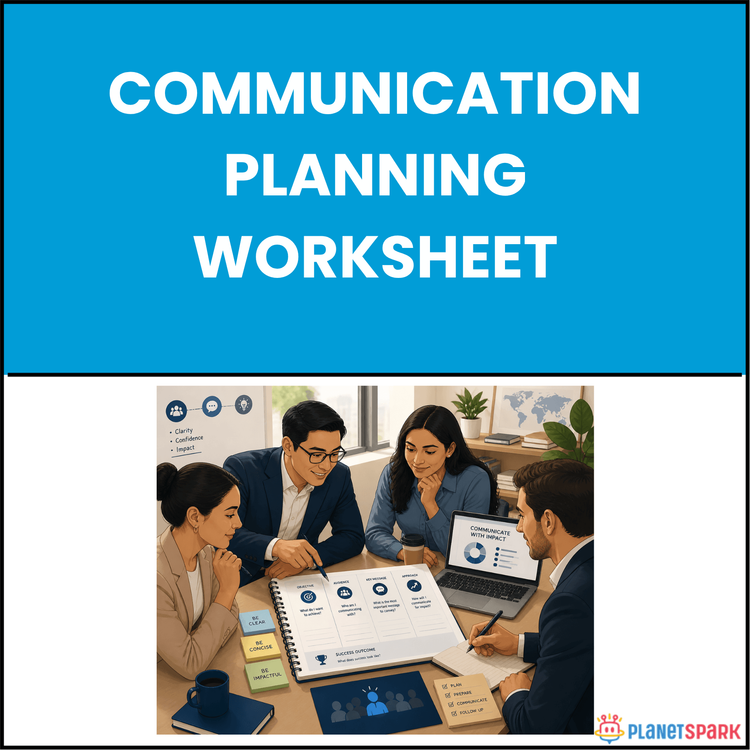
Communication Planning Worksheet
How to Plan High-Stakes Communication with Clarity and Confidence: A Proven Framework for Professionals
Have you ever walked out of a meeting or sent an email, only to feel like you didn’t get your message across as clearly as you intended? You're not alone. In fact, many professionals struggle with communicating effectively in high-stakes scenarios. Whether it's a team meeting, a presentation to senior leadership, or a critical email, the stakes are high. The difference between a successful and a failed communication often lies not in the content itself, but in how it's planned, delivered, and followed up. This is where the Communication Planning Worksheet comes in—a practical tool designed to help you approach any professional communication with clarity, confidence, and strategic intent.
Who Is This Resource For?
This resource is invaluable for:
- Working professionals across all levels (0-15 years of experience)
- Managers and team leaders preparing for important presentations or meetings
- Consultants and specialists looking to improve how they communicate with clients and stakeholders
- Professionals preparing for high-stakes conversations or written communications (e.g., emails, proposals, reports)
- Anyone who has felt the frustration of unclear communication and wants to make their message land every time
If you’re looking to elevate your communication skills and ensure you always communicate with precision and impact, this worksheet is for you.
What Does This Resource Contain?
This worksheet goes beyond generic communication tips. It provides a structured framework for planning, executing, and evaluating your communication. Inside the resource, you’ll find:
- Five-step communication planning process designed to sharpen your approach to any high-stakes situation.
- Audience profile template to understand the context, emotional state, and priorities of your audience, ensuring your message resonates with each individual.
- The PEER Message Framework to structure your core message effectively (Point, Evidence, Explanation, Request).
- Channel and timing selection guidance to ensure you communicate through the most effective medium at the optimal time.
- Pushback and follow-through planning to help you anticipate objections and ensure your message has lasting impact.
- Practical worksheets for every step, including templates for drafting your communication purpose, core message, and follow-up plans.
- Real-world application examples to guide you through a complete communication scenario, from planning to execution.
Summary of the Resource:
The Communication Planning Worksheet is a practical guide for professionals who want to communicate with greater clarity, confidence, and strategic intent. This resource will help you systematically plan every communication scenario, ensuring you hit your mark every time. Whether you’re crafting an email, preparing for a presentation, or engaging in a difficult conversation, this worksheet provides a repeatable, actionable framework to make your communication impactful and purposeful.
How Will This Resource Be Useful?
This resource is designed to deliver tangible benefits in your professional life:
Clarity and confidence: Gain a clear understanding of your communication purpose, audience, and message, which leads to more effective communication.
Improved communication outcomes: By applying this framework, you’ll increase the chances of your audience understanding, agreeing, and taking action based on your message.
Better professional reputation: Communicating strategically makes you appear more competent, trustworthy, and leadership-ready, giving you a career advantage.
Faster decision-making and less miscommunication: With clear messages and strategic follow-up, you will foster better collaboration and decision-making in meetings and written communications.
How Should You Use This Resource?
To get the most out of this resource, follow these steps:
1. Define Your Communication Purpose: Begin by identifying the outcome you want from your communication—what do you want your audience to think, feel, or do differently?
2. Know Your Audience: Complete the audience profile template to understand their emotional state, priorities, and decision-making role.
3. Craft Your Core Message: Use the PEER framework (Point, Evidence, Explanation, Request) to structure your message in a way that is clear and convincing.
4. Choose the Right Channel and Timing: Select the appropriate channel (email, video, live meeting, etc.) and schedule your communication for maximum impact.
5. Prepare for Pushback and Plan Follow-Through: Anticipate objections and prepare your responses, and ensure you have a clear follow-up plan to close the loop.
Take time to complete this worksheet before each major communication, whether it’s an email, a presentation, or a meeting.
Action Steps:
1. Block 30 minutes in your calendar to complete the worksheet for your next communication scenario.
2. Start by defining your communication purpose clearly in one sentence.
3. Fill out the audience profile, considering knowledge level, concerns, and decision-making roles.
4. Use the PEER framework to draft your core message and key supporting points.
5. Choose the appropriate communication channel and timing, keeping the urgency and sensitivity of the message in mind.
6. Plan for potential objections and prepare a follow-up strategy to track the success of your communication.
Effective communication doesn’t happen by accident—it requires careful planning, preparation, and follow-through. By using the Communication Planning Worksheet, you’ll gain the clarity and structure needed to communicate with impact in every professional interaction. This framework will not only improve your communication skills but also enhance your professional credibility and leadership presence. Start using this worksheet today to plan your next high-stakes communication and see how it transforms the way you engage with others.