
Creating a Personal Career Recovery Strategy for Long-Term Stability

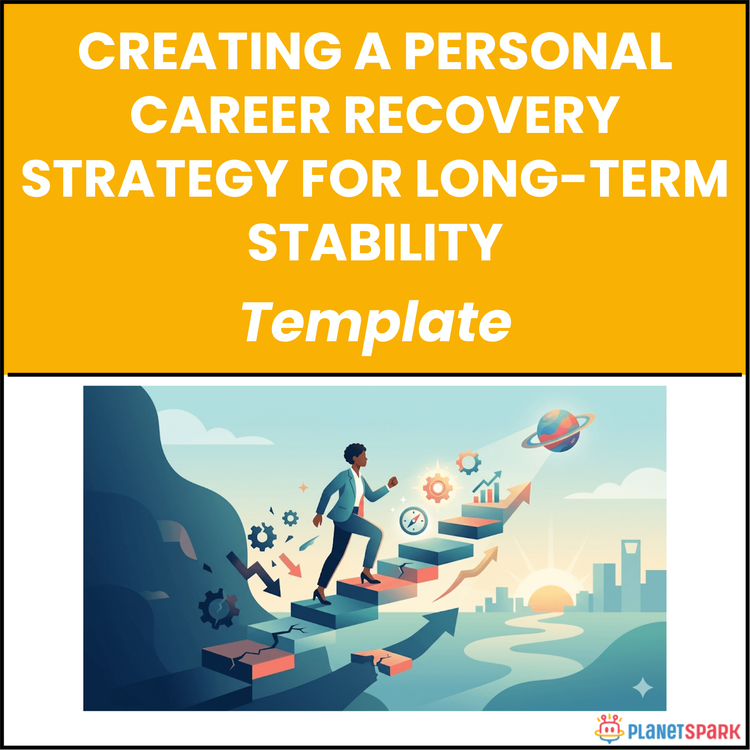
Creating a Personal Career Recovery Strategy for Long-Term Stability
Designing Sustainable Recovery Systems to Rebuild Career Confidence, Direction, and Professional Stability
Career setbacks rarely arrive with a warning. One month you feel stable, and the next you are navigating layoffs, burnout, industry disruption, restructuring, or uncertainty about what comes next. For many working professionals, the hardest part is not just the disruption itself — it is not having a clear roadmap for recovery.
That is exactly why the resource “Creating a Personal Career Recovery Strategy for Long-Term Stability” was designed.
Instead of relying on reactive job applications, scattered networking, or panic-driven career decisions, this guide provides a structured framework to help professionals rebuild with clarity, confidence, and long-term thinking. It is practical, actionable, and specifically designed for professionals who want stability without sacrificing growth or alignment.
Whether you are actively job searching, recovering from a career setback, considering a pivot, or simply preparing proactively for future uncertainty, this resource helps you create a career recovery system that is sustainable, strategic, and personalised to your goals.
Who Is This Resource For?
This resource is especially useful for:
- Working professionals with 0–15 years of experience
- Career changers exploring new industries or functions
- Job seekers recovering from layoffs or career disruptions
- Consultants and freelancers building long-term professional stability
- Managers and mid-career professionals reassessing their direction
- Professionals feeling stuck, burnt out, or disconnected from their current work
- Anyone who wants a proactive career resilience strategy instead of reactive decision-making
If you are looking for clarity, structure, and practical career direction during uncertain times, this guide is built specifically for you.
What Does This Resource Contain?
This resource is not motivational theory or generic career advice. It is a complete, phased career recovery framework that helps professionals assess, rebuild, position, and stabilise their careers strategically.
Inside the resource, you will find:
- A detailed explanation of why career recovery has become an essential professional skill
- A complete 5-phase Career Recovery Strategy roadmap
- Career Audit worksheets to assess skills, energy, market fit, and financial runway
- Reflection exercises to identify hidden strengths and gaps
- Frameworks for clarifying professional values, strengths, and non-negotiables
- Career Anchor exercises to prevent poor career decisions during stressful periods
- Positioning Statement formulas for LinkedIn, CVs, networking, and interviews
- Strategic guidance on defining your value proposition and differentiator
- Visibility and networking systems to build professional momentum
- A weekly activation checklist for outreach, networking, and personal branding
- Opportunity tracking templates for managing applications and conversations
- Long-term career resilience systems and monthly review practices
- A real-world case study showing how one professional used the framework to recover strategically after redundancy
- Clear action steps and recovery practices designed for immediate implementation
Everything inside the guide is structured to help professionals move from uncertainty to direction with practical execution.
Summary of the Resource
“Creating a Personal Career Recovery Strategy for Long-Term Stability” is a practical career recovery playbook that helps professionals rebuild strategically after disruption, uncertainty, burnout, or transition.
Instead of focusing only on finding the next job quickly, the resource helps readers create a long-term recovery system that aligns with their strengths, values, goals, and professional identity.
Through a structured 5-phase roadmap, readers learn how to:
- Assess their current situation honestly
- Clarify what they actually want moving forward
- Position themselves strategically in the market
- Build visibility and networking momentum
- Create long-term career resilience systems
The result is not just career recovery — it is stronger career direction and stability.
How Will This Resource Be Useful?
This resource helps professionals replace confusion with clarity and reactive behaviour with strategic action.
You will gain:
- A clear understanding of your current career position
- Better awareness of your strengths, energy drivers, and market value
- Confidence in making career decisions during uncertain periods
- Stronger positioning for networking, interviews, and opportunities
- A practical system for building career visibility consistently
- Structured methods for creating professional stability over time
- Better long-term resilience against future career disruptions
Most importantly, this guide helps you stop operating in survival mode and start approaching your career with intention and structure.
How Should You Use This Resource?
To get the maximum value from this guide, approach it phase by phase rather than rushing through it.
Start by reading the full framework once to understand how the five recovery phases connect together. This gives you clarity before you begin implementation.
Next, complete the worksheets honestly and thoroughly. Begin with the Career Audit exercises to evaluate your skills, energy levels, market relevance, and financial runway. Avoid rushing this stage — self-awareness is the foundation of effective recovery.
Once you complete the audit, move into the Career Anchors section to define your values, strengths, and non-negotiables. These exercises help prevent desperation-driven decisions during uncertain periods.
Then work through the Positioning phase to refine how you present your professional value to employers, clients, and networks. Apply the positioning frameworks directly to your LinkedIn profile, resume, and networking conversations.
After that, begin implementing the Activation systems:
- Build your networking pipeline
- Send targeted outreach messages
- Improve visibility on LinkedIn
- Track opportunities consistently
Finally, revisit the long-term resilience systems regularly. This guide works best when used as a living career strategy document rather than a one-time read.
You can return to this resource whenever you:
- Experience career uncertainty
- Prepare for a transition or pivot
- Rebuild after burnout or redundancy
- Update your professional positioning
- Plan your next growth phase
- Want to strengthen long-term career resilience
Action Steps
After accessing this resource, take these steps immediately:
1. Block 2 focused hours in your calendar for career strategy work
2. Complete the Career Audit worksheet honestly and thoroughly
3. Define your top professional values and non-negotiables
4. Draft your first Career Positioning Statement
5. Identify 20–30 target organisations or opportunities
6. Set up a simple opportunity tracking system
7. Commit to one weekly visibility or networking activity
8. Schedule monthly career review sessions with yourself
Small but consistent actions create long-term career stability far more effectively than reactive bursts of effort.
Career disruption does not mean career failure. In many cases, it becomes the turning point that forces professionals to build careers that are more aligned, resilient, and intentional than before.
The professionals who recover strongest are not always the most experienced or the most connected — they are the ones who approach recovery with structure, clarity, and consistency.
Use this resource to build a career strategy that helps you move forward with confidence instead of uncertainty. Your next chapter does not need to be reactive. It can be deliberate, stable, and deeply aligned with the professional future you actually want to create.
Book your free session today!