
Creating a Personal Dashboard for Life Management

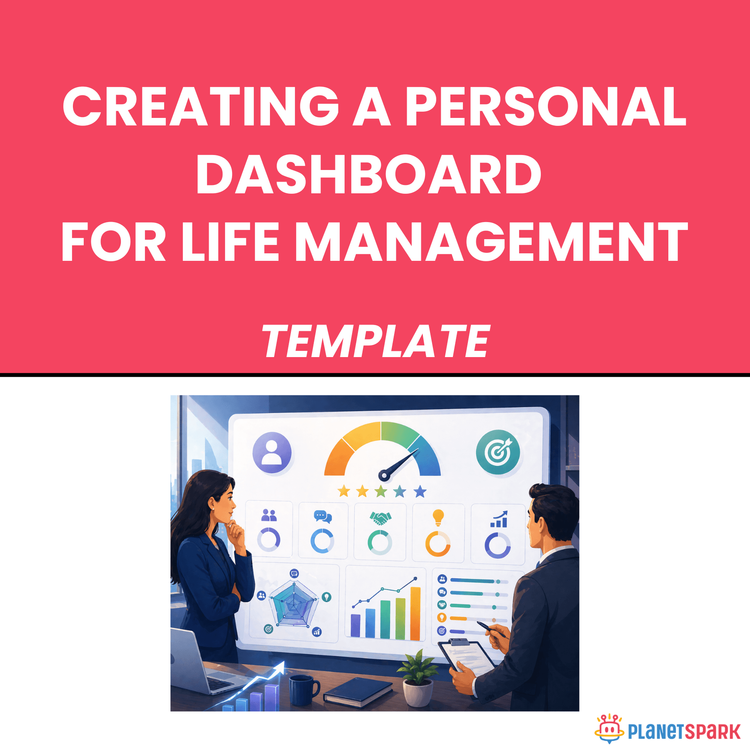
Creating a Personal Dashboard for Life Management
Personal Dashboard for Life Management: A Playbook for Working Professionals
In today’s fast-paced world, many professionals find themselves managing multiple aspects of their lives—career, health, finances, relationships—without a clear, unified system to track progress and stay aligned with their goals. This leads to feeling overwhelmed and constantly reactive. What if you could design a simple yet effective system that consolidates all your priorities, goals, and progress into one manageable space? This is where a personal dashboard comes in. Just like a business intelligence dashboard, it brings together key aspects of your life into one clear view, empowering you to make intentional decisions, track progress, and stay focused on what matters most. In this blog, you’ll learn how to create your very own personal dashboard for life management.
Who Is This Resource For?
This resource is ideal for professionals at any stage of their career who feel stretched thin and want a smarter system to manage their lives:
- Career switchers who need to track progress across multiple domains as they transition to new roles.
- Consultants who juggle various client projects and personal goals.
- Managers and team leaders who balance professional responsibilities with personal development.
- Early-to-mid career professionals looking to take control of their personal and professional life.
If you’re ready to gain clarity, control, and momentum in your life, this personal dashboard will provide the structure you need.
What Does This Resource Contain?
Creating a personal dashboard for life management involves structuring and simplifying your life into manageable domains. The process includes:
- Step 1: Define Your Life Domains
Identify the key areas of your life that matter most. These might include career, health, finances, relationships, personal growth, and wellbeing. Focusing on 5–7 domains allows you to keep your attention on what truly drives your life forward.
- Step 2: Set Goals & Metrics for Each Domain
For each domain, set clear, actionable goals and decide on metrics to track your progress. Use the SMART framework (Specific, Measurable, Achievable, Relevant, Time-bound) and identify both leading indicators (actions you control) and lagging indicators (outcomes you measure).
- Step 3: Build Your Dashboard Structure
Choose a tool to house your dashboard (Google Sheets, Notion, etc.). The structure should include sections for each life domain, where you’ll track goals, metrics, weekly actions, and a simple status indicator (On Track, At Risk, Off Track).
- Step 4: Populate Your Dashboard
Use a starter template to get going, including life domains, goals, and weekly actions. Ensure you define clear, measurable progress indicators and take consistent action on your goals.
- Step 5: Conduct Weekly Reviews
Set aside 10–15 minutes every week to review your progress. Reflect on what went well, what needs attention, and adjust your weekly actions based on your progress.
Real-World Application: Priya’s Dashboard in Action
Priya, a marketing manager, used the dashboard system to regain control over her career and personal life. By setting measurable goals for her career, health, finances, learning, and relationships, Priya was able to track and take action on each domain. After just 90 days, Priya had secured two interviews, completed a Google Analytics certification, and saved money for an emergency fund, all while feeling more in control of her time and priorities.
Common Mistakes to Avoid
Building a personal dashboard is a powerful tool, but it’s important to avoid common pitfalls that can derail your progress:
- Too Many Goals: Start with 5–7 domains to keep the focus narrow. Too many goals can cause overwhelm and inconsistency.
- Skipping Reviews: Weekly reviews are crucial for ensuring that your dashboard stays aligned with your goals. Set a consistent reminder to perform this reflection.
- Vague Metrics: Be clear about how you measure success. If your metrics aren’t specific, you won’t be able to track meaningful progress.
- Confusing Activity with Progress: It’s not about being busy; it’s about achieving outcomes. Ensure your dashboard reflects results, not just effort.
How to Keep Your Dashboard Effective ?
Your personal dashboard is a living document. As your priorities change, so should your dashboard. Here’s how to keep it effective:
1. Start with domains, not goals: Identify 5–7 life domains before setting any specific goals.
2. Measure what matters: Ensure each goal has both leading and lagging indicators.
3. Keep it brutally simple: Your dashboard should take under 15 minutes to update. Focus on simplicity to keep it consistent.
4. Review consistently, not perfectly: A quick 10-minute weekly review is more valuable than a long, sporadic check-in.
5. Treat the dashboard as a living document: Your goals and priorities will evolve—review and reset every 90 days.
Action Steps
To get started on building your own personal dashboard, follow these actionable steps:
1. Complete the Self-Evaluation: Rate your life domains on a scale of 1-10 to identify your current satisfaction in each area.
2. Choose Your 5–7 Domains: Focus on the areas that matter most for your overall life satisfaction and success.
3. Write One 90-Day Goal per Domain: Set specific, measurable, and achievable goals.
4. Create Your Dashboard: Use a template or tool of your choice (Google Sheets, Notion, etc.) to build your dashboard structure.
5. Schedule Your First Weekly Review: Set a reminder to review your dashboard each week and reflect on your progress.
A personal dashboard is more than just a productivity tool; it’s a framework that helps you align your actions with your goals, providing clarity and control. By using the steps outlined in this guide, you can manage your career, health, finances, and personal growth more intentionally. Start today, and begin tracking your progress toward a more organized, focused, and fulfilling life.