
Creating A Personal Decision Tree Framework For Better Clarity

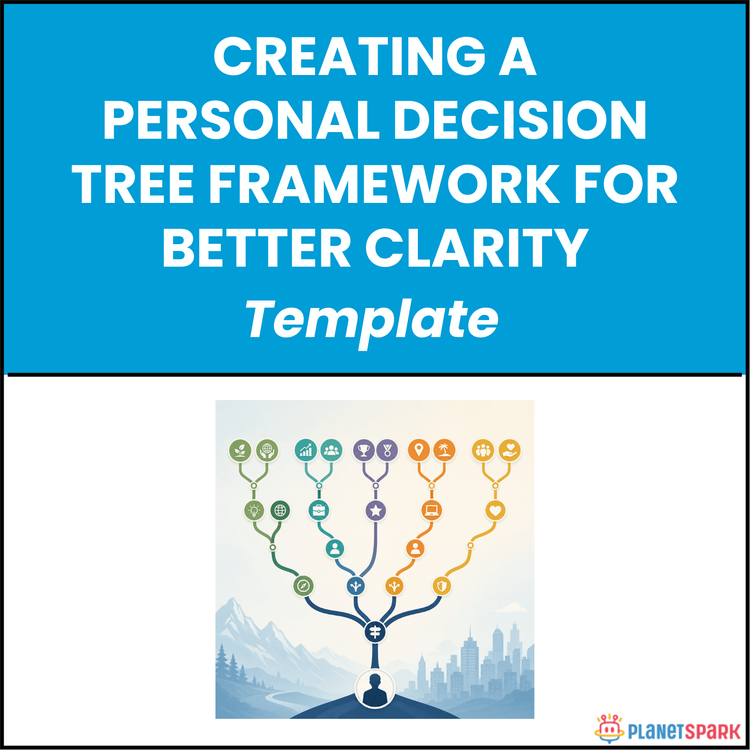
Creating A Personal Decision Tree Framework For Better Clarity
Creating a Personal Decision Tree Framework for Better Clarity: A Practical Guide to Making Smarter, Faster Career Decisions
If you’ve ever felt stuck between multiple options—overthinking, second-guessing, or delaying a decision—you’re not alone.
Most professionals don’t struggle because they lack intelligence or experience. They struggle because they don’t have a structured way to think through decisions.
So what happens?
You rely on gut instinct.
You seek too many opinions.
Or you delay until the opportunity passes.
That’s exactly why the resource “Creating a Personal Decision Tree Framework for Better Clarity” exists. It gives you a clear, repeatable system to map decisions visually, reduce confusion, and move forward with confidence.
Instead of thinking in circles, you start thinking in structure.
Who Is This Resource For?
This resource is especially valuable if you are:
- A working professional with 0–15 years of experience
- A career switcher evaluating major decisions
- A manager or consultant handling complex trade-offs
- A professional facing decision fatigue or overthinking
- Someone comparing multiple opportunities (jobs, projects, roles)
- A professional who wants clarity before committing
If you’ve ever thought, “I know my options—but I can’t decide,” this guide is built for you.
What Does This Resource Contain?
This is not a generic decision-making guide—it is a structured, visual thinking system.
Inside the resource, you’ll find:
- A clear explanation of what a personal decision tree is and how it works (page 3)
- The three core layers of decision-making:
- Root Question (what you’re actually deciding)
- Branches (criteria, values, constraints)
- Leaves (final outcomes/options)
- A step-by-step process to build your own decision tree, including:
- Defining a precise, time-bound decision question (page 4)
- Identifying non-negotiables vs preferences (page 5)
- Mapping decision branches using “if–then” logic (page 6)
- Evaluating final options using scoring and reflection (page 7)
- A complete fill-in worksheet template to apply the framework
- Practical tools like:
- Weighted scoring system
- Regret test (future-based decision validation)
- Information gap identification
- Reversibility assessment
- A real-world case example (page 9) showing how a professional resolved a career decision using the framework
- Common mistakes professionals make (and how to fix them)
- A clear action plan to apply the framework immediately
Everything is designed for practical use—not theory.
Summary of the Resource
“Creating a Personal Decision Tree Framework for Better Clarity” is a practical decision-making system that helps you externalise your thinking, structure your choices, and arrive at decisions with clarity and confidence.
It transforms complex, emotional, and overwhelming decisions into clear, logical pathways you can follow step by step.
If you want to stop overthinking and start deciding with confidence, this resource gives you the system.
How Will This Resource Be Useful?
This resource helps you move from confusion to clarity.
You’ll gain:
- A structured way to think through complex decisions
- Clear separation between what matters vs what is optional
- Reduced decision fatigue and mental overload
- Faster decision-making without sacrificing quality
- Better alignment with your personal values and priorities
- Confidence in your final choice
- A reusable system you can apply to future decisions
As explained in the introduction (page 2), high-performing professionals don’t make better decisions because they are smarter—they make better decisions because they use better systems.
Most importantly, it helps you stop guessing—and start reasoning.
How Should You Use This Resource?
To get the best results, follow a structured approach:
Start with clarity:
- Write your decision as a precise, time-bound question
- Ensure it is actionable and within your control
Map your criteria:
- List your non-negotiables (deal-breakers)
- Define your strong preferences
- Identify external constraints
Build your tree:
- Start with non-negotiables as early branches
- Eliminate options that don’t meet them
- Move to preference-based evaluation
Evaluate outcomes:
- Score each remaining option
- Run the regret test
- Identify any missing information
Make the decision:
- Choose based on both logic and emotional validation
- Set a clear action timeline
Review and learn:
- Save your decision tree
- Revisit it later to improve future decisions
As shown in the framework diagram (page 6), the power of this system lies in sequencing—eliminating wrong options first, then comparing what remains.
Action Steps
After accessing this resource, take these steps immediately:
1. Identify one decision you are currently stuck on
2. Rewrite it as a precise, time-bound question
3. List 2–4 non-negotiables
4. Define 3–5 strong preferences
5. Draw your decision tree (even roughly)
6. Eliminate options that fail your non-negotiables
7. Score the remaining options
8. Run the regret test
9. Make your decision and set a deadline
Clarity comes from structure—not from thinking longer.
Most professionals don’t need more time to decide. They need a better way to think.
When you externalise your thinking using a decision tree, you reduce confusion, remove bias, and make decisions that you can actually stand by.
And over time, that clarity becomes a competitive advantage.
Book your free session today!