
Creating a Personal Life Infrastructure Strategy for Long-Term Success

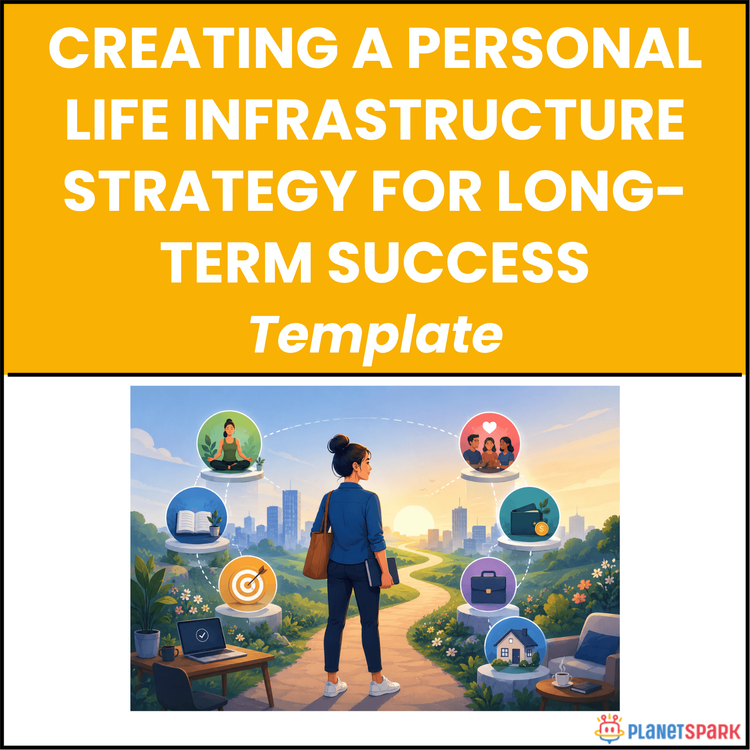
Creating a Personal Life Infrastructure Strategy for Long-Term Success
How to Create a Personal Life Infrastructure Strategy for Long-Term Success: A Practical Guide for Working Professionals
If you’ve ever set ambitious goals—only to find yourself falling short despite your best efforts—you’re not alone.
Most working professionals are not lacking in ambition, intelligence, or discipline. The real problem is something far less visible: the absence of a strong personal infrastructure.
You might have a clear career plan, a learning roadmap, or financial goals—but without systems to support them, even the best strategies collapse under daily pressure.
“Creating a Personal Life Infrastructure Strategy for Long-Term Success” exists to solve this exact gap.
It helps you build the invisible foundation that supports everything else in your life—so your goals don’t just look good on paper, but actually work in reality.
Who Is This Resource For?
This resource is designed for professionals who want long-term success that is stable, sustainable, and intentional.
It is especially useful if you are:
- A working professional with 0–15 years of experience managing multiple responsibilities
- Feeling like your life is reactive despite having clear goals
- Struggling to balance work, health, finances, and relationships
- A mid-career professional aiming for growth without burnout
- Someone who plans well but struggles with execution consistency
- Looking to build systems that support both career and personal life
If you want a life that works—not just a career that looks successful—this resource is built for you.
What Does This Resource Contain?
This is a structured, step-by-step playbook designed to help you build a complete personal life infrastructure.
Inside the resource, you’ll find:
A foundational framework:
- A clear explanation of why infrastructure comes before strategy
- A shift from goal-setting to system-building
- A practical understanding of how systems enable execution
The 6 Pillars of Personal Life Infrastructure:
- Time Architecture (how you structure your days and priorities)
- Energy Management (physical, mental, and emotional capacity)
- Financial Foundation (cash flow, savings, and long-term stability)
- Relationship Ecosystem (personal and professional connections)
- Learning Systems (skill-building and knowledge application)
- Purpose & Direction (values, vision, and decision filters)
A complete audit system:
- A structured Infrastructure Audit to rate each pillar
- Reflection questions to uncover hidden gaps
- A clear method to identify your weakest and most critical systems
Vision-building tools:
- A Compass Statement to define what your life should support
- A 3-year life vision exercise grounded in reality
- A Non-Negotiables list to protect what matters most
System design frameworks:
- A practical system design template (Trigger → Action → Outcome)
- Real examples across time, energy, finance, and learning
- Methods to shift from willpower-driven to system-driven behavior
Prioritisation and execution planning:
- A priority matrix to decide where to start
- A 90-day infrastructure sprint planning framework
- Step-by-step sequencing to avoid overwhelm
Maintenance and review systems:
- Daily reset rituals (5-minute alignment habit)
- Weekly review structure (30-minute system check)
- Monthly audit framework (pillar scoring and reflection)
- Quarterly redesign process to evolve your systems
Real-world application:
- A detailed case study showing transformation from reactive to structured living
- Common mistakes professionals make—and how to fix them
- Practical examples of system implementation across different life areas
Everything is designed to help you build systems that actually fit your real life—not an idealised version of it.
Summary of the Resource
“Creating a Personal Life Infrastructure Strategy for Long-Term Success” is a practical blueprint that helps you design the systems that support your goals.
It replaces:
- Goal-setting without execution
- Reactive, unstructured living
- Overwhelm from disconnected priorities
With:
- A clear, structured life architecture
- Systems that support consistent action
- A foundation that makes success sustainable
If you want your efforts to translate into real, lasting outcomes, this resource gives you the structure to make that happen.
How Will This Resource Be Useful?
This resource helps you move from scattered effort to structured progress.
You’ll gain:
- Clarity on what areas of your life need attention
- A practical way to design systems across key life domains
- Better control over your time, energy, and priorities
- Reduced stress through structured routines and boundaries
- Consistent progress toward long-term goals
- A stronger sense of stability and direction
Most importantly, it helps you build a life that supports your ambitions—rather than constantly working against them.
How Should You Use This Resource?
To get the best results, approach this playbook step-by-step.
Start with awareness:
Complete the Infrastructure Audit honestly. This gives you a clear picture of where you currently stand across all six pillars.
Then define your direction:
Write your Compass Statement and 3-year vision. Focus on how you want your life to function—not just what you want to achieve.
Next, design your systems:
Choose one or two priority pillars. Use the system design template to create simple, repeatable systems with clear triggers and actions.
Then execute gradually:
Avoid overloading yourself. Implement one system at a time and run it for 30–90 days before adding another.
Finally, maintain and evolve:
Schedule your weekly reviews, monthly audits, and quarterly redesign sessions. These ensure your systems stay relevant as your life changes.
This is not a one-time exercise. It is a system you revisit and refine over time.
Action Steps
After accessing this resource, take these steps immediately:
1. Spend 10 minutes completing the Infrastructure Audit
2. Identify your lowest-scoring pillar
3. Write your Compass Statement in one clear sentence
4. Choose one system to build in the next 30 days
5. Define its trigger, action, and outcome
6. Block time in your calendar to run this system
7. Schedule your first weekly review this Sunday
These steps will help you move from planning to execution quickly.
Most professionals try to fix their results by changing their goals.
But results don’t improve because of better goals—they improve because of better systems.
Your personal life infrastructure is that system.
When it is strong:
- Your time is structured
- Your energy is managed
- Your priorities are clear
- Your progress becomes consistent
You don’t need to wait for the “right time” to fix your life systems. That time rarely comes.
Start small. Build one system. Let it stabilise. Then build the next.
Over time, these systems become the foundation for everything you want to achieve.
Book your free session today!