
Creating a Personal System for Emotional Self-Regulation

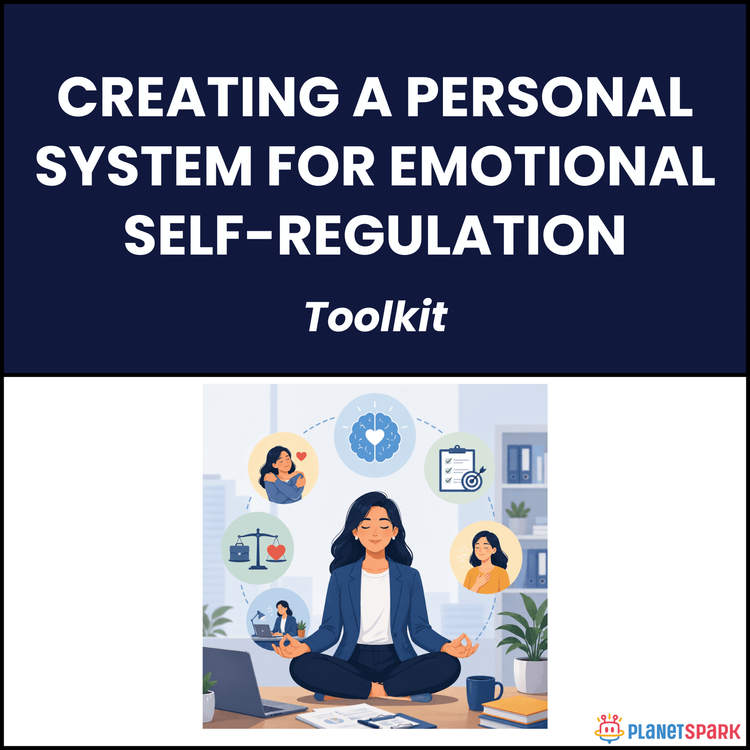
Creating a Personal System for Emotional Self-Regulation
Build Emotional Resilience at Work: A Practical System to Manage Triggers, Stress, and High-Pressure Situations
In today’s fast-paced work environment, it’s rarely the workload alone that drains professionals—it’s the emotional weight that comes with it. A difficult conversation, unexpected feedback, a missed opportunity, or even a single comment in a meeting can disrupt your focus, confidence, and decision-making for hours—sometimes days.
Most professionals are told to “stay calm,” “be resilient,” or “handle pressure better.” But very few are ever shown how to actually do that in real, high-stakes moments.
That’s where the resource “Creating a Personal System for Emotional Self-Regulation” becomes essential. It’s not about suppressing emotions or pretending everything is fine—it’s about building a repeatable system that helps you pause, process, and respond with clarity instead of reacting impulsively.
This toolkit is designed for working professionals who want to stay composed under pressure, make better decisions, and build long-term emotional resilience in their careers.
Who Is This Resource For?
This resource is especially valuable if you are:
- A working professional dealing with high-pressure environments or demanding roles
- A manager or team leader navigating difficult conversations and people dynamics
- A job seeker or career switcher managing rejection, uncertainty, or self-doubt
- A consultant or client-facing professional handling expectations and conflicts
- Someone who feels emotionally drained after meetings, feedback, or workplace interactions
- A professional who wants to respond thoughtfully instead of reacting impulsively
If you often feel triggered, overwhelmed, or mentally exhausted by workplace situations—and want a structured way to manage it—this toolkit is built for you.
What Does This Resource Contain?
This is not generic advice on “staying positive.” It’s a structured, practical system designed for real-world application.
Inside the resource, you’ll find:
- A three-phase framework: Awareness, Application, and Mastery
- Trigger Mapping exercises to identify what actually activates your emotional responses
- Emotional vocabulary tools to help you label and understand your feelings with precision
- The PAUSE Protocol—a simple, powerful method to regulate emotions in under 60 seconds
- A set of proven regulation techniques for different emotional states (anxiety, frustration, conflict, etc.)
- Scenario-based guidance for high-pressure situations like feedback, conflict, and presentations
- Worksheets like the Emotion-Response Planner for proactive preparation
- Daily emotional regulation rituals (morning, midday, and evening practices)
- A structured approach to building your personal “Regulation Playbook”
- A real-world case study showing how professionals apply the system successfully
- Common mistakes and practical fixes to avoid emotional burnout
- A self-evaluation sheet to assess your current regulation capability
- A 7-day action plan to start building your system immediately
Every section is designed to move you from awareness to action—not just understanding.
Summary of the Resource
“Creating a Personal System for Emotional Self-Regulation” is a practical toolkit that helps professionals understand their emotional triggers, regulate their responses in real time, and build consistent habits that strengthen resilience over time.
It gives you a clear system to follow—so instead of reacting automatically, you can respond intentionally, even in high-pressure situations.
If you’re looking for a structured way to improve how you handle stress, conflict, and uncertainty at work, this resource delivers exactly that.
How Will This Resource Be Useful?
This resource helps you move from emotional reactivity to intentional control.
You’ll gain:
- Clarity on what triggers your emotional responses at work
- The ability to pause and think before reacting in difficult situations
- Practical tools to manage anxiety, frustration, and pressure in real time
- Improved communication and better professional relationships
- Greater confidence during high-stakes moments like presentations or feedback discussions
- Reduced emotional exhaustion and burnout over time
Most importantly, it helps you build a skill that directly impacts your performance, decision-making, and long-term career growth.
How Should You Use This Resource?
To get the best results, approach this toolkit in phases:
Start by reading through the entire guide once to understand the overall framework—Awareness, Application, and Mastery. This gives you context for how everything fits together.
Next, begin with the Awareness phase. Complete the Trigger Mapping exercise and reflection questions to identify your emotional patterns without judgment.
Then move into the Application phase. Practice the PAUSE Protocol and try one or two regulation techniques in low-pressure situations first, so they become natural during high-pressure moments.
After that, use the worksheets like the Emotion-Response Planner to prepare for real scenarios such as meetings, feedback sessions, or difficult conversations.
Finally, build your personal Regulation Playbook. Document your triggers, signals, and go-to strategies, and establish small daily rituals to maintain emotional balance.
Revisit the toolkit regularly—especially after challenging situations—to refine your approach and strengthen your system.
Action Steps
After accessing this resource, take these steps immediately:
1. Set aside 60–90 minutes of uninterrupted time
2. Complete the Trigger Mapping worksheet to identify your top emotional triggers
3. Practise the PAUSE Protocol at least twice in low-stakes situations
4. Choose one regulation technique and apply it in a real work scenario
5. Fill out the Emotion-Response Planner for an upcoming high-pressure situation
6. Start one simple daily ritual (morning, midday, or evening)
7. Create your first version of a personal Regulation Playbook
Small, consistent actions here will significantly improve how you handle pressure and challenges at work.
Emotional self-regulation is not about eliminating stress or avoiding difficult situations. It’s about building the ability to handle them with clarity, control, and confidence.
When you learn to manage your internal responses, you don’t just improve your emotional well-being—you improve your professional effectiveness. You communicate better, make stronger decisions, and show up more consistently in high-stakes environments.
Use this resource not just as a toolkit, but as a long-term system for personal and professional growth.
Book your free session today!