
Creating Personal Systems to Manage Crisis-Induced Stress at Work

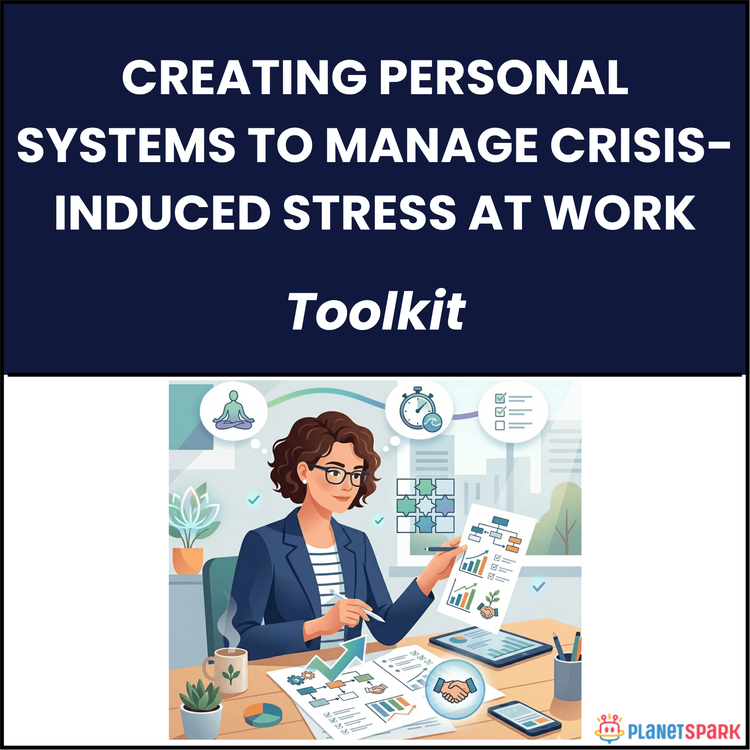
Creating Personal Systems to Manage Crisis-Induced Stress at Work
Balancing Crisis-Induced Stress at Work Through Personal Management Systems
Workplace crises can take many forms — sudden workload pressure, layoffs, organizational change, conflicts, uncertainty, or high-performance expectations. These situations often create intense stress that affects focus, productivity, health, and decision-making.
Without structured systems, stress can become overwhelming and impact both professional performance and personal well-being.
“Creating Personal Systems to Manage Crisis-Induced Stress at Work” is a practical toolkit designed to help professionals build structured systems that reduce stress, improve emotional balance, and support stable performance during workplace crises.
Who Is This Resource For?
This toolkit is ideal for:
- Professionals experiencing workplace stress
- Employees in high-pressure roles
- Managers handling organizational crises
- Individuals facing uncertainty at work
- Professionals recovering from burnout
- Freelancers managing inconsistent workloads
- Teams dealing with rapid change or instability
It is designed for professionals who need practical tools to manage stress effectively during challenging work situations.
What Does This Resource Contain?
Inside the toolkit, readers can expect:
- Stress management frameworks
- Crisis response planning tools
- Emotional regulation exercises
- Workload balancing systems
- Priority-setting templates
- Energy management strategies
- Focus restoration techniques
- Workplace boundary-setting tools
- Recovery and reset routines
The toolkit focuses on creating structured systems that help professionals stay stable during high-stress situations.
Summary of the Resource
This resource helps professionals build systems to manage stress during workplace crises. Instead of relying on reactive coping, it introduces structured approaches to maintain emotional balance, productivity, and clarity under pressure.
It supports sustainable performance even in unstable environments.
How Will This Resource Be Useful?
Workplace stress can reduce clarity, productivity, and long-term effectiveness. This toolkit helps professionals regain control through structure. Readers can benefit by:
- Managing stress more effectively
- Improving focus under pressure
- Creating healthier work boundaries
- Reducing emotional overwhelm
- Enhancing productivity stability
- Preventing burnout cycles
- Building long-term resilience
The toolkit helps professionals stay grounded even in challenging environments.
How Should You Use This Resource?
Step 1: Identify Your Stress Triggers
Understand what increases pressure in your work environment.
Step 2: Build Daily Stability Systems
Create simple routines to maintain emotional balance.
Step 3: Use Priority Frameworks
Focus only on high-impact tasks during crises.
Step 4: Practice Emotional Regulation Techniques
Use tools consistently during stressful periods.
Step 5: Adjust Systems as Needed
Modify strategies based on real workload demands.
Step 6: Maintain Consistency
Even small systems create stability over time.
Action Steps
- Identify key workplace stress triggers
- Build simple daily recovery routines
- Set clear work boundaries
- Prioritize tasks effectively
- Track stress and energy levels
- Use toolkit exercises regularly
- Review systems monthly
Stress is inevitable in many careers, but suffering from unmanaged stress is not. With the right systems, professionals can maintain clarity, performance, and emotional stability even during difficult workplace periods. This toolkit helps create that structure step by step.