
Creating Recovery Systems for Post-Deadline Burnout

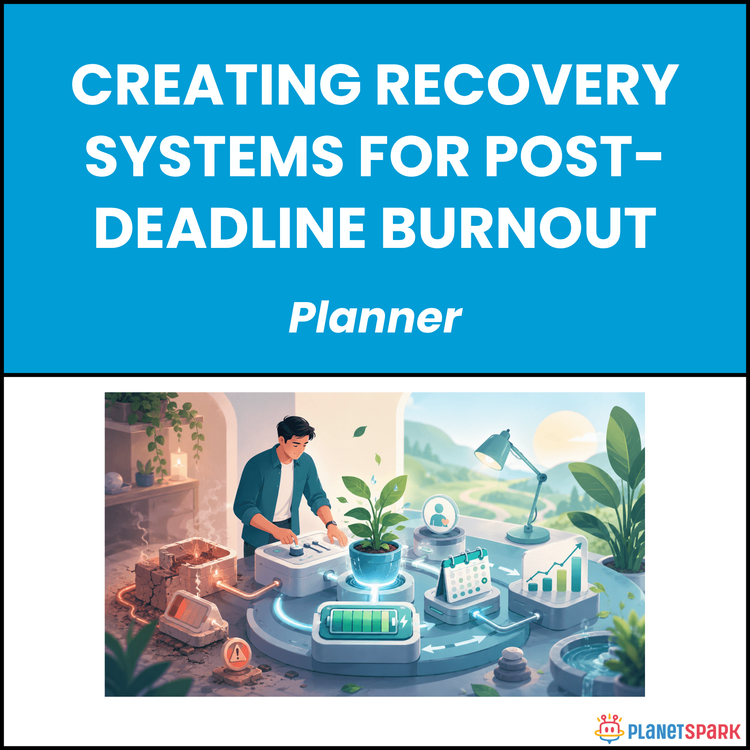
Creating Recovery Systems for Post-Deadline Burnout
Creating Recovery Systems for Post-Deadline Burnout: A Practical Planner for Working Professionals
You delivered the project. The deadline is over. The launch, presentation, exam, client report, or sprint is finally complete.
But instead of feeling relieved, you feel empty, tired, unfocused, and disconnected from your next task.
That is post-deadline burnout.
Many professionals assume recovery will happen automatically after a weekend of rest. But when the body and mind have been pushed hard for too long, recovery needs more than passive rest. It needs a system.
This resource, “Creating Recovery Systems for Post-Deadline Burnout,” helps working professionals reset after intense deadlines without losing long-term momentum. It gives you a structured recovery process that helps you acknowledge burnout, restore your energy, and rebuild healthier work patterns for the future.
Who Is This Resource For?
This planner is useful for professionals who often push through high-pressure work and then struggle to recover afterward.
It is especially helpful for:
Working professionals managing demanding deadlines, launches, reports, exams, or client deliverables.
Managers and team leads who need to recover after intense project cycles.
Consultants who experience pressure after client engagements or delivery sprints.
Career switchers balancing learning, applications, interviews, and professional responsibilities.
Early-career professionals who are still learning how to manage pressure sustainably.
High performers who tend to ignore exhaustion until the work is finished.
Professionals who feel brain fog, emotional flatness, irritability, or lack of motivation after a major deadline.
This resource is not a medical guide. It is a professional productivity and recovery planner. If someone is experiencing severe depression, anxiety, or physical illness, they should consult a healthcare professional.
What Does This Resource Contain?
The resource is built around a 3-phase recovery system.
The three phases are:
Acknowledge and Assess.
Restore and Reset.
Rebuild and Protect.
Each phase helps you move from burnout awareness to active recovery and then to long-term protection.
Phase 1: Acknowledge and Assess
This phase is designed for Days 1 to 2 after a major deadline.
The goal is simple: stop pretending everything is fine and understand what the deadline actually cost you.
Many professionals skip this stage. They minimize the exhaustion or jump straight into the next task. This planner encourages you to pause and assess your current state honestly.
This phase helps you look at four areas:
Physical energy.
Cognitive focus.
Emotional state.
Relational impact.
The resource includes a Burnout Signal Checklist to help you identify signs such as difficulty concentrating, emotional numbness, irritability, exhaustion despite sleep, laptop dread, forgetfulness, appetite changes, and pressure to keep doing more.
It also includes a Burnout Assessment Worksheet where you reflect on how your body, mind, emotions, and relationships have been affected.
Phase 2: Restore and Reset
This phase is designed for Days 3 to 7.
Once you understand what has been depleted, the planner helps you rebuild your energy intentionally.
This section focuses on four kinds of restoration:
Physical restoration: Prioritizing sleep, short outdoor walks, reduced caffeine, and nourishing meals.
Cognitive restoration: Returning through low-stakes work, avoiding major decisions, using focused work intervals, and reducing multitasking.
Emotional restoration: Naming feelings, journaling, and doing activities that bring joy without needing to be productive.
Relational restoration: Reconnecting with at least one person you may have neglected during the deadline push.
The resource also includes a Phase 2 Daily Recovery Checklist so you can track simple but important recovery actions across the week.
Phase 3: Rebuild and Protect
This phase is designed for Days 8 to 14.
The purpose is not just to return to work. The purpose is to return differently.
The planner recommends a staged re-entry into full productivity. Instead of jumping back to 100% capacity immediately, it encourages a gradual ramp: 60% capacity, then 80%, then full capacity.
This phase helps you:
Plan your next two-week work sprint.
Identify peak-intensity periods in advance.
Pre-schedule recovery breaks.
Set capacity limits.
Activate support from trusted colleagues or managers.
Build a personal recovery system.
The resource includes a Personal Recovery System Template where you define your burnout signals, earliest warning signs, go-to recovery actions, support person, work to defer when depleted, and non-negotiables to protect.
Energy Audit
One of the most practical tools in the planner is the Energy Audit.
This worksheet helps you identify what drains you and what restores you.
You rate activities, work types, and relationships on an energy scale from deeply draining to energizing. Examples include back-to-back meetings, deep focus work, brainstorming, mentoring others, client-facing communication, administrative tasks, learning, movement, creative thinking, and social interactions.
This helps you stop relying on generic self-care advice and build a recovery plan based on your real energy patterns.
Real-World Case Study
The resource includes a case study of Priya, a mid-level product manager recovering after an intense product launch sprint.
Priya experiences exhaustion, resentment, low motivation, and cognitive mistakes after a successful launch. Instead of ignoring the signs, she uses the recovery system to assess her burnout, negotiate low-intensity work, complete an Energy Audit, and build a personal recovery template.
The case study shows that recovery is not weakness. It is a professional skill that can be learned and improved.
Common Recovery Mistakes
The planner also explains six common mistakes professionals make after deadline burnout.
These include:
Treating recovery as passive.
Rushing back to full productivity.
Isolating during recovery.
Skipping the emotional dimension.
Not building a system for next time.
Treating burnout as a personal failure.
Each mistake is paired with a practical fix, which makes this section useful for quick self-correction.
Summary of the Resource
“Creating Recovery Systems for Post-Deadline Burnout” is a practical recovery planner for professionals who want to reset after high-pressure work without falling into the same burnout cycle again.
The resource teaches that burnout recovery is not just about taking time off. It is about restoring the specific resources that were depleted: physical energy, mental focus, emotional capacity, and social connection.
The planner helps readers move through a clear 14-day recovery arc:
Days 1 to 2: Acknowledge what happened and assess the impact.
Days 3 to 7: Restore energy through intentional recovery practices.
Days 8 to 14: Rebuild work capacity with better systems and boundaries.
It also provides worksheets, checklists, templates, reflection prompts, a case study, and action steps to make recovery practical and measurable.
The main outcome is simple: you learn how to recover after demanding work without losing your confidence, wellbeing, or professional momentum.
How Will This Resource Be Useful?
It helps you recognize burnout instead of ignoring it.
Many professionals keep pushing because they think exhaustion is normal after success. This planner helps you identify real signs of depletion before they become worse.
It gives recovery a clear structure.
Instead of guessing what to do after a deadline, you follow a phased system. This makes recovery feel less confusing and more manageable.
It addresses more than physical tiredness.
The planner does not only focus on sleep or rest. It also considers focus, emotions, relationships, decision-making, and work habits.
It helps you return to work gradually.
The staged re-entry model helps you avoid the common mistake of going back to full capacity too soon. This can protect both your performance and your wellbeing.
It makes recovery personal.
The Energy Audit helps you understand your own patterns. You can see what drains you, what restores you, and what needs to change in your schedule.
It helps prevent repeat burnout.
The Personal Recovery System Template helps you prepare for future pressure. You decide in advance what you will do when warning signs appear.
It supports sustainable high performance.
The planner does not ask professionals to choose between ambition and wellbeing. It helps them build a better bridge between both.
How Should You Use This Resource?
Start by reading the planner once from beginning to end.
This gives you a full understanding of the recovery arc before you begin filling in the worksheets.
Use Phase 1 immediately after a major deadline.
Complete the Burnout Signal Checklist and Burnout Assessment Worksheet within the first two days. Be honest about your physical, cognitive, emotional, and relational state.
Use Phase 2 as your active recovery week.
Follow the Daily Recovery Checklist for five days. Focus on sleep, movement, low-stakes work, journaling, joy, and social connection.
Use Phase 3 before returning to full workload.
Plan your next two-week sprint carefully. Do not overload your calendar too quickly. Use the 60-80-100 re-entry approach to rebuild capacity gradually.
Complete the Energy Audit.
Track what drains and restores you. Circle your top three energy sources and top three energy drains. Use this information to adjust your work habits.
Fill in the Personal Recovery System Template.
Write down your burnout signals, warning signs, recovery actions, support person, and non-negotiables. This becomes your ready-to-use plan for future deadlines.
Revisit the planner after every major deadline.
The goal is not to use this once and forget it. The goal is to build recovery into your professional operating system.
Action Steps
Complete the Burnout Signal Checklist today.
Write down your top three burnout symptoms.
Block one 30-minute recovery planning session.
Identify one physical recovery action you can take this week.
Choose one low-stakes task to work on before returning to complex work.
Spend 10 minutes journaling about what the deadline cost you.
Reconnect with one person you neglected during the deadline push.
Complete the Energy Audit and circle your top three drains.
Schedule one recovery break before your next intense work period.
Fill in your Personal Recovery System Template.
Post-deadline burnout is not a sign that you are weak. It is often a sign that you gave significant energy to something demanding and now need a structured way to recover.
The smartest professionals do not wait until they collapse to take recovery seriously. They build systems that help them reset, learn, and return stronger.
This planner gives you a practical way to do exactly that. It helps you move from exhaustion to awareness, from awareness to restoration, and from restoration to better protection for the future.
Use it after a deadline. Use it before the next sprint begins. Use it whenever your body and mind are telling you that success came at a cost.
High performance and sustainable wellbeing do not have to work against each other. With the right recovery system, they can support each other.