
Creating Systems to Sustain Leadership Without Burnout

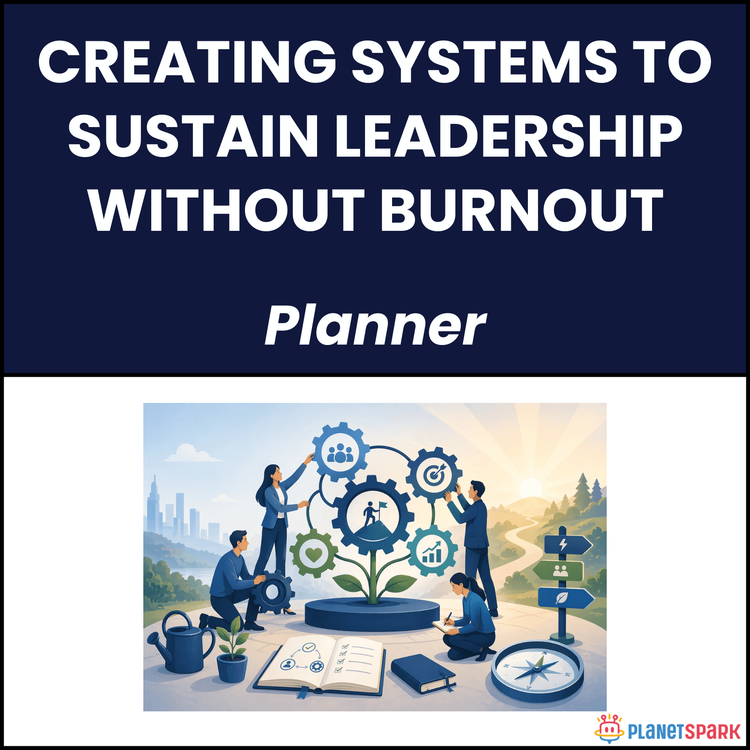
Creating Systems to Sustain Leadership Without Burnout
A Practical Guide to Leading Consistently Without Burnout
Most professionals don’t burn out because they lack capability. They burn out because they rely on effort instead of systems.
You push through busy weeks, manage competing priorities, show up for your team, and try to stay productive—but over time, the cracks start to show. Your energy becomes inconsistent, decision-making feels heavier, and even small tasks begin to feel overwhelming.
The problem isn’t your ambition or your work ethic.
It’s the absence of a structure that supports how you operate every day.
The resource “Creating Systems to Sustain Leadership Without Burnout” is designed to fix exactly that. It gives you a practical, structured way to build a leadership system that protects your energy, improves consistency, and helps you perform at a high level—without depending on motivation alone.
Who Is This Resource For?
This resource is built for working professionals who are managing increasing responsibility and want to sustain performance without exhaustion.
It is especially useful for:
- First-time managers learning to balance people and performance
- Mid-career professionals experiencing signs of burnout
- Consultants and freelancers managing multiple clients and deadlines
- Team leaders juggling execution, strategy, and stakeholder management
- Career switchers stepping into more demanding roles
- High performers who feel constantly “busy” but not always effective
If your leadership feels inconsistent depending on your energy levels, this resource will help you create stability.
What Does This Resource Contain?
This planner is structured into three practical phases, each designed to help you build a sustainable leadership system step by step.
Phase 1: Awareness — Understanding Your Energy Architecture
- A structured energy audit to track mental, emotional, and physical capacity
- Tools to identify hidden drains (tasks, people, environments)
- Methods to map your peak performance windows
- A self-assessment worksheet to evaluate focus, decision-making, relationships, and overall energy
Phase 2: Application — Building Your Leadership Operating System
This is the core of the resource, where you design your personal system.
It includes:
- A Weekly Leadership Rhythm framework:
- Deep Work Blocks for high-focus tasks
- Collaborative Windows for meetings and interactions
- Administrative Slots for low-energy tasks
- Recovery Anchors to maintain energy
- A Decision Architecture (3-Filter Framework):
- Helps you reduce decision fatigue
- Guides what to decide, delegate, or default
- Minimizes cognitive overload
- A Boundary Protocol:
- Clear operating hours
- Communication response standards
- Protected recovery practices
- End-of-day shutdown rituals
Phase 3: Mastery — Sustaining and Evolving Your System
- Monthly system check-ins to review effectiveness
- Reflection questions across rhythm, decisions, boundaries, and recovery
- Methods to adapt your system as your role evolves
- Practical guidance to prevent system breakdown over time
Additionally, the resource includes:
- Common mistakes professionals make when trying to “fix burnout”
- Clear, actionable corrections for each mistake
- A structured “Next 7 Days” plan to get started immediately
Everything is designed to move from awareness to execution—not just theory.
Summary of the Resource
At its core, this resource helps you shift from reactive work patterns to a structured leadership system.
It enables you to:
- Understand where your energy is currently being spent
- Design a weekly structure aligned with how you actually perform
- Reduce unnecessary decisions that drain your mental bandwidth
- Create boundaries that protect your time and focus
- Build recovery into your routine so performance is sustainable
Instead of relying on willpower, you build a system that works even on low-energy days.
How Will This Resource Be Useful?
This resource directly improves both your performance and your well-being.
By applying it, you will:
- Reduce burnout by managing energy more intentionally
- Improve consistency in how you lead and deliver
- Make better decisions with less mental fatigue
- Protect time for deep, meaningful work
- Create clearer boundaries with stakeholders and teams
- Build a leadership style that is sustainable long-term
Most importantly, it helps you move from “surviving busy weeks” to operating with clarity and control.
This is what separates professionals who sustain success from those who burn out despite high potential.
How Should You Use This Resource?
To get the most value, approach this as a working system—not just reading material.
Here’s how to use it effectively:
Step 1: Complete the energy audit
Start by understanding where your energy currently goes and what drains it.
Step 2: Map your patterns
Identify your peak and low-energy periods across the week.
Step 3: Design your weekly rhythm
Assign deep work, collaboration, and admin tasks based on your energy—not convenience.
Step 4: Apply the decision framework
Use the 3-filter system daily to reduce unnecessary decisions.
Step 5: Implement boundary protocols
Define and communicate how you work—availability, response times, and recovery.
Step 6: Schedule recovery intentionally
Treat recovery as part of your system, not an afterthought.
Step 7: Run monthly check-ins
Review what’s working, what’s breaking, and adjust your system accordingly.
The goal is not perfection—it’s consistency.
Action Steps
If you want to start immediately, follow this plan:
1. Complete your energy audit today
2. Identify your top three energy drains
3. Block one deep work slot in your calendar this week
4. Define one clear boundary (e.g., response time or working hours)
5. Schedule one recovery activity and protect it
6. Apply the decision framework to at least five decisions this week
7. Book a 30-minute monthly system review in your calendar
Small structural changes create large long-term impact.
Most professionals try to solve burnout by working less or pushing harder.
Neither works consistently.
Sustainable leadership comes from designing how you work—not just managing what you work on.
When you build the right system, your performance becomes more predictable, your energy becomes more stable, and your leadership becomes more effective.
You don’t need more motivation.
You need a system that supports you—even on your worst days.
Book your free session today!