
Creative Problem-Solving Techniques guide

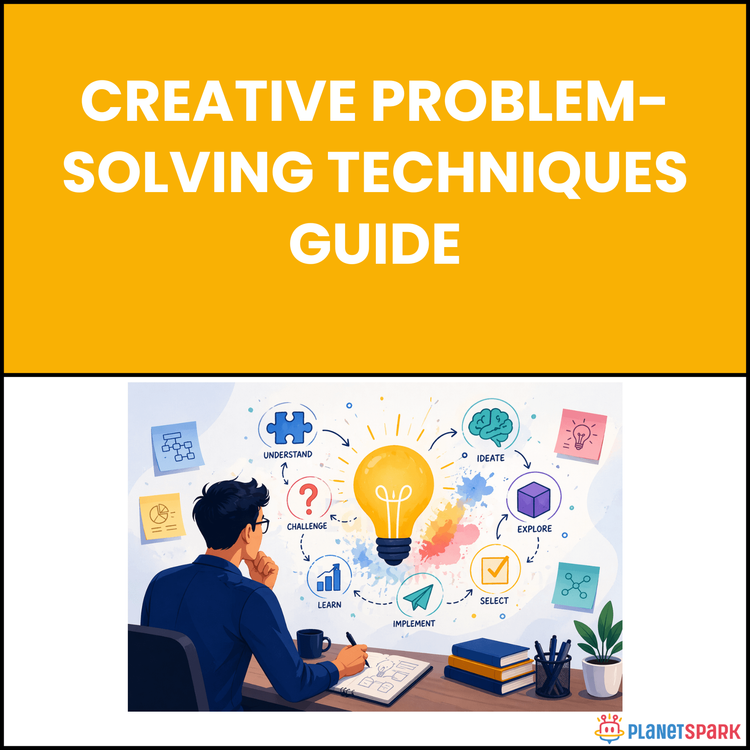
Creative Problem-Solving Techniques guide
Creative Problem-Solving Techniques Guide: A Practical Framework to Solve Workplace Challenges Faster and Better
If you’ve ever sat in a meeting where the same problem keeps resurfacing—or spent hours “brainstorming” with little to show for it—you’re not alone. Most working professionals don’t struggle because they lack intelligence or effort. They struggle because they lack a structured method to approach complex problems.
In fast-paced work environments, jumping straight to solutions is the norm. But without clarity on the real problem, even the best ideas fail. That’s exactly why the “Creative Problem-Solving Techniques Guide” exists. It provides a practical, step-by-step system to help you think clearly, generate better ideas, and execute solutions that actually work.
This is not about being “creative” in an abstract sense. It’s about applying structured thinking to real-world challenges—quickly, confidently, and effectively.
Who Is This Resource For?
This guide is designed for professionals who deal with real-world problems daily and need practical solutions—not theory.
It is especially useful for:
- Working professionals with 0–15 years of experience
- Managers handling team challenges and decision-making
- Consultants solving client problems under time pressure
- Career switchers navigating ambiguous situations
- Individuals stuck in repetitive problem cycles at work
- Professionals who want to improve their thinking, not just their output
If you’re someone who wants clarity under pressure and better outcomes from your decisions, this resource is built for you.
What Does This Resource Contain?
This guidebook is structured as a complete problem-solving system—not just isolated tips.
Inside, you’ll find:
- A 5-step creative problem-solving framework (from diagnosis to reflection)
- Problem framing tools like the “5 Whys” and “How Might We” (HMW) method
- Structured ideation techniques such as Brainwriting, SCAMPER, Reverse Brainstorming, and Mind Mapping
- A deep dive into the SCAMPER framework for generating breakthrough ideas
- An ideation checklist to ensure quality and diversity of ideas
- Decision-making frameworks like:
- Impact vs Effort Matrix
- Weighted Criteria Scoring
- Assumption Testing
- A ready-to-use Impact/Effort Matrix template
- Implementation frameworks including:
- One-page implementation brief
- 48-hour action rule
- Worksheets for:
- Problem framing
- Implementation planning
- Reflection tools such as:
- After-Action Review (AAR)
- Problem-solving journal
- Monthly retrospective framework
- A skill progression model to assess your problem-solving maturity
- A real-world case study demonstrating the full framework in action
- Common mistakes and practical fixes
- A 30-day action plan to build problem-solving as a habit
- A one-page quick-reference toolkit for daily use
Everything is designed to move you from “thinking about problems” to actually solving them.
Summary of the Resource
The “Creative Problem-Solving Techniques Guide” is a practical playbook that helps professionals move from reactive thinking to structured problem-solving.
It teaches you how to:
- Diagnose the real problem instead of chasing symptoms
- Generate diverse, high-quality ideas systematically
- Evaluate options objectively using clear criteria
- Execute solutions with clarity and accountability
- Reflect and improve your thinking over time
If you want a repeatable method to solve problems faster and better, this guide delivers exactly that.
How Will This Resource Be Useful?
This resource helps you build one of the most valuable professional skills: the ability to solve complex problems effectively.
You will gain:
- Clarity in ambiguous or messy situations
- Confidence in making decisions under pressure
- Structured thinking that reduces trial-and-error
- Better outcomes from meetings and discussions
- Stronger execution with clear ownership and timelines
- The ability to avoid common problem-solving mistakes
- Long-term improvement through reflection and learning
Most importantly, it helps you stop reacting to problems—and start solving them deliberately.
How Should You Use This Resource?
To get the best results, use this guide as a working tool, not just reading material.
Start by reading through the entire guide once to understand the full framework and how each step connects.
Next, apply the process to a real problem you are currently facing:
- Begin with the Problem Framing worksheet
- Use the 5 Whys and HMW method to define the real problem
- Move into ideation using one structured technique
- Evaluate your ideas using a decision framework
- Use the implementation worksheet to plan execution clearly
As you progress:
- Apply the 48-hour rule to take immediate action
- Use reflection tools after completing the task
- Revisit specific sections whenever you face new challenges
Over time, this becomes less of a guide—and more of a way you naturally think and work.
Action Steps
After accessing this resource, take these steps immediately:
1. Identify one current problem you are facing at work
2. Spend 20–30 minutes applying the 5 Whys to find the root cause
3. Rewrite the problem as a “How Might We” question
4. Generate at least 15 ideas using a structured technique like Brainwriting or SCAMPER
5. Use the Impact/Effort Matrix to shortlist the best solution
6. Define one clear owner and the first action within 48 hours
7. Schedule a quick reflection after implementation
These small, structured actions can significantly improve how you approach problems.
Most professionals don’t fail because they lack ideas—they fail because they lack a method. When you apply structure to your thinking, you don’t just solve problems faster—you solve the right problems.
Use this guide to build a skill that compounds across your entire career. The ability to think clearly, act decisively, and improve consistently will set you apart in any role, industry, or stage of your professional journey.