
Designing a Personal Crisis Playbook for Workplace Emergencies

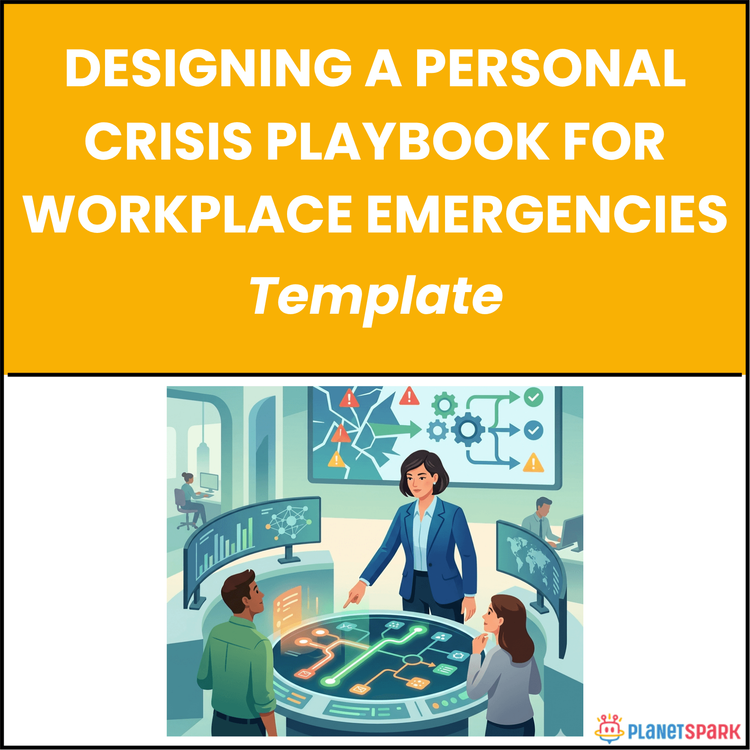
Designing a Personal Crisis Playbook for Workplace Emergencies
Formulating a Personal Crisis Playbook for Workplace Emergencies and Disruptions
Workplace emergencies can happen unexpectedly — sudden layoffs, performance crises, organizational changes, conflicts, or high-pressure situations. In such moments, confusion often leads to reactive decisions that may worsen outcomes.
A structured crisis playbook helps professionals stay calm, organized, and effective during uncertainty.
“Designing a Personal Crisis Playbook for Workplace Emergencies” is a practical template designed to help professionals prepare structured responses for workplace crises and emergencies.
Who Is This Resource For?
This template is ideal for:
- Professionals in high-pressure environments
- Employees facing unstable workplace conditions
- Managers handling team crises
- Professionals recovering from workplace disruptions
- Freelancers managing unpredictable workloads
- Individuals in competitive or volatile industries
- Professionals seeking preparedness and control
It supports anyone who wants structured readiness during workplace uncertainty.
What Does This Resource Contain?
Inside the template, readers can expect:
- Crisis identification frameworks
- Emergency response planning sections
- Decision-making flowcharts
- Priority action templates
- Communication scripts for crises
- Stress stabilization tools
- Role-based action plans
- Risk assessment checklists
- Recovery planning frameworks
The template helps professionals respond effectively instead of reacting emotionally.
Summary of the Resource
This resource helps professionals build a structured crisis playbook for workplace emergencies. It guides readers in creating predefined actions, communication strategies, and decision-making frameworks to handle stressful situations effectively.
The goal is to improve preparedness and reduce panic-driven decisions.
How Will This Resource Be Useful?
Workplace crises often require quick decisions under pressure. This template helps professionals respond with clarity instead of confusion. Readers can benefit by:
- Improving crisis preparedness
- Reducing emotional decision-making
- Enhancing workplace confidence
- Managing emergencies effectively
- Improving communication during crises
- Increasing professional stability
- Strengthening resilience under pressure
The template helps professionals stay in control during uncertain situations.
How Should You Use This Resource?
Step 1: Identify Potential Workplace Risks
Understand possible crisis scenarios in your environment.
Step 2: Build Response Frameworks
Create structured steps for each type of situation.
Step 3: Prepare Communication Scripts
Develop ready-to-use messaging for emergencies.
Step 4: Define Priority Actions
Focus on immediate stabilization tasks.
Step 5: Practice Using the Playbook
Familiarity improves effectiveness during real crises.
Step 6: Update Regularly
Crisis conditions and roles may change over time.
Action Steps
- Identify possible workplace crisis scenarios
- Build structured response plans
- Create communication templates
- Define emergency priorities
- Practice crisis simulations mentally
- Update playbook regularly
- Maintain calm execution under pressure
Preparedness reduces panic. A well-designed crisis playbook helps professionals navigate workplace emergencies with structure, clarity, and confidence, improving both performance and emotional stability.