
Designing Personal Brand Rituals for Consistency

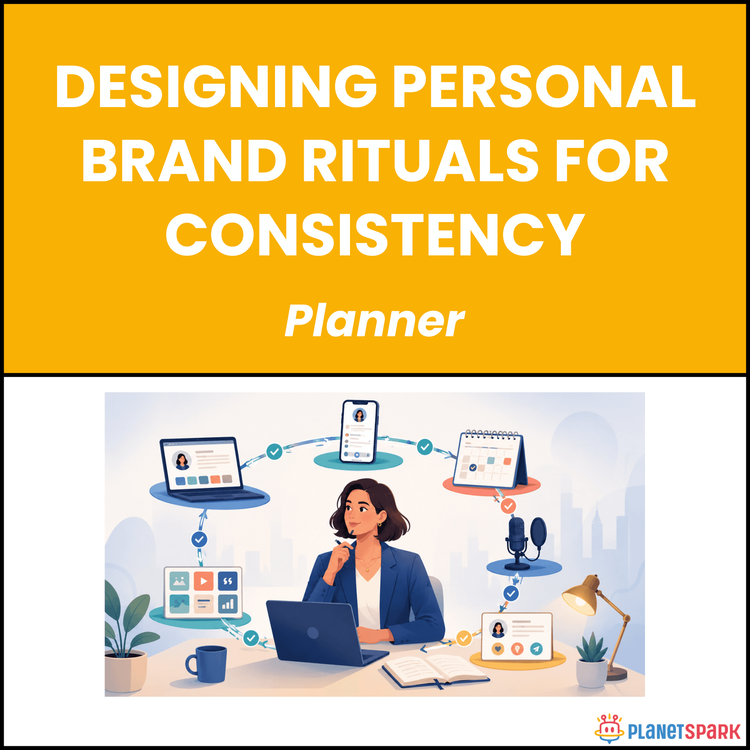
Designing Personal Brand Rituals for Consistency
Designing Personal Brand Rituals for Consistency: A Practical Template Pack to Build Visibility Without Burning Out
Most professionals know personal branding matters. The real challenge is not understanding the concept — it is staying consistent.
You update your LinkedIn when you are job searching. You post for a few weeks, then stop. You rewrite your bio for one opportunity, but forget to update your resume or email signature. You network when you need something, but not as a regular professional habit. Over time, your presence becomes scattered, reactive, and inconsistent.
That is exactly the problem this resource helps solve.
Designing Personal Brand Rituals for Consistency is a premium template pack created for working professionals who want to show up with intention, build a recognisable professional presence, and maintain consistency across platforms, interactions, and opportunities — without burning out. Instead of treating personal branding as a one-time profile refresh, this resource turns it into a set of structured, repeatable rituals.
The core idea is simple: your personal brand is built through repeated actions, not occasional bursts of visibility.
Who Is This Resource For?
This resource is designed for professionals who want to become more consistent, intentional, and strategic in how they show up professionally.
It is especially useful for:
- Job seekers who want their LinkedIn, resume, bio, and outreach messages to communicate the same clear identity
- Career switchers who need a consistent positioning statement across platforms and conversations
- Consultants and freelancers who want a stronger brand voice, sharper value proposition, and steady visibility
- Managers who want to maintain intentional professional relationships and communicate their expertise consistently
- Thought leaders and content creators who want to plan brand-aligned content without relying on last-minute inspiration
- Professionals preparing for promotions, pivots, new certifications, launches, or market changes
- Anyone who feels their online presence is inconsistent, outdated, or too reactive
This pack is especially helpful if you have ever thought, “I know I should show up more consistently, but I don’t have a system for it.”
What Does This Resource Contain?
The resource includes 10 practical templates that help professionals turn personal branding into a repeatable routine. Each template focuses on a specific part of brand consistency, from weekly planning and content creation to audits, metrics, networking, and daily habits.
1. Weekly Brand Ritual Planner
This template helps you plan your brand-building actions every Sunday or Monday before the week begins.
It includes an identity anchor, weekly brand focus, top brand goal, daily action grid, content themes, tone reminder, and end-of-week reflection. The goal is to help you avoid random posting or reactive networking by giving your week a clear brand rhythm.
For example, you can plan when to publish a LinkedIn post, engage with industry accounts, draft an article, reach out to a new connection, and reflect on your weekly brand win.
2. Brand Voice & Tone Guide
Consistency is not only about how often you show up. It is also about sounding like the same person across every platform.
This template helps you define your brand voice in three words, identify your core audience, document what your voice is and is not, list signature phrases, and clarify words or phrases to avoid.
It also helps you adjust your tone by platform, such as LinkedIn, email, Twitter/X, portfolio, or bio. This is especially valuable for consultants, freelancers, and professionals who communicate across multiple channels.
3. Personal Brand Audit Worksheet
This worksheet is designed for quarterly brand reviews.
It helps you assess whether your LinkedIn profile, portfolio, resume, email signature, and social profiles are consistent with your current professional identity. It also includes a messaging consistency check and prompts you to identify the top three brand gaps to fix in the next 30 days.
This template is useful because many professionals do not realise how quickly their brand touchpoints become outdated.
4. Content Ritual Calendar
This template helps you plan a full month of brand-aligned content.
It includes a monthly brand theme, content goal, weekly content topics, formats, platforms, status tracking, three brand content pillars, format rotation, and monthly reflection.
Instead of asking “What should I post today?” you can plan content around your expertise, professional goals, and audience needs.
5. Core Brand Statement Builder
This template is especially useful for job seekers and career switchers who need a clear positioning statement.
It guides you through four steps:
- Define your identity
- Identify your unique value
- Anchor your proof
- Articulate your brand promise
The final output is a concise brand statement you can adapt for LinkedIn, your resume summary, networking conversations, proposals, or bio pages.
6. Digital Presence Consistency Checklist
This checklist helps you review your digital touchpoints bi-weekly or before a major career move.
It covers LinkedIn, portfolio or personal website, resume or CV, and email signature. It prompts you to check whether your headline reflects your current positioning, your About section includes key outcomes, your projects are updated, and your professional summary aligns with your brand statement.
It ends with an overall consistency score and a top-priority fix before your next review.
7. Networking Ritual Tracker
Networking becomes more effective when it is intentional rather than reactive.
This template helps managers, consultants, and professionals track monthly relationship-building activities. It includes a networking brand goal, monthly connection log, follow-up actions, weekly relationship rituals, conversation positioning, and monthly reflection.
The template encourages practical habits such as commenting meaningfully on posts, sharing useful content, sending personalised check-ins, and attending relevant industry discussions.
8. Brand Metrics & Visibility Log
This template helps you track whether your brand rituals are producing results.
It includes sections for platform reach, engagement quality, and opportunity signals. You can track metrics such as LinkedIn impressions, profile views, newsletter growth, website visitors, meaningful comments, inbound enquiries, shares, aligned connections, speaking invites, job enquiries, project opportunities, and collaborations.
This is useful because consistency should not be measured only by effort. It should also be reviewed through visibility, engagement, and opportunity signals.
9. Value Proposition Refresh Template
Your brand positioning should evolve when your career evolves.
This template helps you refresh your value proposition after a promotion, career pivot, new certification, or major project win. It guides you to compare your old positioning with your updated identity, highlight new skills or credentials, and rewrite your value proposition.
It also includes a checklist of channels to update immediately, including LinkedIn, resume summary, portfolio bio, email signature, and pitch or intro script.
10. Daily Brand Micro-Habit Tracker
This template helps you build brand momentum through small daily actions.
Rather than relying on large, time-consuming branding projects, it encourages simple micro-habits such as reading one article in your niche, commenting on two industry posts, adding one note to your idea bank, reviewing your brand goal, or writing one sentence for upcoming content.
The template includes weekly habit tracking, a 30-day streak goal, a reward milestone, and an end-of-week brand momentum note.
Summary of the Resource
Designing Personal Brand Rituals for Consistency is a practical system for turning personal branding into a sustainable habit.
The resource explains that a personal brand is not created by a single LinkedIn refresh, polished headshot, or one-off content push. It is the accumulated impression you create through posts, email signatures, conversations, content, and professional interactions over time. Without structured rituals, consistency becomes difficult to maintain.
This pack helps professionals move from reactive brand-building to intentional brand maintenance. It gives you tools to plan weekly actions, define your voice, audit your platforms, create content, update your positioning, track networking, measure results, and build small daily habits that compound over time.
The resource is especially valuable because it recognises a real professional constraint: most working professionals are busy. They do not need more theory. They need repeatable systems that fit into real schedules.
How Will This Resource Be Useful?
This resource is useful because it helps you build a personal brand you can actually maintain.
It Helps You Stay Visible Without Feeling Overwhelmed
Many professionals assume personal branding means constantly posting, networking, and creating content. This resource takes a more practical approach.
It breaks brand-building into weekly rituals, monthly content planning, quarterly audits, and daily micro-habits. That makes consistency feel manageable instead of exhausting.
It Creates Message Consistency Across Platforms
A strong professional brand should not change drastically from LinkedIn to your resume to your email signature to your portfolio.
The audit worksheet, digital presence checklist, brand voice guide, and value proposition refresh template help you ensure that your positioning, tone, keywords, and value proposition are aligned everywhere people encounter you.
It Helps You Build a Recognisable Professional Identity
Recognition comes from repetition. When your audience repeatedly sees the same themes, tone, expertise, and value proposition, your professional identity becomes easier to remember.
This resource helps you define the themes, phrases, content pillars, and habits that make your presence more recognisable.
It Turns Networking Into a Habit
Networking often feels uncomfortable when it only happens during a job search or sales push.
The Networking Ritual Tracker helps you build relationships consistently by setting monthly goals, tracking conversations, planning follow-ups, and reflecting on which relationships created the most brand value.
It Helps You Measure What Is Working
Personal branding can feel vague if you never track results.
The Brand Metrics & Visibility Log helps you measure reach, engagement, inbound opportunities, collaborations, and other visibility signals. This allows you to focus on the platforms and actions that actually support your goals.
It Supports Career Changes and Growth Moments
When your role, skills, credentials, or career direction changes, your brand needs to change with it.
The Core Brand Statement Builder and Value Proposition Refresh Template help you update your “why you” narrative after major transitions such as promotions, pivots, certifications, new services, or significant project wins.
How Should You Use This Resource?
To get the most value from this pack, use it as a living system rather than a one-time worksheet.
Step 1: Start With Your Core Brand Statement
Begin with the Core Brand Statement Builder if your positioning feels unclear.
Clarify who you are, who you help, what outcome you create, how you create it, and what proof supports your credibility. This statement becomes the foundation for your LinkedIn profile, resume summary, elevator pitch, portfolio bio, and outreach messages.
Step 2: Define Your Brand Voice
Next, complete the Brand Voice & Tone Guide.
Decide how you want to sound across platforms. Are you direct and evidence-based? Warm and practical? Strategic and concise? Thought-provoking and conversational?
Also define what your voice is not. This helps you avoid drifting into language that feels too formal, vague, jargon-heavy, or overly self-promotional.
Step 3: Audit Your Current Digital Presence
Use the Personal Brand Audit Worksheet and Digital Presence Consistency Checklist to review your existing touchpoints.
Check whether your LinkedIn, resume, portfolio, email signature, and bios all reflect the same professional identity. Look for outdated titles, inconsistent value propositions, weak summaries, old projects, missing proof, or unclear positioning.
Choose one priority fix to complete first.
Step 4: Plan Your Weekly Brand Rituals
Use the Weekly Brand Ritual Planner every Sunday or Monday.
Set one brand focus for the week. Then choose realistic actions across content, engagement, outreach, reflection, and relationship-building.
The goal is not to do everything. The goal is to create a rhythm you can repeat.
Step 5: Build a Monthly Content Rhythm
Use the Content Ritual Calendar to plan content in advance.
Choose one monthly brand theme and three content pillars. Then map topics, formats, and platforms across four weeks. Rotate formats so your content stays fresh without becoming difficult to manage.
At the end of the month, reflect on what performed best and what to repeat.
Step 6: Track Visibility and Opportunity Signals
Use the Brand Metrics & Visibility Log once a month.
Track reach, engagement quality, inbound messages, profile views, aligned connections, speaking invites, job enquiries, project leads, and collaborations.
This helps you understand whether your rituals are creating the right kind of visibility.
Step 7: Use Daily Micro-Habits to Maintain Momentum
Use the Daily Brand Micro-Habit Tracker to make consistency easier.
Choose three to five small actions that take only 5–10 minutes each. Over time, these habits help you stay active in your niche, generate ideas, build relationships, and maintain visibility without needing a major time investment.
Step 8: Refresh Quarterly
Every 90 days, revisit your audit, metrics, brand statement, and value proposition.
Ask yourself:
- Has my role changed?
- Have my goals changed?
- Have I gained a new skill or credential?
- Have I completed a project worth highlighting?
- Are my platforms still aligned?
- Is my content reflecting the expertise I want to be known for?
Use the Value Proposition Refresh Template whenever your professional identity needs an update.
Action Steps
After accessing this resource, take these steps:
1. Complete the Core Brand Statement Builder to clarify your current positioning.
2. Define your brand voice in three words using the Brand Voice & Tone Guide.
3. Audit your LinkedIn, resume, portfolio, bio, and email signature for consistency.
4. Choose the top three brand gaps you want to fix in the next 30 days.
5. Set one weekly brand goal using the Weekly Brand Ritual Planner.
6. Choose three content pillars that reflect the expertise you want to be known for.
7. Plan one month of content using the Content Ritual Calendar.
8. Create a simple networking goal for the month and track follow-ups.
9. Select three daily micro-habits you can complete in under 20 minutes total.
10. Review your metrics at the end of the month and decide what to repeat, improve, or stop.
Personal branding does not have to be loud, performative, or exhausting. At its best, it is a consistent practice of showing people what you stand for, what you know, how you think, and where you create value.
This resource gives you the structure to do that with intention.
Use it to build a professional presence that feels clear, recognisable, and sustainable. Start small. Repeat often. Review regularly. Your brand becomes stronger every time your actions, words, platforms, and opportunities tell the same story.