
Designing Personal Rules for Sustainable Work Output

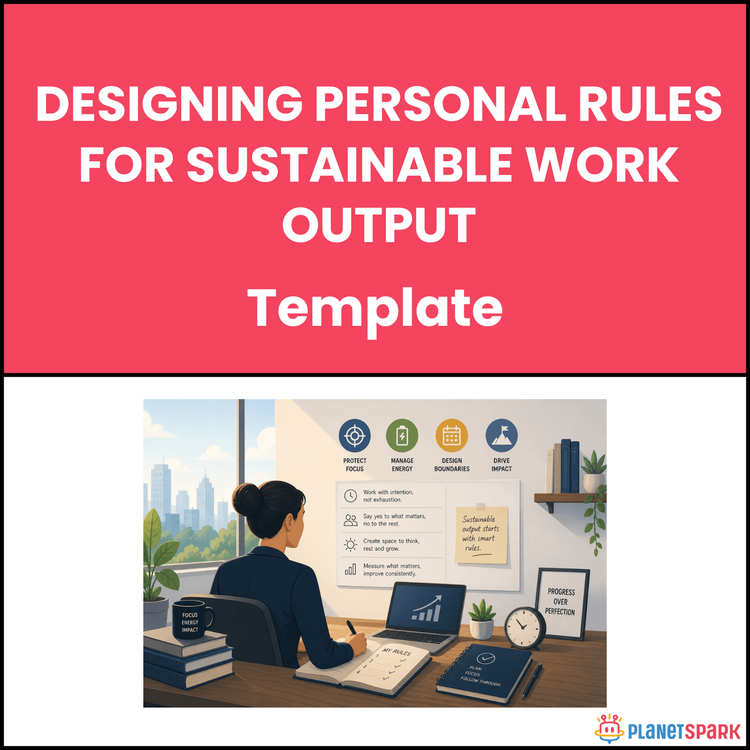
Designing Personal Rules for Sustainable Work Output
Designing Personal Rules for Sustainable Work Output: A Practical System to Improve Focus, Energy, and Performance
Most professionals don’t struggle because they lack discipline or ambition—they struggle because they don’t have clear rules for how they work.
If your week starts with a plan but quickly turns into back-to-back meetings, reactive emails, and unfinished priorities, you’re not alone. By the end of the week, it often feels like you were busy—but not effective. And over time, this pattern leads to fatigue, frustration, and inconsistent output.
That’s exactly why the resource “Designing Personal Rules for Sustainable Work Output” exists. It helps you move from reactive working to intentional performance by building a personal system that protects your time, energy, and focus—without requiring drastic changes or unrealistic routines.
Who Is This Resource For?
This resource is especially valuable if you are:
- A working professional with 0–15 years of experience
- A manager, consultant, or individual contributor handling multiple responsibilities
- Someone constantly pulled into meetings, emails, and reactive tasks
- A professional struggling to find time for deep, meaningful work
- A high performer facing inconsistent output or burnout risk
- Someone who wants to improve productivity without working longer hours
If you feel like your calendar controls your day instead of the other way around, this guide is built for you.
What Does This Resource Contain?
This is not a productivity hack or time-management checklist. It’s a structured playbook to help you design your own “personal operating system” for work.
Inside the resource, you’ll find:
- A clear explanation of why most professionals struggle with output—not due to effort, but lack of rules
- A 5-day Work Audit framework to track how you actually spend your time and energy
- The Four Pillars of Sustainable Work Output:
- Energy Architecture (protecting peak focus time)
- Input Filters (deciding what gets your attention)
- Output Standards (defining what “done” means)
- Recovery Rhythms (ensuring consistent energy)
- Step-by-step guidance to design your own rules for each pillar
- Real examples of effective rules used by high-performing professionals
- Fill-in worksheets to create personalized, practical rules
- A Personal Rules Consolidation Sheet (your one-page system)
- A Rule Stress-Test Checklist to ensure your rules are realistic and sustainable
- A real-world case study showing how better rules led to better output—not longer hours
- Common mistakes professionals make when creating rules—and how to fix them
- A weekly and quarterly review system to keep your rules relevant over time
Everything is built for real-world application—not theory.
Summary of the Resource
“Designing Personal Rules for Sustainable Work Output” is a practical guide that helps you build a clear, structured system for how you work.
Instead of relying on motivation or discipline, it gives you a set of rules that guide your decisions—what to take on, how to work, and when to stop.
The result: better focus, higher-quality output, and sustainable performance without burnout.
How Will This Resource Be Useful?
This resource helps you shift from scattered effort to structured execution.
You’ll gain:
- Clear visibility into how you actually spend your time and energy
- Strong boundaries around meetings, tasks, and interruptions
- More time for deep, high-impact work
- Reduced mental fatigue from constant decision-making
- Better consistency in output quality
- A sustainable way to perform at a high level without overworking
Most importantly, it helps you take back control of your workday.
How Should You Use This Resource?
To get the best results, follow a structured approach:
Start with the 5-day work audit. Track what you do, your energy levels, and the value of your output. This step is critical—it ensures your rules are based on reality, not assumptions.
Next, analyze your patterns. Identify your peak energy hours, biggest time drains, and gaps in meaningful work.
Then, build your rules across the four pillars:
- Protect your peak hours (Energy Architecture)
- Filter what you say yes to (Input Filters)
- Define what “done” means (Output Standards)
- Set clear boundaries for rest (Recovery Rhythms)
Once your rules are defined, consolidate them into a single, visible system. This becomes your personal operating guide.
Finally, review and refine:
- Do a quick weekly check-in to see what worked
- Conduct a deeper quarterly review to adjust your rules as your role evolves
This is not a one-time exercise—it’s a system you improve over time.
Action Steps
After accessing this resource, take these steps immediately:
1. Block 30–45 minutes to plan your work audit
2. Track your work patterns for 5 consecutive days
3. Identify your biggest time drain and peak energy window
4. Create 2–3 simple rules (start small):
- One for protecting focus time
- One for reducing unnecessary inputs
5. Write your rules in clear, specific language
6. Test them for one week in real work conditions
7. Schedule a weekly 10–15 minute review to refine them
Small, consistent rule changes can dramatically improve how you work.
Most professionals try to fix productivity by working harder or managing time better. But real improvement comes from changing how you make decisions about your work.
That’s what personal rules do.
They remove guesswork, reduce overwhelm, and create a structure where high-quality output becomes repeatable—not accidental.
Use this resource to build a system that supports your ambition without draining your energy. Because sustainable success isn’t about doing more—it’s about doing what matters, consistently.
Book your free session today!