
Designing Personal Systems to Prevent Burnout Cycles

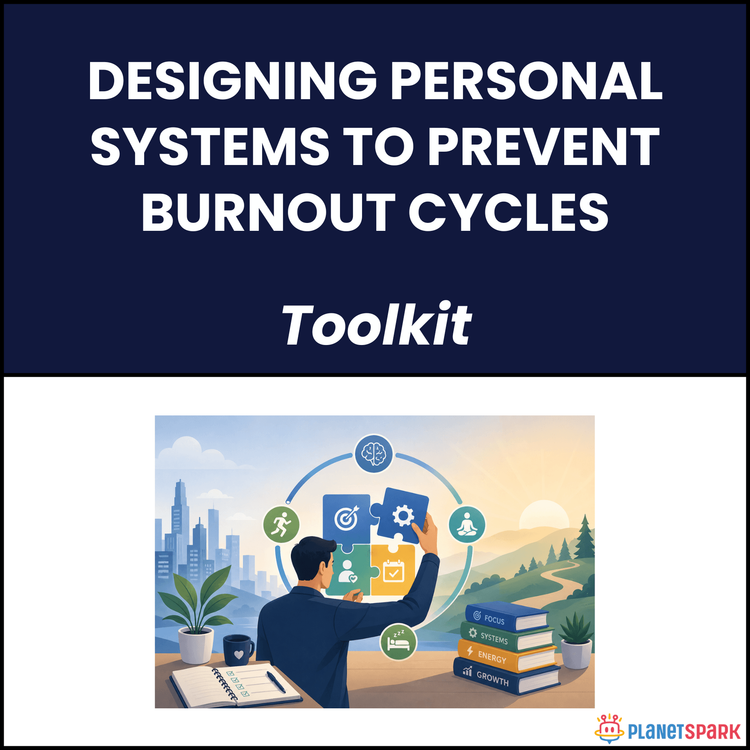
Designing Personal Systems to Prevent Burnout Cycles
Creating Personal Systems to Break the Burnout Cycle: A Practical Toolkit for Professionals
Burnout isn't just a one-time event—it's a cycle. Many professionals push hard to achieve success, only to fall into a cycle of exhaustion, brief recovery, and then back to high-pressure work. This cycle repeats and erodes not only your energy but also your clarity, creativity, and emotional resilience. The key to preventing burnout isn't working less, but designing a personal system that actively prevents it.
Who Is This Resource For?
This toolkit is designed for:
- Career changers navigating unfamiliar territory
- Mid-career professionals balancing multiple responsibilities
- Consultants juggling client demands
- Managers aiming for sustainable, high-performance work lives
If you’re ready to build a more sustainable work life and avoid repeating burnout cycles, this toolkit is for you.
What Does This Resource Contain?
This resource provides actionable steps to create a personal system for preventing burnout. Key components include:
- Identifying your Burnout Signature by understanding your unique burnout triggers and early warning signs
- Mapping your Energy Architecture to identify areas of energy depletion and gain clarity on how to manage it
- Building a Boundary Architecture that ensures your time, attention, and emotional energy are protected
- Designing a Recovery Protocol to integrate intentional recovery into your work life
- Creating a Weekly Sustainability Rhythm to balance deep work, meetings, recovery, and reflection
The toolkit includes worksheets, checklists, and real-world examples to help you implement each step.
Summary of the Resource
The core idea of this toolkit is to move beyond reactive recovery and instead create a structured system that helps you manage your energy, set firm boundaries, and ensure consistent recovery. By doing so, you’ll break the burnout cycle and set yourself up for long-term success.
How Will This Resource Be Useful?
By using this toolkit, you will:
- Understand your personal burnout patterns and recognize the early warning signs
- Build an energy management system that allows you to perform at a high level without depleting yourself
- Set clear boundaries to protect your time, energy, and mental health
- Develop an active recovery strategy to replenish your energy and prevent burnout
- Establish a weekly rhythm that prioritizes deep work and recovery, ensuring consistent performance
How Should You Use This Resource?
Follow these steps to implement the toolkit effectively:
1. Know Your Burnout Signature: Complete the Burnout Signal Audit to identify your personal warning signs. Understanding how burnout manifests for you is the first step to breaking the cycle.
2. Map Your Energy Architecture: Rate your physical, emotional, mental, and purposeful energy to identify where you need support. This self-assessment will guide your recovery and energy management strategies.
3. Build Your Boundary Architecture: Define boundaries across time, attention, and emotional labor. Use the worksheet to set clear, actionable boundaries that you can communicate to others.
4. Activate Your Recovery Protocol: Develop a structured recovery protocol using the Three-Tier Recovery Framework—micro-recovery daily, mid-recovery weekly, and deep recovery quarterly.
5. Design Your Weekly Sustainability Rhythm: Use the Weekly Sustainability Rhythm template to structure your workweek, balancing deep work, meetings, and recovery.
Action Steps
Here’s how to get started:
1. Complete the Burnout Signal Audit today to identify your early burnout signs.
2. Rate your energy dimensions (physical, emotional, mental, and purposeful) and identify the two areas that need the most attention.
3. Set your boundaries for time, attention, and emotional labor by using the Boundary Architecture worksheet.
4. Activate your recovery protocol by scheduling daily, weekly, and quarterly recovery activities.
5. Design your weekly rhythm to incorporate deep work blocks and regular recovery periods.
By following these steps, you’ll be able to prevent burnout and create a sustainable work routine that supports long-term success.
Your Next Step: Start with the Burnout Signal Audit today, and then move on to creating your Boundary Architecture.
Book your free session today!