Designing Your Career Identity Around Long-Term Optionality

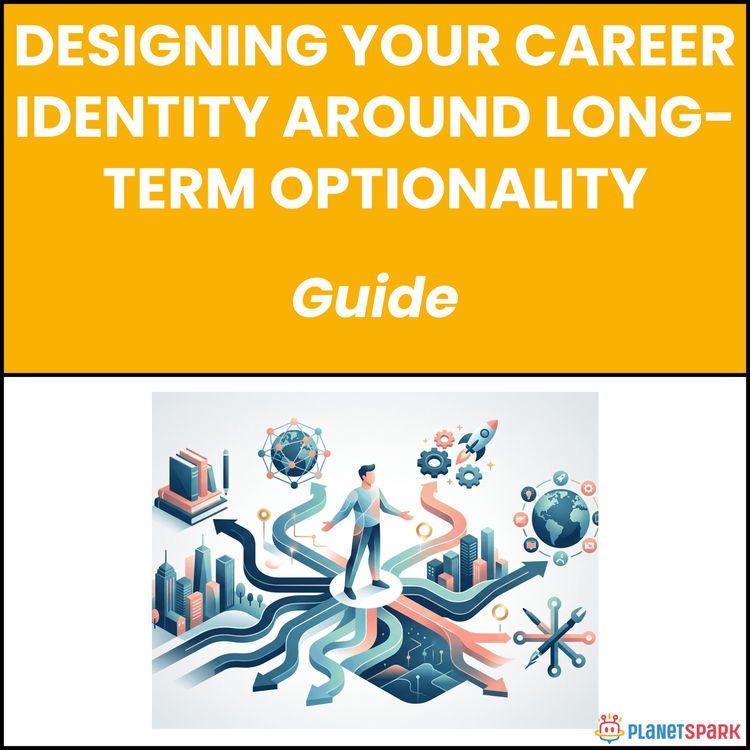
Designing Your Career Identity Around Long-Term Optionality
Design Your Career Identity for Long-Term Success: A Step-by-Step Guide for Professionals
Are you feeling stuck in your career, unsure of how to stay relevant or grow in today’s rapidly changing job market? It’s a real challenge to stay competitive, especially as industries evolve at lightning speed. Whether you’re looking to pivot roles, expand your skills, or future-proof your career, the key to long-term success lies in how you design your career identity. This resource will help you proactively build a career that is flexible, adaptable, and full of opportunity.
Who Is This Resource For?
This guide is ideal for:
- Early to Mid-Career Professionals: Individuals still exploring career paths or feeling uncertain about their next move.
- Career Switchers: Those looking to transition into new roles or industries.
- Managers and Consultants: Professionals looking to sharpen their strategic edge while ensuring their skills remain in demand.
- Professionals Facing Industry Disruption: If you’re navigating sector changes or potential layoffs, this guide provides a roadmap for creating a career identity that’s more resilient.
What Does This Resource Contain?
This guide breaks down how to design a career identity based on long-term optionality. It includes:
- The Optionality Identity Model: A framework that emphasizes building a professional identity with transferable skills, depth, and adaptability.
- Worksheets and Reflection Prompts: These tools will help you conduct a personal audit of your career identity, from how you see yourself to how the market perceives you.
- Actionable Steps: Clear, structured steps to help you define your core competencies, build transferable signals, craft your career narrative, and strategically build your relationship capital.
- Case Studies & Examples: Real-world stories of professionals who have successfully redesigned their careers.
- Practical Templates: Ready-to-use templates to help you articulate your professional value and future direction.
Summary of the Resource
At its core, this resource provides a framework to help you design your career with long-term optionality — the ability to move freely across roles and industries while remaining relevant and adaptable. Through a combination of reflection, structured worksheets, and strategic tools, this guide empowers professionals to create a career identity that can evolve with shifting market demands. The key to succeeding in a fast-paced, uncertain world is to proactively build a career that’s not just about today’s job title, but one that offers flexibility and potential for growth in the future.
How Will This Resource Be Useful?
By applying the principles in this guide, you’ll be able to:
- Build a Resilient Career Identity: Move beyond reactive career decisions and focus on intentionally designing a professional identity that opens doors to multiple opportunities.
- Enhance Marketability: Develop a set of transferable skills that are not only relevant today but remain valuable as you pivot between roles, industries, or geographies.
- Increase Confidence: Gain clarity on your core competencies, career narrative, and personal brand, which will make you a more confident decision-maker in career transitions.
- Improve Networking: Strengthen your professional relationships and strategically expand your network across multiple industries, functions, and levels.
How Should You Use This Resource?
This guide is designed to be both read as a sequential manual or used as a reference when needed. Here’s how to make the most of it:
1. Start with the Audit: Complete the “Identity Gap Map” worksheet to get an honest assessment of your current career positioning.
2. Define Your Core Competency: Use the Precision Competency Statement formula to articulate your core value clearly and precisely.
3. Build Transferable Signals: Create tangible proof points (like case studies or LinkedIn posts) that demonstrate the value you offer.
4. Craft Your Career Narrative: Use the Narrative Bridge Exercise to shape a compelling story that explains your past, anchors your present value, and signals your future.
5. Build Relationship Capital: Make a deliberate effort to expand your network beyond your current industry, focusing on Tier 2 and Tier 3 relationships.
6. Make Future Bets: Identify skills and domains you can invest in today that will provide long-term value in the future.
Action Steps
1. Complete the Identity Gap Map: Start by evaluating how your current career identity matches how you want to be perceived.
2. Write Your Precision Competency Statement: Draft your competency statement using the guide’s formula and test it with colleagues.
3. Build Transferable Signals: Choose at least one action you can take in the next 30 days to start creating visible signals of your work.
4. Expand Your Network: Focus on building at least one meaningful connection outside of your immediate circle this month.
5. Make Your First Future Bet: Identify one new skill or domain you’ll invest in for the next 1–3 years.
Outro / Closing
Building your career identity around long-term optionality is not a one-time task — it’s an ongoing practice that ensures your relevance and adaptability over the course of your professional journey. By following the steps in this guide, you’ll be equipped to confidently navigate career changes, build deeper relationships, and create new opportunities — all while staying true to the core of your professional identity. Start today by taking one small action, and see how it can change the course of your career.