
Designing Your Personal Brand Operating System for Consistency

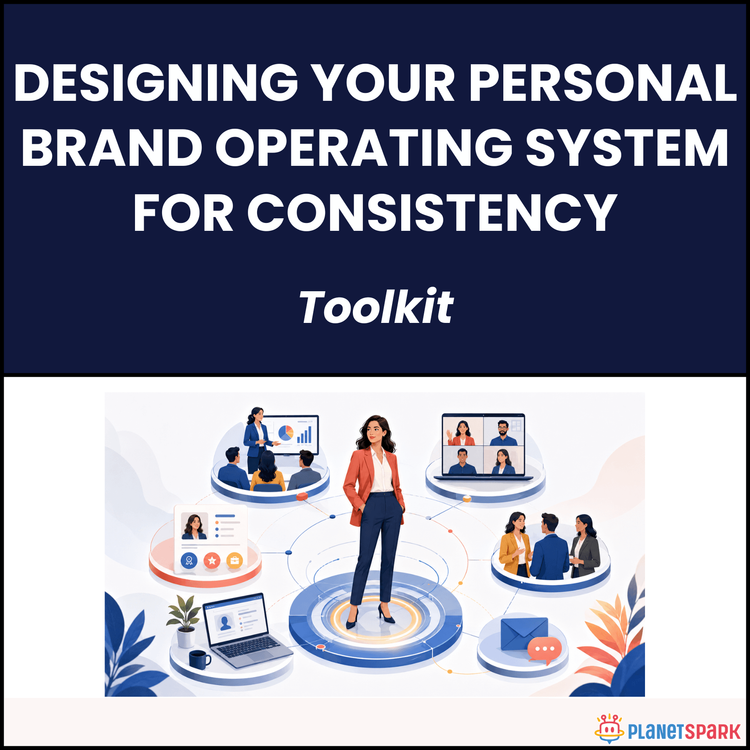
Designing Your Personal Brand Operating System for Consistency
Designing Your Personal Brand Operating System for Consistency: A Practical Toolkit for Building a Clear, Consistent Professional Brand
Your personal brand is not just your LinkedIn headline, your resume summary, or the way you introduce yourself in an interview. It is the full picture people form about you every time they see your name, read your content, hear your pitch, review your portfolio, or receive a message from you.
The problem is that most professionals build that picture by accident.
One version of their bio appears on LinkedIn. Another version appears on their resume. Their elevator pitch sounds different from their website. Their content does not connect to their career goals. Their profile photo, tone, and messaging shift from platform to platform.
Over time, this creates confusion.
And in a competitive professional world, confusion weakens trust.
That is exactly why the “Designing Your Personal Brand Operating System for Consistency” toolkit exists. It helps professionals stop improvising their personal brand and start building it like a system. Instead of guessing what to say, where to show up, or how to sound consistent, this resource gives you structured templates to define, align, audit, and maintain your professional identity across every touchpoint.
Whether you are job searching, preparing for interviews, building a consulting practice, refreshing your online presence, or trying to become more visible in your industry, this toolkit helps you communicate who you are with clarity and confidence.
Who Is This Resource For?
This personal branding toolkit is designed for working professionals who want to be seen, remembered, and trusted for the right reasons.
It is especially useful for:
- Job seekers who want their LinkedIn profile, resume, portfolio, and interview pitch to tell one consistent story
- Career switchers who need to reposition themselves clearly for a new industry, role, or audience
- Consultants and freelancers who want a stronger, more professional presence across platforms
- Managers and early leaders who want to build credibility beyond their current job title
- Professionals with 0–15 years of experience who are ready to move from scattered branding to intentional positioning
- Speakers, creators, or thought leaders who want their content, voice, visuals, and professional story to feel aligned
- Anyone preparing for networking events, interviews, promotions, media features, or public-facing opportunities
This resource is not just for people who want to “look polished” online. It is for professionals who want their brand to support real outcomes: better opportunities, stronger conversations, clearer positioning, and more confidence when presenting themselves.
What Does This Resource Contain?
The toolkit includes 10 practical templates, each designed for a specific personal branding scenario. Together, they help you create a complete Personal Brand Operating System, or PBOS, that keeps your messaging, visuals, content, and professional communication consistent.
1. Brand Identity Blueprint
This is the foundation of the toolkit. It helps you define who you are professionally, what you stand for, what makes you different, who your audience is, and what brand promise you want to communicate.
You will work through sections such as:
- Professional title or role descriptor
- Years of experience and domain focus
- Core values
- Key differentiators
- Target audience
- Brand promise
This template is especially useful when you are building or rebuilding your personal brand from scratch.
2. Multi-Platform Bio Consistency Kit
Most professionals need more than one bio. A short bio for email signatures. A medium bio for LinkedIn or speaker introductions. A longer bio for websites, media kits, or professional profiles.
This template helps you create all three while keeping the same core message intact.
It includes:
- A short bio format of 25–40 words
- A medium bio format of 75–100 words
- A long bio format of 150–250 words
- A checklist to ensure your bios use the same role descriptor, differentiators, tone, name format, and next step
This is useful when your online presence feels inconsistent or outdated.
3. Brand Voice and Tone Style Guide
A strong personal brand does not just look consistent. It sounds consistent.
This template helps you define how your brand should communicate in writing, whether you are posting on LinkedIn, writing articles, sending emails, or preparing proposals.
It guides you through:
- Choosing a brand voice archetype
- Defining words and phrases you always use
- Identifying words and jargon you avoid
- Mapping your tone across formal, conversational, serious, playful, broad, niche, humble, and confident scales
- Setting writing style rules
- Creating before-and-after examples in your own voice
This section helps prevent your communication from sounding generic or disconnected from your actual professional personality.
4. Digital Presence Audit Tracker
Before improving your brand, you need to know where it currently stands.
The Digital Presence Audit Tracker helps you review each platform where you appear online and identify what needs to be updated, improved, archived, or aligned.
It includes a practical framework to:
- Discover all platforms where you appear
- Evaluate consistency and recency
- Identify gaps or off-brand content
- Prioritise fixes
You can review platforms such as LinkedIn, personal websites, portfolios, GitHub, Behance, Dribbble, Twitter/X, Instagram, Medium, Substack, or any other platform relevant to your work.
5. Thought Leadership Content Planner
If you want to build authority, posting randomly is not enough. Your content needs to connect to your expertise and positioning.
This template helps you define content pillars and plan 30 days of brand-aligned content across LinkedIn, blogs, newsletters, or other platforms.
It includes:
- Space to define 3–4 content pillars
- Posting frequency goals
- Primary platform selection
- A 30-day content calendar
- Post formats such as story posts, list posts, opinion posts, case studies, curation posts, and question posts
This is especially useful for professionals who want to publish consistently without scrambling for ideas every week.
6. Elevator Pitch Scripting Framework
Your personal brand should not only work in writing. It should also work when you speak.
This template helps you create 30-second, 60-second, and 90-second versions of your professional pitch for networking events, interviews, conferences, introductions, and client meetings.
The framework includes four core parts:
- Hook
- Who and what
- Proof
- Call to action
It also includes practice notes to help your pitch sound natural rather than over-rehearsed.
7. Professional Story Narrative Map
One of the biggest mistakes professionals make is listing jobs instead of telling a story.
This template helps you turn your career journey into a clear narrative arc that can be used in your LinkedIn About section, interview answers, speaker bio, or personal website.
The story structure includes:
- The Origin: where you began
- The Challenge: what you had to figure out
- The Shift: what changed
- The Proof: what you built or achieved
- The Now: where you are headed
It also includes formatting guidance for LinkedIn and delivery guidance for interviews.
8. Visual Brand Standards One-Pager
Visual consistency matters because people remember patterns. If your profile photo, colours, fonts, and graphics change across platforms, your brand can feel less professional and less recognisable.
This template helps you document your visual standards, including:
- Profile photo guidelines
- Colour palette
- Typography
- Graphic style rules
- Photography style
- Logo or wordmark placement
- Brand mark or signature graphic
This is useful for LinkedIn, websites, presentations, media kits, and branded documents.
9. Brand Consistency Review Scorecard
Personal branding is not a one-time task. It needs review and maintenance.
This scorecard gives you a quarterly self-assessment tool to measure how consistent your brand is across messaging, bios, visuals, tone, content, pitch, network communication, platform completeness, proof points, and relevance.
You can score yourself from 1 to 5 across key criteria and identify what needs to be fixed in the next quarter.
The score interpretation helps you understand whether your brand is highly consistent, mostly consistent, significantly inconsistent, or in need of a full overhaul.
10. Network Touchpoint Communication Log
Your personal brand is not only public. It shows up in private messages, follow-ups, check-ins, and one-to-one professional interactions.
This template helps you maintain brand-consistent communication when nurturing relationships with recruiters, mentors, peers, potential clients, or professional contacts.
It includes:
- Network communication principles
- Message templates for first connection requests
- Follow-up messages after meetings or events
- Value-first check-ins
- A relationship tracker for logging touchpoints, responses, outcomes, and next steps
This is especially helpful for professionals who want to build stronger relationships without sounding generic or transactional.
Summary of the Resource
The “Designing Your Personal Brand Operating System for Consistency” toolkit helps you turn your personal brand into a structured, repeatable system.
Instead of treating personal branding as a one-time profile update, it helps you manage the full experience people have of you across platforms, conversations, content, visuals, and professional relationships.
In simple terms, this resource helps you answer five important questions:
- Who am I professionally?
- What do I want to be known for?
- How do I communicate my value consistently?
- Where is my current brand inconsistent or outdated?
- How do I maintain my brand over time?
The outcome is not just a better-looking profile. The outcome is clarity.
You know what to say. You know how to say it. You know where to update it. You know how to review it. And you know how to keep your brand aligned as your career evolves.
How Will This Resource Be Useful?
This toolkit is useful because it turns an abstract concept into practical action.
Many professionals know they need a personal brand, but they do not know where to begin. This resource removes that uncertainty by giving you ready-to-use templates for the most important personal branding situations.
It helps you create clarity around your professional identity
When you complete the Brand Identity Blueprint, you define your values, differentiators, audience, and brand promise. This makes it easier to introduce yourself, write your bio, update your profiles, and communicate your expertise without overthinking every word.
It helps you become more consistent across platforms
A recruiter, hiring manager, client, or industry peer may encounter you in multiple places before making a decision about you. They may see your LinkedIn profile, read your resume, visit your portfolio, hear your pitch, or receive your email.
This toolkit helps ensure each of those touchpoints tells the same story.
It helps you improve your online presence before opportunities arise
The Digital Presence Audit Tracker helps you identify outdated bios, incomplete profiles, inconsistent visuals, and missing proof points before they cost you opportunities.
This is especially valuable before a job search, career pivot, promotion cycle, speaking opportunity, or consulting launch.
It helps you communicate your value in outcome-driven language
The templates encourage you to move beyond job-title descriptions and focus on outcomes, proof points, audience needs, and specific results.
That shift matters because people do not only want to know what you do. They want to know why it matters.
It helps you prepare for interviews and networking conversations
The Elevator Pitch Scripting Framework and Professional Story Narrative Map help you speak about yourself with confidence. Instead of giving a scattered answer to “Tell me about yourself,” you can structure your story clearly and adapt it to different professional situations.
It helps you build thought leadership with less friction
The Thought Leadership Content Planner gives you a practical way to plan content around defined pillars. This helps you publish with more intention and avoid random posting that does not support your professional goals.
It helps you maintain your brand over time
The Brand Consistency Review Scorecard and Network Touchpoint Communication Log help you treat personal branding as an ongoing system. You can review your brand quarterly, update what has changed, and keep your communication aligned as your career grows.
How Should You Use This Resource?
You can use this toolkit in two ways: as a full personal brand build or as a targeted problem-solving resource.
If you are building your personal brand from the beginning, work through the templates in order. If you already have a clear brand but need help with a specific area, go directly to the template that matches your current need.
Here is a practical way to approach it.
Step 1: Start with your foundation
Begin with the Brand Identity Blueprint. Do not skip this step if your positioning feels unclear.
Use it to define:
- Your professional role descriptor
- Your core values
- Your differentiators
- Your target audience
- Your brand promise
This becomes the anchor for everything else.
Step 2: Align your written identity
Next, complete the Multi-Platform Bio Consistency Kit. Write your short, medium, and long bios using the same core message.
Then compare them against the checklist. Make sure your name, role descriptor, tone, differentiators, and next step are consistent.
Step 3: Define how your brand should sound
Use the Brand Voice and Tone Style Guide to document your communication style. This is especially useful if you create content, send proposals, write emails, or work with others who may help you create professional materials.
The goal is to make your writing recognisable and authentic.
Step 4: Audit your current digital presence
Use the Digital Presence Audit Tracker to review your online platforms. Be honest about what is outdated, incomplete, or inconsistent.
Score each platform and identify your top three priority fixes.
Do not try to update everything at once. Start with the platforms most likely to influence your current career goal.
Step 5: Plan your visibility
If you want to build authority, use the Thought Leadership Content Planner. Define your content pillars first, then build your 30-day calendar.
Focus on content that supports your expertise, not content that simply fills space.
Step 6: Prepare your spoken brand
Use the Elevator Pitch Scripting Framework to create three versions of your pitch. Record yourself saying them out loud. Adjust the language until it sounds natural.
Then use the Professional Story Narrative Map to prepare a stronger career story for interviews, LinkedIn, speaker bios, or personal websites.
Step 7: Standardise your visuals
Use the Visual Brand Standards One-Pager to document your photo, colour palette, fonts, and graphic style. This helps you look consistent across professional platforms and materials.
You do not need a complicated design system. You need simple, repeatable rules.
Step 8: Review and maintain your brand
Use the Brand Consistency Review Scorecard every quarter. Your goals, role, proof points, and audience may change over time. This template helps you keep your brand current instead of letting it become stale.
Use the Network Touchpoint Communication Log every two weeks if you are actively networking, job searching, consulting, or building professional relationships.
Action Steps
Once you access the resource, do not try to complete everything in one sitting. Use it strategically.
Start with these steps:
1. Complete the Brand Identity Blueprint first. This gives you the foundation for your positioning, messaging, and professional story.
2. Update your LinkedIn headline and About section using the Multi-Platform Bio Consistency Kit.
3. Audit your top three platforms using the Digital Presence Audit Tracker. For most professionals, this will be LinkedIn, resume or portfolio, and one additional platform relevant to their field.
4. Write your 60-second elevator pitch using the Elevator Pitch Scripting Framework. Practise it out loud until it feels conversational.
5. Choose three content pillars using the Thought Leadership Content Planner. Use them to plan your next four posts, articles, or professional updates.
6. Review your visuals using the Visual Brand Standards One-Pager. Make sure your profile photo, colours, and presentation style are consistent.
7. Set a quarterly reminder to complete the Brand Consistency Review Scorecard. Personal branding works best when it is maintained, not forgotten.
8. Use the Network Touchpoint Communication Log if you are reaching out to recruiters, mentors, peers, clients, or industry contacts.
The most important step is to apply the toolkit to real situations. Update a profile. Rewrite a bio. Practise a pitch. Send a better follow-up message. Plan content that reflects your expertise.
A strong personal brand is not built by thinking about it. It is built by using it.
Your professional reputation is shaped by every signal you send. The clearer and more consistent those signals are, the easier it becomes for others to understand your value, remember your strengths, and trust your expertise.
The “Designing Your Personal Brand Operating System for Consistency” toolkit gives you a practical way to build that consistency with intention. It helps you move from scattered communication to structured positioning, from improvised introductions to confident storytelling, and from occasional updates to a repeatable system you can maintain throughout your career.
Use it when you are preparing for a career move. Use it when your online presence feels outdated. Use it when you want to show up more confidently in interviews, networking conversations, content, or client-facing opportunities.
Your personal brand does not need to be loud to be effective. It needs to be clear, credible, and consistent.