
Developing A Strategic Communication Skillset Over Time

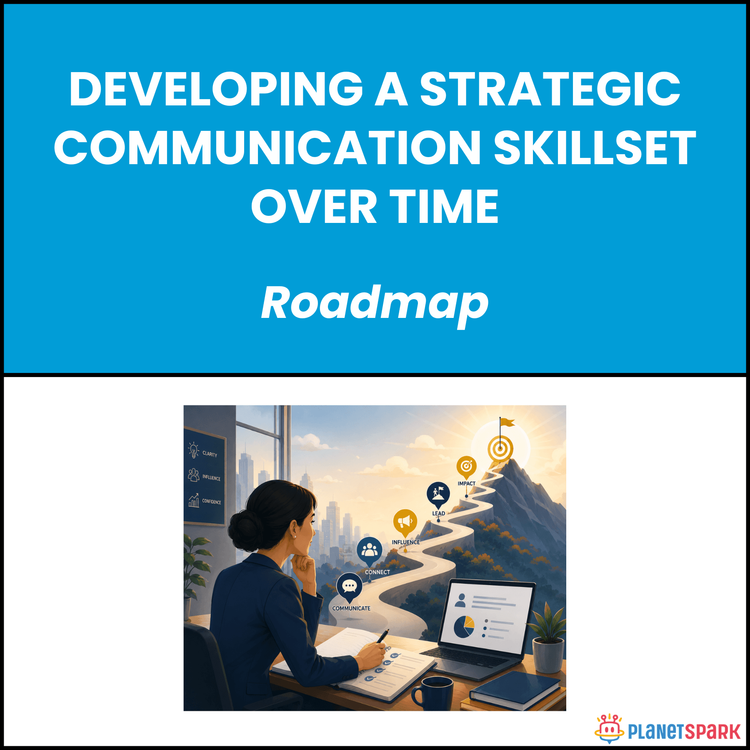
Developing A Strategic Communication Skillset Over Time
Mastering Workplace Communication
Strong communication is often treated like a “nice-to-have” skill in the workplace—until missed opportunities, unclear messaging, difficult meetings, or stalled career growth make its importance impossible to ignore.
Many professionals work hard, deliver quality results, and develop strong technical expertise. Yet they still struggle to influence decisions, communicate confidently with senior stakeholders, or make their ideas truly land in high-pressure situations.
That’s where strategic communication changes everything.
This resource was created for professionals who want to move beyond simply “speaking well” and start communicating with purpose, clarity, and influence over the long term. Instead of focusing on generic communication advice, it provides a structured roadmap for building communication capability intentionally across different career stages.
Whether you are early in your career, transitioning into leadership, managing stakeholders, or trying to strengthen your executive presence, this guide helps you build communication as a long-term professional advantage—not just a temporary skill.
Who Is This Resource For?
This resource is especially useful for:
- Early-career professionals building workplace confidence
- Managers and team leads who need stronger influence skills
- Consultants and client-facing professionals handling high-stakes conversations
- Career switchers adapting to new industries and workplace dynamics
- Professionals preparing for leadership responsibilities
- Individuals who feel technically strong but struggle to communicate impact effectively
- Professionals who want to improve clarity, confidence, and presence in meetings
If you often feel overlooked despite doing strong work, struggle to articulate ideas clearly under pressure, or want to communicate with more authority and intention, this guide is designed for you.
What Does This Resource Contain?
This resource offers a practical, phased communication development roadmap instead of disconnected tips.
Inside, you’ll find:
- A three-phase communication growth framework covering Awareness, Application, and Mastery
- Practical communication habits for early-career professionals
- Guidance on improving listening, clarity, tone, and professional presence
- Frameworks for influencing stakeholders without formal authority
- Strategies for structuring presentations and written communication effectively
- The BLUF (Bottom Line Up Front) communication approach for concise messaging
- Audience-mapping techniques for high-stakes communication
- Practical methods for handling meetings, presentations, and stakeholder discussions
- Reflection worksheets to identify communication strengths and gaps
- The IMPACT communication planning framework for important conversations
- Real-world professional case studies showing communication transformation in action
- Self-assessment tools to track growth over time
- A practical 30-day action plan for implementation
Everything inside the resource is designed to be immediately actionable and professionally relevant.
Summary of the Resource
“Developing a Strategic Communication Skillset Over Time” is a structured professional development guide that helps working professionals strengthen communication intentionally across every stage of their career.
Rather than treating communication as talent or personality, the guide breaks it down into trainable, practical behaviours that improve clarity, influence, leadership presence, and decision-making effectiveness.
The resource focuses on real workplace outcomes: better meetings, stronger stakeholder alignment, improved executive communication, greater professional credibility, and long-term career growth.
How Will This Resource Be Useful?
This resource helps professionals communicate more strategically instead of reactively.
By applying the frameworks and exercises inside, readers can:
- Improve clarity in verbal and written communication
- Build confidence in meetings and presentations
- Influence decisions more effectively
- Reduce misunderstandings and communication friction
- Strengthen executive presence over time
- Handle difficult conversations more calmly and strategically
- Build stronger relationships with managers, peers, and stakeholders
- Communicate complex ideas more simply and persuasively
- Create consistency across email, meetings, presentations, and workplace interactions
One of the biggest strengths of this guide is that it treats communication as a long-term career lever. Small improvements made consistently can compound into stronger visibility, leadership opportunities, and professional trust over time.
How Should You Use This Resource?
To get maximum value from this guide, approach it as an active practice resource—not passive reading material.
Start by reading through the full roadmap once to understand the three communication phases and identify where you currently stand.
Next, complete the reflection exercises honestly. The self-awareness sections are designed to help you recognise patterns that may be limiting your communication effectiveness without you realising it.
Then begin applying one framework at a time in real workplace situations.
For example:
- Use the BLUF method in emails and updates
- Apply the IMPACT planner before important conversations
- Practise concise communication in meetings
- Audit your tone consistency across communication channels
- Review stakeholder conversations with audience-mapping techniques
Do not try to improve everything at once.
Instead, focus on one or two communication behaviours consistently for several weeks. Communication capability improves through repetition, reflection, and deliberate practice.
You can also revisit this resource:
- Before performance reviews
- During leadership transitions
- When preparing for presentations
- While managing stakeholder conflicts
- Before interviews or client conversations
- During career growth planning
Action Steps
After accessing this resource, take these steps immediately:
1. Identify which communication phase best reflects your current professional stage
2. Complete the Communication Baseline reflection exercise honestly
3. Choose one communication habit to improve over the next 30 days
4. Apply the BLUF framework to your next important email or update
5. Use the IMPACT planner before a high-stakes conversation
6. Ask a trusted colleague or manager for specific communication feedback
7. Track your progress weekly through self-reflection or journaling
Consistent small improvements often create the biggest professional shifts over time.
Communication is not just about speaking clearly. It is about creating understanding, building trust, influencing outcomes, and helping others move toward action with confidence.
Professionals who communicate strategically are often the ones who gain visibility, build stronger relationships, lead more effectively, and create long-term career momentum—even in highly competitive environments.
This resource gives you a practical roadmap to build those capabilities intentionally, one conversation at a time.