
Developing Long-Term Energy Discipline for Career Longevity

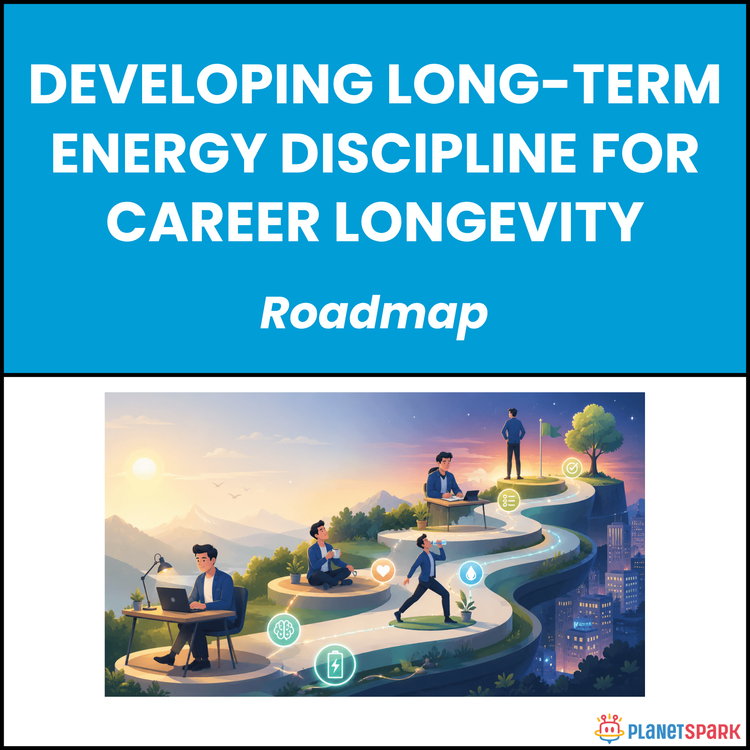
Developing Long-Term Energy Discipline for Career Longevity
Developing Long-Term Energy Discipline for Career Longevity
Most professionals are taught to manage time.
They block calendars, track tasks, and plan their weeks carefully. But even with a well-organised schedule, many still end the week feeling exhausted, distracted, and behind.
The real issue is often not time. It is energy.
The resource “Developing Long-Term Energy Discipline for Career Longevity” helps working professionals understand, protect, and rebuild their energy so they can perform well over the long term without burning out.
This roadmap is practical, structured, and easy to apply. It helps you identify what drains you, design a better work rhythm, recover strategically, and build emotional and purpose-based resilience for a sustainable career.
Who Is This Resource For?
This resource is useful for working professionals who want to sustain performance without constantly feeling depleted.
It is especially helpful for:
Early-career professionals building healthy work habits
Career switchers adjusting to new demands
Managers balancing execution, people, and decision-making
Consultants managing high-pressure client work
Professionals who feel productive on the outside but drained inside
People who rely too much on caffeine, willpower, or weekends to recover
Anyone who wants long-term career growth without repeated burnout cycles
If you often feel like your calendar is full but your energy is empty, this roadmap gives you a better system.
What Does This Resource Contain?
A Practical Energy Management Roadmap
The resource is built around the idea of Long-Term Energy Discipline.
This means creating habits and decisions that protect your ability to perform over months and years, not just during one busy week.
The roadmap includes:
Energy awareness frameworks
Self-audit prompts
Checklists
Daily rhythm templates
Recovery strategies
Purpose alignment questions
A 30-day starter plan
Real-world case examples
It is designed to be read once fully, then revisited regularly as your career and workload change.
Understanding Your Personal Energy Architecture
The first module explains that energy is not one single thing.
It is divided into four dimensions:
Physical energy
Mental energy
Emotional energy
Purpose energy
Physical energy includes sleep, movement, nutrition, and recovery.
Mental energy includes focus, decision-making, analysis, and creative thinking.
Emotional energy includes boundaries, self-awareness, workplace relationships, and emotional processing.
Purpose energy comes from alignment between your daily work and your larger values or goals.
The resource makes it clear that these four areas are connected. If one area is neglected for too long, the others are affected too.
Energy Leak Audit
The next section helps you identify where your energy is being drained.
Common energy leaks include:
Reactive email and message habits
Unnecessary meetings
Unresolved workplace conflict
Misaligned tasks
Perfectionistic rework
Skipping meals or breaks
Carrying work anxiety into personal time
Feeling guilty when not producing
The Energy Leak Audit Checklist helps you review your recent work patterns honestly.
This section is useful because many professionals try to add new productivity habits without first fixing what is draining them.
The message is simple:
Close the leaks before trying to optimise.
Daily Energy Rhythm Design
The roadmap then helps you design your workday around your natural energy patterns.
It explains that not all hours are equal.
Your peak cognitive window is best used for deep work, important decisions, writing, planning, and high-value tasks.
The resource breaks the day into common energy zones:
Morning peak
Midday dip
Afternoon window
Evening wind-down
It also includes a Daily Rhythm Design Template, showing which tasks fit best into different parts of the day.
The key principles include:
Protect your peak window
Schedule recovery breaks
Batch similar tasks
Create a clear shutdown routine
This section helps professionals stop using their best energy on low-value tasks like email or admin.
Strategic Recovery
The resource explains that recovery is not laziness.
Recovery is part of high performance.
It introduces three types of recovery:
Micro-recovery
Meso-recovery
Macro-recovery
Micro-recovery includes short breaks during the workday, such as walking, stretching, breathing, or stepping away from screens.
Meso-recovery includes evenings and weekends where you genuinely disconnect from work.
Macro-recovery includes longer breaks, annual leave, or extended time away from work.
This section is important because many professionals confuse “not working” with real recovery. The resource encourages intentional recovery that actually restores energy.
Emotional and Purpose Resilience
The roadmap also focuses on emotional energy and purpose energy.
These are often ignored, but they strongly affect long-term career sustainability.
The emotional resilience section includes practices such as:
Naming emotions clearly
Setting boundaries
Auditing workplace relationships
The purpose resilience section helps you reflect on whether your work is still aligned with your values and goals.
It includes a Purpose Alignment Worksheet with questions such as:
What energises me most in my current role?
What am I tolerating that I should address?
Where am I operating against my values?
What does career success mean to me?
This section is especially useful for professionals who are successful on paper but feel disconnected from their work.
Real-World Case Study
The resource includes a case study of Priya, a marketing manager who had been running on low energy for a long time.
She used the roadmap to identify her biggest energy leaks, redesign her work rhythm, add recovery habits, and reconnect with the type of work that energised her.
Her changes included:
Batching email
Protecting her peak morning window
Taking post-lunch walks
Setting a device-off rule
Using annual leave properly
Restructuring her role toward strategy and team development
The case study shows how small changes can build into a more sustainable professional life.
30-Day Energy Discipline Starter Plan
The resource also includes a 30-day starter plan.
It is divided into four weeks:
Week 1: Audit Week
Week 2: Rhythm Week
Week 3: Recovery Week
Week 4: Resilience Week
Each week has a clear focus.
The plan also includes a daily accountability tracker for habits such as:
Protecting peak work time
Batching email
Taking micro-breaks
Turning devices off at a target time
Using an end-of-day shutdown ritual
Setting or maintaining one boundary
This makes the resource actionable, not just informative.
Summary of the Resource
“Developing Long-Term Energy Discipline for Career Longevity” is a practical roadmap for professionals who want to build sustainable performance.
It helps readers shift from time management to energy management.
Instead of asking only, “How can I fit more into my day?” the resource encourages a better question:
“How can I protect the energy needed to do meaningful work well?”
The roadmap helps professionals understand their energy patterns, identify what drains them, design better daily rhythms, recover properly, and stay connected to their purpose.
The main outcome is long-term career sustainability.
This resource is not about doing less. It is about working in a way that allows you to keep doing what matters without burning out.
How Will This Resource Be Useful?
It Helps You Understand Your Energy Better
Many professionals only notice their energy when it is gone.
This resource helps you become more aware of your physical, mental, emotional, and purpose-based energy before burnout becomes serious.
It Helps You Find What Is Draining You
The Energy Leak Audit is one of the most useful parts of the roadmap.
It helps you identify small habits and work patterns that silently reduce your capacity every day.
Once you know your leaks, you can start fixing the right problems.
It Helps You Use Your Best Hours Better
The Daily Rhythm Design section helps you protect your peak energy window.
This can improve focus, decision-making, writing, planning, and execution.
Instead of using your best energy on reactive tasks, you learn how to reserve it for work that actually moves your career forward.
It Makes Recovery Practical
The resource explains recovery in a clear and professional way.
It shows that breaks, evenings, weekends, and annual leave are not rewards. They are part of the system that helps you perform consistently.
It Builds Better Boundaries
The emotional resilience section helps you see boundaries as energy management.
This is useful for professionals who say yes too often, over-explain their limits, or feel guilty when they protect their time.
It Supports Long-Term Career Clarity
The purpose alignment questions help you check whether your career direction still feels meaningful.
This is useful for people who are progressing professionally but slowly drifting away from what actually matters to them.
How Should You Use This Resource?
Read the Roadmap Fully Once
Start by reading the full resource from beginning to end.
This will help you understand how the modules connect.
You will see how awareness, energy leaks, daily rhythm, recovery, emotional resilience, and purpose alignment work together.
Complete the Energy Self-Audit
Rate your current energy across the four dimensions:
Physical
Mental
Emotional
Purpose
Notice which one is lowest.
That should be your first area of focus.
Do the Energy Leak Checklist
Review the past two weeks of your work life.
Check the habits that apply to you.
If you identify several leaks, do not try to fix everything at once.
Choose the top three that are causing the most damage.
Protect Your Peak Window
Identify when your energy is strongest during the day.
Then block that time for your most important work.
Avoid using this window for email, admin, or low-value meetings.
Even one protected peak window per day can improve your output.
Add One Recovery Habit
Choose one recovery habit to start with.
This could be:
A 10-minute walk
A proper lunch break
A screen-free evening window
A shutdown ritual
One fully disconnected day
Start small so the habit is easy to maintain.
Use the Purpose Alignment Worksheet
Complete the purpose questions honestly.
Do not write what sounds impressive. Write what is true.
This worksheet can help you notice whether your current work still matches your values, strengths, and long-term goals.
Follow the 30-Day Starter Plan
Use the starter plan as a simple implementation guide.
Focus on one week at a time.
The goal is not perfection. The goal is to build better defaults.
Action Steps
After accessing this resource, take these steps:
Complete the Energy Leak Checklist today.
Rate your physical, mental, emotional, and purpose energy.
Identify your top three energy drains.
Find your peak cognitive window.
Block that peak window in your calendar for tomorrow.
Move email and messages into fixed checking windows.
Add one 10–15 minute recovery break to your workday.
Create a clear end-of-day shutdown ritual.
Complete the Purpose Alignment Worksheet this week.
Choose one boundary you need to set or maintain.
Book or plan your next proper recovery break.
Set a reminder to revisit the roadmap in 90 days.
Your career is not built only through effort.
It is built through sustainable effort.
Long-term success requires more than ambition, discipline, or time management. It requires a clear relationship with your own energy.
When you understand what fuels you, what drains you, and what helps you recover, you can build a career that lasts.
Start with one audit, one rhythm change, and one recovery habit. Small energy decisions, repeated consistently, can change the way you work and the way your career feels.