
Diagnosing Chronic Overcommitment and Its Energy Impact

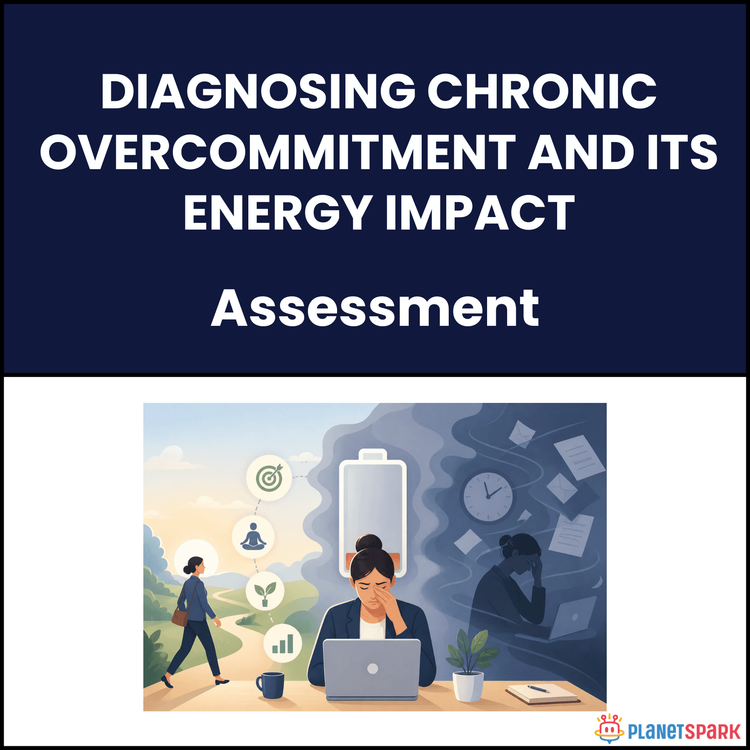
Diagnosing Chronic Overcommitment and Its Energy Impact
Diagnosing Chronic Overcommitment: A Practical Framework to Reclaim Your Energy and Performance
If you constantly feel busy but not truly productive, exhausted but unable to slow down, or stuck in a cycle where your to-do list grows faster than you can complete it—you’re likely dealing with something deeper than poor time management.
This is the reality for many working professionals today. Overcommitment often disguises itself as ambition, reliability, or high performance. But over time, it quietly erodes your energy, clarity, and effectiveness—until even simple tasks start to feel overwhelming.
That’s exactly why the resource “Diagnosing Chronic Overcommitment and Its Energy Impact” was created. It helps you step back, assess your current state objectively, and make smarter, more sustainable decisions about how you work and what you commit to.
Who Is This Resource For?
This resource is especially useful if you are:
- A working professional with 0–15 years of experience
- A manager or consultant juggling multiple responsibilities
- A career switcher trying to prove yourself by saying “yes” to everything
- A high performer who feels constantly stretched or mentally fatigued
- Someone experiencing burnout symptoms but unsure why
- A professional who wants sustainable success—not just short-term output
If you’ve been operating in “always busy” mode without clarity on what’s actually draining you, this guide is built for you.
What Does This Resource Contain?
This is not generic advice about work-life balance. It’s a structured diagnostic system designed to help you understand exactly where your energy is going—and why.
Inside the resource, you’ll find:
- A clear explanation of chronic overcommitment and how it develops over time
- The Overcommitment Spectrum (Stretched, Strained, Depleted) to identify your current state
- The Five Energy Dimensions Framework:
- Physical Energy (sleep, recovery, health)
- Cognitive Energy (focus, decision-making)
- Emotional Energy (relationships, resilience)
- Purpose Energy (meaning and alignment)
- Temporal Energy (control over your time)
- A self-assessment tool to score your energy across all five dimensions
- A 20-point overcommitment checklist to identify real behavioral patterns
- Root cause analysis covering:
- Identity-driven overcommitment
- Fear-based decision-making
- Structural workload issues
- Approval-seeking tendencies
- Optimism bias in planning
- An Energy Audit Worksheet to map all your commitments and their true cost
- The Overcommitment Pattern Decoder to identify your dominant behavioral pattern
- A real-world case study showing how reducing workload improved performance
- Common mistakes professionals make when trying to fix overcommitment
- The CLEAR Protocol (a 5-step recovery framework):
- Catalogue
- Label
- Eliminate
- Assert
- Reserve
- A 4-week recovery tracker to measure progress across energy dimensions
- A quick reference guide for ongoing self-check-ins
Everything is designed for active use—not passive reading.
Summary of the Resource
“Diagnosing Chronic Overcommitment and Its Energy Impact” is a practical self-assessment and action guide that helps you identify where your commitments are exceeding your capacity—and how to fix it.
It gives you clarity on your energy, helps you pinpoint the root causes of overcommitment, and provides a structured plan to reduce overload without sacrificing ambition or performance.
If you want to work better—not just harder—this resource gives you the tools to do exactly that.
How Will This Resource Be Useful?
This resource helps you move from reactive working to intentional performance.
You’ll gain:
- Clear visibility into where your energy is being drained
- A structured way to assess your current mental, physical, and emotional capacity
- Awareness of hidden overcommitment patterns affecting your work
- Practical tools to reduce overload without guilt or confusion
- Better decision-making around what to say yes to—and what to decline
- Improved focus, productivity, and output quality
- A sustainable way to manage ambition without burnout
Most importantly, it helps you stop operating at depleted capacity—and start working with clarity and control.
How Should You Use This Resource?
To get the best results, use this resource in three phases:
Start by reading the full guide once. This helps you understand the frameworks, especially the energy dimensions and overcommitment spectrum.
Next, complete the diagnostic sections:
- Rate yourself across all five energy dimensions
- Fill out the checklist honestly based on the past 30 days
- Identify your lowest-scoring areas (your primary drain points)
Then move into action:
- Complete the Energy Audit to map all current commitments
- Identify high-cost, misaligned commitments
- Apply the CLEAR Protocol step by step
Finally, track your progress:
- Use the 4-week tracker to measure improvements
- Conduct weekly reviews to adjust your commitments
You can revisit this resource whenever you feel overwhelmed, stuck, or stretched too thin.
Action Steps
After accessing this resource, take these steps immediately:
1. Block 60–90 minutes of uninterrupted time
2. Complete the Five Energy Dimensions self-assessment
3. Identify your two lowest energy areas
4. Fill out the Energy Audit worksheet honestly
5. List at least 3 high-cost, misaligned commitments
6. Take one immediate action:
- Eliminate, delegate, or renegotiate one commitment
7. Schedule a weekly 10-minute review using the CLEAR framework
Small adjustments here can significantly improve both your performance and wellbeing.
Most professionals don’t fail because they lack capability—they struggle because they operate in a constant state of overload. When your energy is depleted, even your best efforts produce average results.
This resource helps you correct that.
By understanding your energy, identifying what’s truly draining you, and making deliberate changes, you can build a career that is not only ambitious—but sustainable.
Book your free session today!