
Diagnosing Emotional Disengagement in Teams

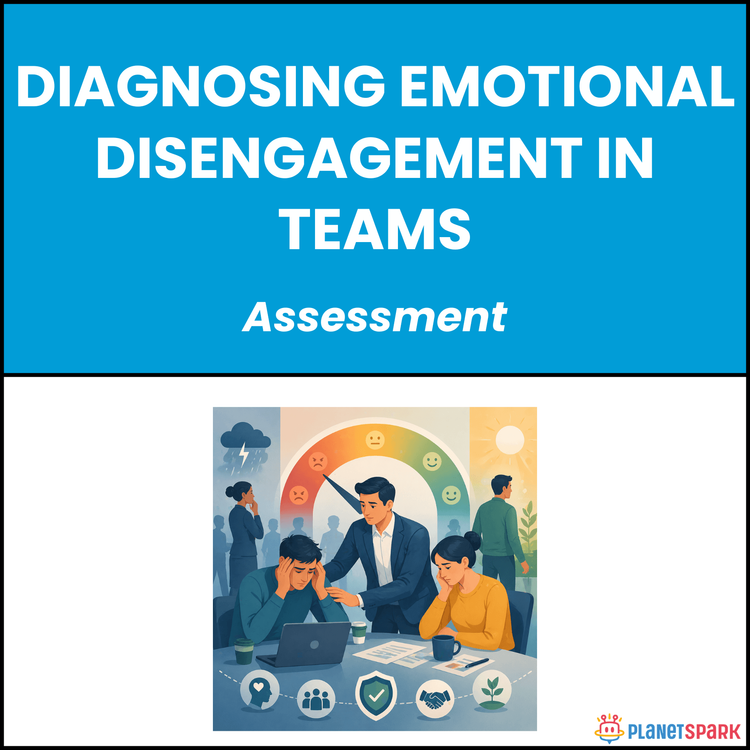
Diagnosing Emotional Disengagement in Teams
How to Identify and Fix Emotional Disengagement in Teams: A Practical Guide for Managers and Team Leaders
If you’ve ever had a team member who “seems fine on paper” but feels completely checked out in reality, you’re not alone. They attend meetings, complete tasks, and respond to messages—but something is missing. The energy, initiative, and ownership that once defined their work have quietly disappeared.
This is the hidden challenge most managers struggle to address: emotional disengagement.
Unlike obvious performance issues, disengagement doesn’t always show up in missed deadlines or poor output. It lives in subtle behavioral shifts—reduced participation, lower enthusiasm, and minimal effort. By the time it becomes visible, it’s often already advanced.
That’s exactly why the resource “Diagnosing Emotional Disengagement in Teams” exists. It equips managers, consultants, and team leaders with a structured, practical approach to identify, understand, and address disengagement before it impacts performance, culture, and retention.
Who Is This Resource For?
This resource is especially valuable if you are:
- A manager or team leader responsible for team performance and engagement
- A consultant working with organizations on people, culture, or leadership challenges
- A mid-to-senior professional managing direct reports or cross-functional teams
- An HR professional supporting employee engagement and retention initiatives
- A leader who senses “something is off” in their team but can’t clearly diagnose it
- Someone who wants to proactively prevent disengagement—not just react to it
If you’re responsible for people outcomes and want a structured way to handle complex human dynamics, this guide is built for you.
What Does This Resource Contain?
This is not a theoretical leadership document. It’s a hands-on diagnostic toolkit designed for immediate use.
Inside the resource, you’ll find:
- A clear explanation of emotional disengagement and how it differs from burnout, introversion, or skill gaps
- The Disengagement Spectrum (Drifting → Withdrawing → Coasting → Departed) to identify stages early
- A detailed breakdown of the six root causes of disengagement, including broken trust, lack of recognition, and poor manager relationships
- A comprehensive Early Warning Signal Checklist across cognitive, behavioral, output, and relational indicators
- The SEED Framework (Safety, Energy, Esteem, Direction) for structured diagnosis
- A practical SEED assessment worksheet to evaluate individual team members
- Team-level disengagement indicators to identify cultural patterns, not just individual issues
- A 10-question team pulse survey for ongoing engagement measurement
- A step-by-step guide to conducting diagnostic conversations without triggering defensiveness
- Reflection questions to assess your own role as a manager in team disengagement
- Common misdiagnoses and why they lead to ineffective interventions
- A real-world case study illustrating how disengagement develops—and how it could have been prevented
- A re-engagement action plan template for structured follow-through
- Preventive leadership practices to build long-term team engagement
- A quick-reference diagnostic framework for real-time application
Everything is designed to help you move from assumption to clarity—and from reaction to intentional leadership.
Summary of the Resource
“Diagnosing Emotional Disengagement in Teams” is a structured, practical guide that helps leaders identify early signs of disengagement, understand the underlying causes, and take targeted action to re-engage team members.
Instead of relying on intuition or generic engagement tactics, this resource provides clear frameworks, checklists, and conversation tools that make people management more precise, proactive, and effective.
If you want to catch problems early—before they turn into resignations or performance issues—this guide gives you the system to do it.
How Will This Resource Be Useful?
This resource helps you become a more effective and perceptive leader.
You’ll gain:
- The ability to identify disengagement early—before it becomes costly
- A structured way to diagnose complex people issues with clarity
- Confidence in handling sensitive conversations with team members
- Deeper insight into what truly drives motivation and withdrawal
- Tools to move beyond surface-level fixes to root-cause solutions
- Stronger relationships and trust within your team
- Improved team performance, retention, and culture
Most importantly, it helps you stop guessing—and start leading with insight.
How Should You Use This Resource?
To get the best results, use this guide in a phased and practical way:
Start by reading the entire guide once to understand the frameworks, concepts, and overall approach. This builds the foundation for effective application.
Next, apply the Early Warning Signal Checklist to a specific team member you’re concerned about. This helps you move from vague intuition to observable patterns.
Then, use the SEED Framework to diagnose the root cause more deeply. Complete the worksheet with evidence-based observations.
Once you have clarity, initiate a diagnostic conversation using the recommended approach—focusing on curiosity, not judgment.
After the conversation, co-create a re-engagement action plan with the team member. Define clear commitments, timelines, and success indicators.
Finally, revisit the plan regularly, track progress, and reassess using the same frameworks. This ensures sustained improvement, not one-time intervention.
You can also use this resource continuously for:
- Regular 1-on-1 conversations
- Team health assessments
- Leadership reflection and development
- Preventing disengagement before it starts
Action Steps
After accessing this resource, take these steps immediately:
1. Identify one team member who has shown subtle changes in behavior
2. Run the Early Warning Signal Checklist (10–15 minutes)
3. Map their position on the Disengagement Spectrum
4. Complete a quick SEED assessment to identify the likely root cause
5. Schedule a 1-on-1 conversation using a curiosity-driven opener
6. Co-create one small, meaningful action to improve their experience
7. Set a follow-up check-in within the next 2–3 weeks
Small, timely interventions here can prevent major long-term issues.
Emotional disengagement doesn’t happen overnight—and it doesn’t resolve itself either. It builds quietly, often unnoticed, until it starts affecting performance, morale, and retention.
As a leader, your ability to notice, diagnose, and respond early is what separates reactive management from intentional leadership.
Use this resource not just to fix disengagement, but to build a team culture where people feel seen, valued, and motivated to contribute at their best.
Book your free session today!