
Diagnosing Financial Stress Despite High Income

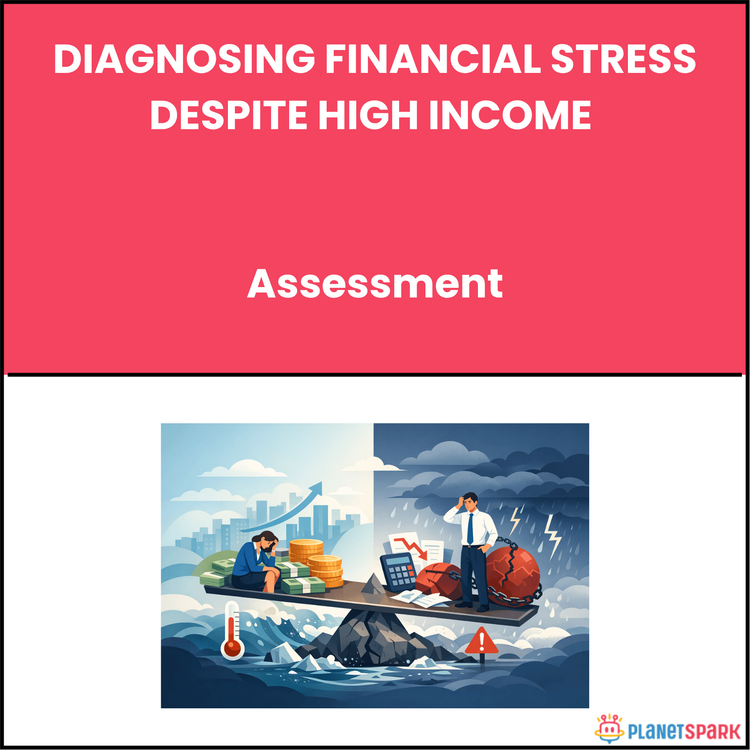
Diagnosing Financial Stress Despite High Income
Diagnosing Financial Stress Despite High Income: A Practical Assessment Guide
High income doesn’t always equal financial peace. The “Financial Stress Diagnostic Guide” helps professionals uncover why earning more can still feel financially worse off—and how to fix it.
Who Is This Resource For?
This guide is designed for:
- Career switchers navigating new financial realities
- Early-to-mid career professionals (0–15 years experience)
- Consultants managing variable income
- Managers balancing lifestyle and wealth-building
- Anyone earning well but still feeling financially stressed
If you want to understand and resolve the paradox of high income with low financial confidence, this resource is built for you.
What Does This Resource Contain?
Inside the guide, you’ll find:
- Introduction: Why high earners still feel broke
- The High-Income, High-Stress Trap explained
- Module 1: Financial Stress Symptom Checklist
- Module 2: Income-Lifestyle Gap Analyser
- Module 3: Money Script Diagnostic
- Root cause deep dives (lifestyle creep, debt normalisation, identity spending, wealth avoidance, income dependency)
- The EARN Framework (Exposure, Allocation, Resilience, Narrative)
- Case study showing real-world diagnosis
- Common mistakes and fixes
- A 30-day financial stress reduction sprint
- Quarterly Financial Confidence Index
- Key takeaways and next steps
Summary of the Resource
The “Financial Stress Diagnostic Guide” is a structured toolkit that reframes financial stress as a design problem. It ensures professionals can identify symptoms, measure gaps, uncover root causes, and apply corrective systems.
How Will This Resource Be Useful?
By applying this guide, you’ll gain:
- Clarity on why stress persists despite high income
- Confidence in diagnosing structural and psychological drivers
- Awareness of lifestyle inflation and debt risks
- Tools to identify money scripts influencing behaviour
- Strategies to rebalance allocation and build resilience
- Long-term confidence through quarterly reviews
How Should You Use This Resource?
Follow a phased approach:
1. Complete the Financial Stress Symptom Checklist.
2. Audit your income-lifestyle gap with real numbers.
3. Diagnose your dominant money script.
4. Identify root causes using the deep dive modules.
5. Apply the EARN Framework to prioritise fixes.
6. Run the 30-day stress reduction sprint.
7. Track progress with the Financial Confidence Index quarterly.
Action Steps
After accessing this resource, take these immediate steps:
1. Pull 3 months of bank and credit card statements.
2. Complete the Income-Lifestyle Gap Analyser.
3. Identify your dominant money script.
4. Cancel two unused subscriptions and set up one automated investment.
5. Create a 90-day emergency fund plan.
6. Schedule your first Financial Confidence Index review.
Financial stress is not a flaw—it’s a design issue. With this guide, you can move from anxious earning to confident wealth-building, ensuring your career trajectory reflects both income and resilience.
Book your free session today!