
Diagnosing Gaps for Working in International Environments
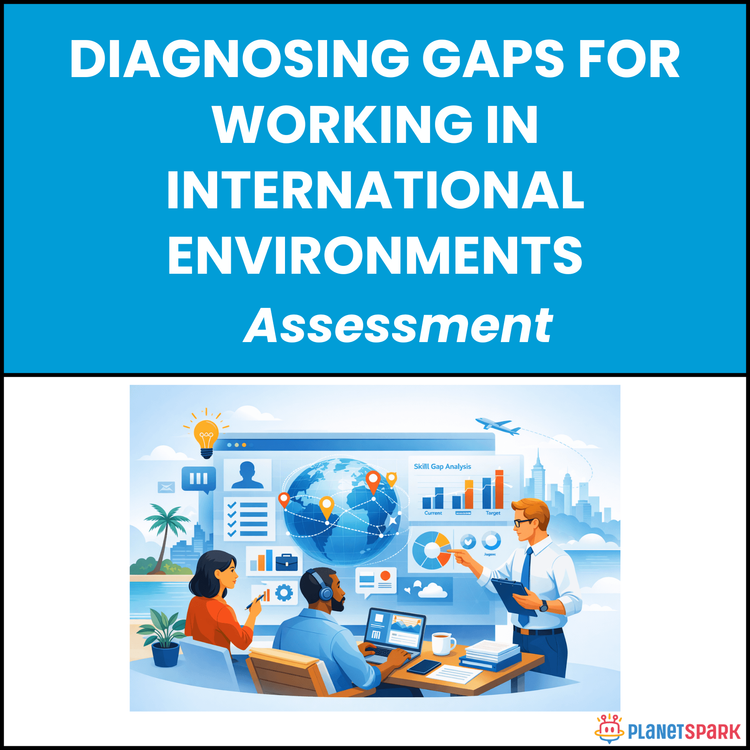
Diagnosing Gaps for Working in International Environments
Diagnosing Gaps for Working in International Environments: A Practical Self-Assessment Toolkit for Global Career Readiness
Many professionals dream of working in international environments — leading global projects, collaborating with multinational teams, managing international clients, or building careers that go beyond local markets.
But the reality is often more complicated.
Professionals who perform exceptionally well in domestic environments sometimes struggle unexpectedly in global settings. Meetings feel harder to navigate. Communication gets misunderstood. Feedback becomes unclear. Confidence drops in high-stakes international conversations. And despite strong technical skills, professionals often realise they are not as globally prepared as they assumed.
The challenge is rarely intelligence or capability.
The real issue is that most professionals have never been taught how international workplace dynamics actually work — or where their own global readiness gaps exist.
That’s exactly why the resource “Diagnosing Gaps for Working in International Environments” was created.
This practical self-assessment toolkit helps professionals identify the hidden gaps that affect performance in cross-cultural and international work environments. Instead of vague advice about “improving communication skills,” the guide provides structured frameworks, diagnostic exercises, competency assessments, reflection tools, and actionable development plans that help professionals understand exactly what needs improvement — and how to improve it.
Whether you are preparing for international roles, working with global teams, planning career mobility, or simply trying to become more effective in multicultural environments, this resource gives you a clear roadmap for professional growth.
Who Is This Resource For?
This resource is especially valuable if you are:
- A working professional with 0–15 years of experience
- A professional working with international clients or teams
- A manager preparing for cross-border leadership responsibilities
- A consultant, analyst, engineer, marketer, or specialist in multinational environments
- A professional transitioning into remote or globally distributed teams
- Someone planning international career growth or relocation
- A mid-career professional seeking stronger executive presence globally
- A professional who feels technically capable but less confident in international interactions
- Someone who wants structured feedback and self-awareness around global readiness
If you want to understand where your international workplace effectiveness breaks down — and how to strengthen it strategically — this guide is built for you.
What Does This Resource Contain?
This is not a generic cultural awareness ebook or motivational career guide. It’s a structured international readiness assessment system designed for real-world professional application.
Inside the resource, you’ll find:
- A complete introduction explaining why international readiness matters in modern careers
- A detailed framework covering the five pillars of international workplace readiness
- Self-assessment tools to evaluate global competency across multiple dimensions
- Cultural Intelligence (CQ) diagnostic exercises and reflection prompts
- Cross-cultural communication audits to identify hidden communication gaps
- Global collaboration frameworks for multicultural team environments
- Professional presence assessments focused on global executive credibility
- Adaptability and resilience evaluation tools for international work settings
- A Personal Gap Diagnosis Dashboard to prioritise development areas
- A structured scoring system to evaluate overall international readiness
- Practical worksheets designed for honest self-reflection and behaviour analysis
- A 30-60-90 day international readiness action plan
- Behaviour goal templates for measurable professional improvement
- A detailed real-world case study showing how one professional improved global effectiveness
- The seven most common international readiness mistakes — and how to fix them
- Quick-reference frameworks like BLUF communication and the ADAPT model
- A post-assessment reflection sheet for accountability and action planning
- Key principles that help professionals build long-term international competence
Everything inside the resource is designed to move readers from awareness to practical execution.
Summary of the Resource
“Diagnosing Gaps for Working in International Environments” is a practical self-assessment and professional development toolkit designed to help working professionals become more effective in global environments.
The resource helps readers:
- Understand how international workplace expectations differ across cultures
- Identify personal blind spots affecting global performance
- Improve communication, collaboration, and executive presence
- Build stronger adaptability and cultural intelligence
- Develop practical systems for international career growth
Rather than offering broad, theoretical advice, the guide focuses on measurable behaviours, practical adjustments, and structured improvement frameworks that professionals can apply immediately.
How Will This Resource Be Useful?
One of the biggest misconceptions professionals have is believing that technical expertise alone guarantees success internationally.
In reality, international effectiveness depends heavily on:
- Communication style
- Cultural awareness
- Collaboration habits
- Executive presence
- Adaptability under ambiguity
- Relationship management across cultures
This resource helps professionals diagnose those exact areas.
By using this toolkit, readers can:
- Gain clarity on their global readiness strengths and weaknesses
- Identify hidden behavioural patterns affecting international interactions
- Improve cross-cultural communication effectiveness
- Build stronger confidence in global meetings and discussions
- Develop better collaboration habits across time zones and cultures
- Strengthen professional presence in international settings
- Create a focused development plan instead of trying to improve everything at once
- Become more intentional, adaptable, and credible in global environments
Most importantly, the resource helps professionals stop guessing where they struggle internationally — and start improving with precision and self-awareness.
How Should You Use This Resource?
To get the best results, use this resource actively rather than reading it passively.
Start by reading through the full guide once to understand the five competency pillars and how international readiness is evaluated.
Then begin working through the assessments and worksheets honestly.
Start with:
- Cultural Intelligence (CQ) assessment
- Communication style audits
- Collaboration reflections
- Professional presence inventory
Once you’ve completed the scoring sections, use the Personal Gap Diagnosis Dashboard to identify your top priority development areas.
After that:
- Build your 30-60-90 day action plan
- Define measurable behaviour goals
- Apply new habits in real international interactions
- Track outcomes consistently
The resource becomes even more powerful when revisited regularly.
You can return to it whenever you:
- Start a new international role
- Join a global team
- Prepare for multinational leadership responsibilities
- Improve executive communication
- Plan international career growth
- Prepare for relocation or cross-border opportunities
The frameworks are designed for continuous professional development over time.
Action Steps
After accessing this resource, take these practical steps immediately:
1. Complete the self-assessment sections honestly without overrating yourself
2. Calculate your scores across all five competency pillars
3. Identify your top two international readiness gaps
4. Write down one recent cross-cultural interaction that didn’t go as expected
5. Create three measurable behaviour goals for improvement
6. Begin tracking your international interactions weekly
7. Ask one trusted colleague for honest feedback on your communication style
8. Apply one new communication adjustment in your next global meeting
9. Build your 30-60-90 day improvement plan
10. Reassess your progress after 60–90 days using the same framework
Consistent behavioural adjustments create significant professional growth over time.
International readiness is no longer optional for modern professionals. Even professionals who never relocate physically are increasingly expected to collaborate across cultures, communicate globally, and operate effectively in distributed environments.
“Diagnosing Gaps for Working in International Environments” helps professionals move beyond assumptions and develop a clear understanding of where they stand today — and where they need to grow next.
Instead of relying on generic advice, you gain a structured framework for self-awareness, skill development, and measurable progress. Instead of treating global effectiveness as an abstract concept, you learn how specific behaviours shape credibility, communication, and career opportunities internationally.
Global competence is not something professionals are born with. It is something they build deliberately — one interaction, one adjustment, and one improvement at a time.