
Diagnosing Psychological Barriers to Collaboration

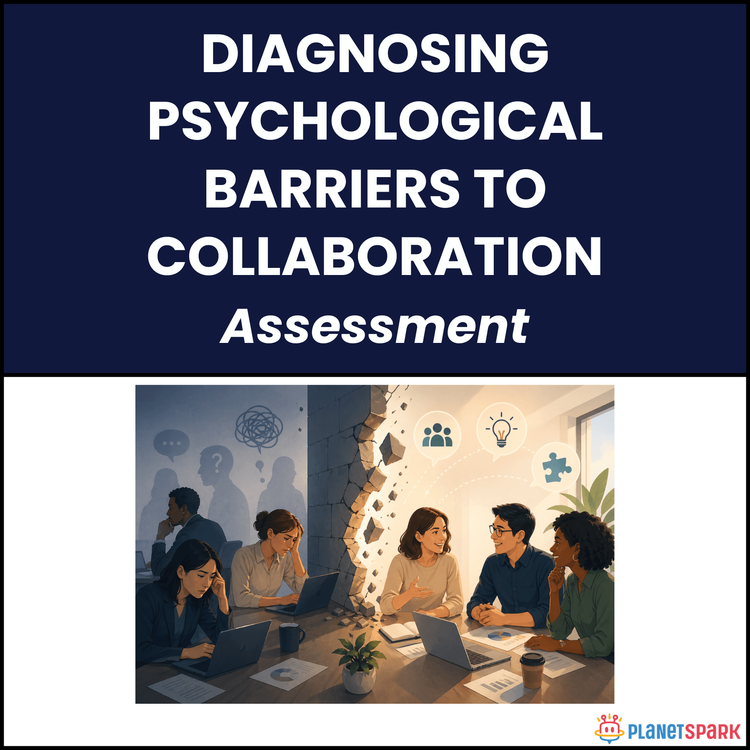
Diagnosing Psychological Barriers to Collaboration
Why Team Collaboration Breaks Down (And How to Fix It): A Practical Diagnostic Guide for Working Professionals
If you’ve ever been part of a team where meetings go nowhere, ideas don’t get traction, or collaboration feels harder than it should—you’re not alone. Most professionals assume collaboration issues come from poor processes, lack of tools, or unclear communication.
But in reality, the biggest barriers to collaboration are not structural—they’re psychological.
That’s exactly why the resource “Understanding Psychological Barriers to Collaboration: A Practical Diagnostic Guide” exists. It helps working professionals go beyond surface-level symptoms and identify what’s actually driving breakdowns in teamwork—so they can respond with clarity instead of frustration.
Who Is This Resource For?
This resource is especially valuable if you are:
- A working professional with 0–15 years of experience navigating team environments
- A manager or team leader dealing with disengagement, conflict, or low participation
- A consultant working on cross-functional alignment or team performance
- A mid-career professional aiming to improve influence and collaboration skills
- Someone whose ideas are often overlooked in group settings
- A professional trying to understand “why teamwork feels harder than it should”
If you want to move from guessing to diagnosing collaboration challenges, this guide is built for you.
What Does This Resource Contain?
This is not a generic teamwork guide. It’s a structured diagnostic system designed for real-world professional situations.
Inside the resource, you’ll find:
- A clear explanation of why collaboration breakdowns are psychological—not just operational
- The six core psychological barriers to collaboration, including safety deficits, status threats, and autonomy anxiety
- The SCOUT™ framework (Signals, Context, Origin, Underlying Need, Trigger) to diagnose issues systematically
- A detailed signals checklist to identify disengagement, resistance, defensiveness, and mistrust patterns
- A context-mapping framework to understand how environment shapes behaviour
- Guidance on identifying root causes without overstepping boundaries
- A structured approach to mapping underlying psychological needs (safety, recognition, control, trust)
- A trigger identification tool to pinpoint what activates collaboration barriers
- Deep-dive profiles of each barrier with diagnostic questions and signals
- A real-world case study showing how misdiagnosis can derail projects—and how accurate diagnosis fixes them
- A personal diagnostic worksheet to apply the framework to real situations
- Common diagnostic mistakes that make collaboration worse—and how to avoid them
- A self-assessment tool to identify your own collaboration barriers
- Clear next steps to turn insights into action
Everything is designed for practical application—not just understanding.
Summary of the Resource
“Understanding Psychological Barriers to Collaboration” is a diagnostic, action-oriented guide that helps professionals identify what’s really blocking effective teamwork.
Instead of relying on assumptions or generic fixes, it gives you a structured way to analyse behaviour, uncover root causes, and take targeted action that actually improves collaboration.
If you want better team outcomes, this resource helps you start at the right place: accurate diagnosis.
How Will This Resource Be Useful?
This resource helps you move from frustration to clarity.
You’ll gain:
- The ability to identify hidden psychological barriers behind team behaviour
- A structured framework to analyse complex collaboration challenges
- Better decision-making by understanding root causes—not just symptoms
- Improved team dynamics through targeted, need-based interventions
- Stronger leadership capability in managing people and performance
- Increased confidence in handling difficult team situations
- Greater self-awareness of your own collaboration patterns
Most importantly, it helps you stop misjudging people—and start understanding what’s actually driving their behaviour.
How Should You Use This Resource?
To get the best results, follow a structured approach:
Start by reading the entire guide once to understand the core concept: behaviour is data, not character.
Next, apply the SCOUT™ framework to a real situation you’re currently facing. Begin with identifying signals—what you can observe objectively.
Then map the context. Look at team dynamics, organisational culture, and pressure levels that may be influencing behaviour.
Move into forming a hypothesis about the origin and identifying the underlying need driving the barrier.
Finally, identify triggers and design a response that addresses the root cause—not just the surface behaviour.
Use the worksheet to structure your thinking and revisit the process regularly as situations evolve.
This resource is most powerful when used actively—not just read.
Action Steps
After accessing this resource, take these steps immediately:
1. Identify one current team situation where collaboration feels difficult
2. List 3–5 observable behaviours (signals) without interpreting them
3. Map the context influencing those behaviours
4. Apply the SCOUT™ framework to diagnose the underlying barrier
5. Identify the core psychological need involved
6. Take one targeted action that addresses the root cause
Small, structured analysis here can transform how you handle team dynamics.
Collaboration problems are rarely about “difficult people.” They are about unmet needs, hidden fears, and misunderstood behaviours. When you learn to diagnose these accurately, everything changes—your conversations, your decisions, and your results.
The most effective professionals are not the ones who avoid conflict or force alignment. They are the ones who understand what’s happening beneath the surface—and respond with precision.
Use this resource to build that capability. Because better collaboration doesn’t come from more effort—it comes from better diagnosis.