
Diagnosing When You’re Forcing the Wrong Career Transition

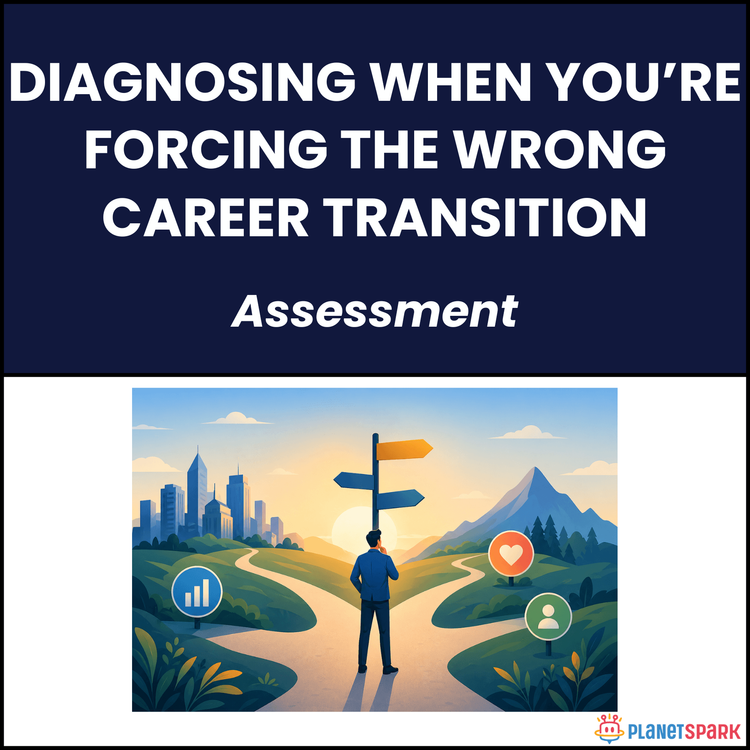
Diagnosing When You’re Forcing the Wrong Career Transition
Diagnosing the Wrong Career Move: How to Know If You’re Forcing a Career Transition
Career transitions often feel exciting on the surface—but beneath that excitement, many professionals are making decisions driven by pressure, burnout, or uncertainty rather than clarity.
If you’ve ever found yourself questioning whether your next career move is truly right—or just an escape from your current situation—you’re not alone.
Most professionals don’t fail because they lack ambition. They struggle because they make transitions without fully diagnosing whether the move is aligned with their skills, market realities, and long-term goals.
That’s exactly why this resource—“Diagnosing When You’re Forcing the Wrong Career Transition”—exists. It helps you move from reactive decision-making to structured, evidence-based career thinking.
Who Is This Resource For?
This resource is designed for working professionals who are actively considering a career move but want to avoid making the wrong one.
It is especially valuable for:
- Professionals with 0–15 years of experience exploring a career switch
- Job seekers unsure whether they are targeting the right roles
- Consultants and freelancers reconsidering their positioning
- Managers questioning whether they are in the right career path
- Individuals experiencing burnout but unsure if a full transition is the answer
If you’re feeling stuck, uncertain, or pressured to make a move—this resource helps you slow down and think clearly before committing.
What Does This Resource Contain?
This is not a generic career guide. It is a structured diagnostic toolkit built around real-world decision-making scenarios.
Inside, you’ll find:
- 10 scenario-driven diagnostic templates
Each template focuses on a specific career transition situation, helping you evaluate your decisions from multiple angles.
- Trigger-based analysis frameworks
Tools to identify what is actually driving your desire to transition—whether it’s burnout, dissatisfaction, external pressure, or misalignment.
- Market reality checks
Structured prompts to assess whether your target role or industry aligns with your current skills and market demand.
- Skill alignment diagnostics
Exercises that help you evaluate whether your existing capabilities genuinely support the transition you're considering.
- Assumption-testing frameworks
Templates designed to challenge your beliefs and prevent emotionally driven decisions.
- Common mistake breakdowns
Insights into frequent errors professionals make, such as:
- Confusing industry fatigue with career misalignment
- Chasing roles based on salary rather than skill fit
- Reacting to a bad manager instead of evaluating the role itself
- Skipping proper skills-gap analysis
Each component is designed to mimic the level of questioning you’d receive from a senior career coach or executive recruiter.
Summary of the Resource
This resource is a structured assessment toolkit that helps you determine whether your planned career transition is genuinely aligned—or being forced by temporary emotions or external pressures.
Instead of pushing you toward action, it helps you pause, evaluate, and make a rational, defensible decision.
How Will This Resource Be Useful?
The real value of this resource lies in the clarity it provides.
By working through the templates, you will:
- Identify whether your desire to switch is emotional or strategic
- Uncover blind spots you may not have considered
- Understand if your skills actually match your target role
- Avoid costly mistakes in time, money, and effort
- Make decisions based on evidence, not assumptions
- Gain confidence in your chosen direction
Rather than jumping into a new career path and hoping it works, you’ll be making a well-diagnosed, thoughtful decision.
How Should You Use This Resource?
To get the most value, approach this resource systematically.
Step 1: Start with the Trigger Analysis
Understand what is pushing you toward a career transition. Be honest—this step sets the foundation.
Step 2: Work Through Each Diagnostic Template
Go through the scenarios one by one. Don’t rush—each template is designed to surface deeper insights.
Step 3: Reflect on Patterns
Look for recurring themes in your answers. Are your concerns consistent? Are your assumptions being challenged?
Step 4: Evaluate Market Reality
Use the frameworks to assess whether your target path is viable given your current skills and experience.
Step 5: Make a Decision with Evidence
Only after completing the diagnostics should you decide whether to proceed, pause, or pivot differently.
Step 6: Revisit When Needed
Career decisions evolve. Reuse the templates whenever you’re considering a major move.
Action Steps
If you’re considering a career transition, here’s what you should do next:
1. Download and review the diagnostic templates
2. Set aside focused, uninterrupted time to work through them
3. Be brutally honest in your responses—this is for your clarity, not validation
4. Identify the top 2–3 insights that challenge your current thinking
5. Re-evaluate your transition plan based on these insights
6. Take action only after your decision is grounded in logic and evidence
Career growth is not about making fast decisions—it’s about making the right ones.
The difference between a successful transition and a forced one often comes down to how well you diagnose the situation before acting.
This resource gives you the structure, clarity, and discipline to make that decision wisely. Use it thoughtfully, apply it honestly, and treat your career like the high-stakes investment it truly is.