
Early Career Exploration Canvas

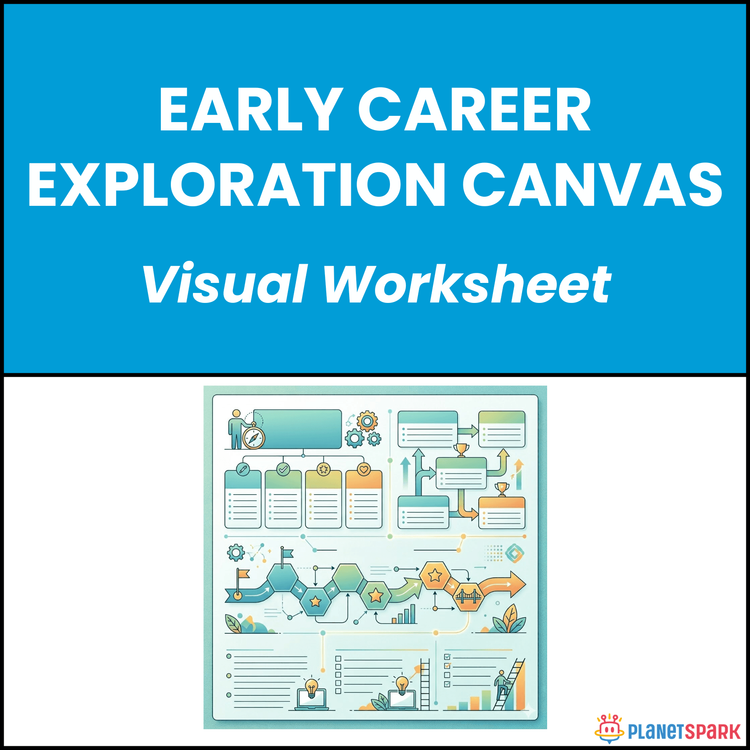
Early Career Exploration Canvas
How to Use an Early Career Exploration Canvas to Find the Right Career Direction
Many working professionals reach a point where they feel stuck—but can’t clearly explain why.
You may be performing well in your role, meeting expectations, and staying busy. Yet beneath the routine, there’s a persistent question: “Is this the right path for me?” The challenge isn’t a lack of ambition or effort. It’s a lack of structured clarity.
Most career decisions are made reactively—after burnout, frustration, or a disappointing appraisal cycle. But the most successful professionals treat career exploration as a professional skill, not a crisis response.
That’s exactly why the Early Career Exploration Canvas exists. It provides a practical, structured system to help you understand your strengths, map realistic opportunities, evaluate career fit, and take confident action—without guesswork or endless overthinking.
Who Is This Resource For?
This resource is especially valuable if you are:
- A working professional with 0–15 years of experience trying to define your next move
- Someone feeling stuck in your current role without a clear growth path
- A career switcher exploring new industries or functions
- A professional unsure whether to stay, move, or pivot
- An ambitious early–mid career professional seeking direction and clarity
- A manager or consultant evaluating long-term career alignment
- Someone who wants to make career decisions strategically—not emotionally
If you want a structured way to think about your future instead of reacting to circumstances, this resource is designed for you.
What Does This Resource Contain?
The Early Career Exploration Canvas is not a theoretical career guide. It is a practical, visual worksheet system built for real professionals with real constraints.
Inside the resource, you will find:
A Self-Audit Framework
- Functional skills audit to identify what you actually do
- Transferable skills mapping to uncover strengths that travel across roles
- Energy audit to understand what motivates versus drains you
- Values clarification to define non-negotiables in your career
An Opportunity Mapping System
- A structured way to identify adjacent roles, stretch roles, and pivot roles
- A skills gap analysis to understand readiness for each path
- A realistic timeline framework for career transitions
A Market Intelligence Toolkit
- Industry trend scanning to understand future opportunities
- Skills demand analysis based on real job descriptions
- Employer expectation mapping to decode what organizations truly value
- Salary and career progression benchmarking
The Career Fit Framework
- A five-factor evaluation system covering role fit, culture fit, growth fit, values fit, and lifestyle fit
- A structured scorecard to compare multiple opportunities objectively
Strategic Networking Guidance
- A method to map your existing network
- A process to identify relationship gaps
- Practical steps to initiate meaningful professional conversations
Personal Brand Development Tools
- A narrative definition framework to clarify your professional identity
- A digital presence audit checklist
- A system to create visible expertise and strengthen reputation
A 90-Day Career Action Plan
- A step-by-step roadmap to move from exploration to execution
- Weekly milestones to maintain momentum
- A structured accountability system
Common Career Exploration Mistakes to Avoid
- Practical corrections for the most frequent decision-making traps
- Guidance to maintain progress and avoid stagnation
Every section is designed to be completed quickly, applied immediately, and revisited regularly.
Summary of the Resource
The Early Career Exploration Canvas is a structured decision-making tool that helps professionals move from confusion to clarity.
Instead of guessing your next step, you systematically:
- Understand your strengths and preferences
- Explore realistic career options
- Evaluate opportunities objectively
- Build a practical action plan
- Take consistent, confident steps forward
If you only spend a few focused hours with this resource, you will gain a clearer picture of where you stand—and where you should go next.
How Will This Resource Be Useful?
This resource helps you make better career decisions faster.
You will gain:
- Clear visibility into your current skills and strengths
- Confidence in evaluating career opportunities
- A structured method for exploring new roles or industries
- Better alignment between your work and your values
- Reduced uncertainty about career direction
- A practical plan for career growth and transition
Most importantly, it helps you shift from reactive decision-making to strategic career planning.
Instead of drifting into the next role, you deliberately choose it.
How Should You Use This Resource?
To get the maximum value from this resource, follow a simple phased approach.
First, review the entire canvas.
Skim all sections to understand the full structure and flow. This creates context before you begin detailed work.
Next, complete the Self-Audit section.
Identify your current skills, strengths, energizers, and values. This step builds the foundation for every decision that follows.
Then, map your opportunities.
List potential career paths and evaluate how close each one is to your current capabilities. This step transforms ideas into realistic options.
After that, analyze the market.
Research demand, skill requirements, and career trajectories to ensure your plans align with real-world opportunities.
Next, evaluate career fit.
Use the scorecard to compare options objectively rather than relying on intuition alone.
Finally, build your 90-day action plan.
Define specific steps, timelines, and milestones to move forward with clarity and momentum.
You can revisit this resource whenever you:
- Feel uncertain about your career direction
- Consider a job change or promotion
- Explore a new industry or function
- Prepare for performance reviews
- Plan long-term career growth
- Reassess your professional goals
Action Steps
After accessing this resource, take these steps immediately:
1. Block 60–90 minutes of uninterrupted time
2. Complete the Self-Audit section honestly
3. Identify at least three potential career paths
4. Research the skills required for those roles
5. Evaluate each option using the Career Fit Framework
6. Create your 90-day action plan
7. Schedule a monthly check-in to review progress
Small, consistent actions create career momentum.
Your career direction should not be left to chance. It should be designed with intention, clarity, and evidence.
When you understand your strengths, evaluate opportunities carefully, and act deliberately, you build a career that is both successful and sustainable.
Use this resource not just to explore possibilities—but to take ownership of your professional future.
Book your free session today!