
Early Career Skill Gap IdentificationEarly Career Skill Gap Identification Worksheet Worksheet

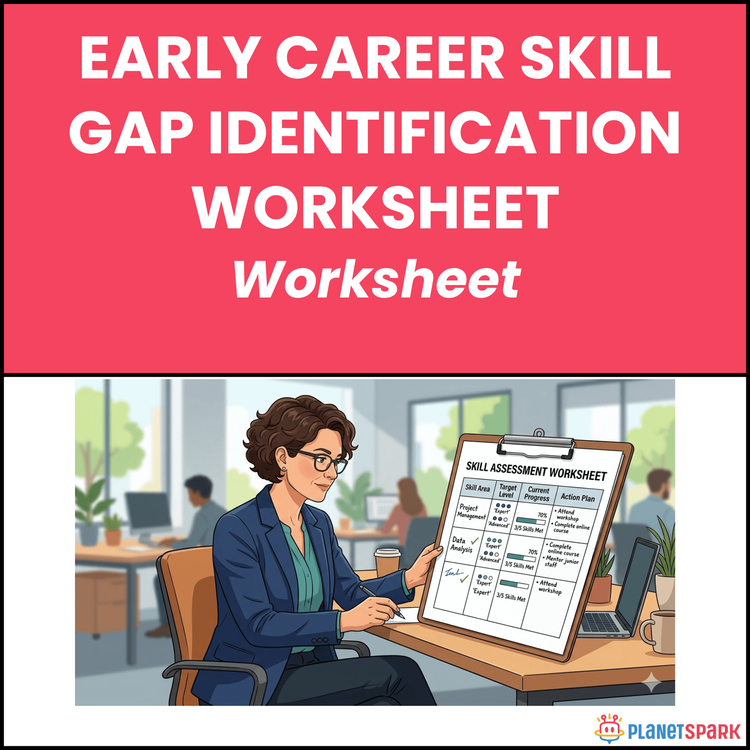
Early Career Skill Gap IdentificationEarly Career Skill Gap Identification Worksheet Worksheet
Identify and Close Your Skill Gaps: A Practical Guide for Early-Career Professionals
You’ve felt it before: that nagging sense that something’s missing in your career toolkit. Maybe you’ve been passed over for promotions, or you’re uncertain about which skills to focus on next. For most early-career professionals, this feeling isn’t just frustrating—it’s limiting. You know you need to grow, but where do you start? The solution is simple: pinpoint exactly where you stand with the Early Career Skill Gap Identification Worksheet.
This powerful resource helps you identify your current skill gaps, benchmark them against your target role, and create a clear action plan to close them—all in a way that’s practical, actionable, and tailored to your career trajectory.
Who Is This Resource For?
This worksheet is ideal for:
- Early-career professionals with 0–15 years of experience.
- Job seekers looking to pivot into new industries or roles.
- Consultants or specialists aiming to refine their skills and build a stronger professional brand.
- Managers looking to upskill for a promotion or leadership position.
- Anyone feeling uncertain about which skills to develop next in their career.
Whether you’re navigating a career switch, climbing the corporate ladder, or preparing for a performance review, this resource is for you.
What Does This Resource Contain?
The Early Career Skill Gap Identification Worksheet offers a structured, self-directed process to help you map your current skills and prioritize areas for growth. Here’s what you’ll find inside:
- Self-Audit: A skill inventory to assess where you stand today and understand your strengths and areas for improvement.
- Role Benchmark: Tools to define your target role or career outcome and benchmark your skills against current market demands.
- Gap Map: A diagnostic framework that identifies your skill gaps and compares your competencies to the skills needed for your next career step.
- Prioritization Framework: A method for ranking your skill gaps based on their career impact, urgency, and momentum.
- 90-Day Learning Action Plan: A clear, focused plan to address your top 3–5 skill gaps in the next 90 days.
- Real-World Application: Case studies and self-reflection prompts to deepen your self-awareness and guide your growth journey.
Summary of the Resource:
In just a few focused hours, this worksheet provides a structured method for identifying your skill gaps and transforming your career trajectory. It’s not about fixing everything at once but rather about gaining clarity, focusing on what matters most, and creating a manageable plan to close the gaps that will have the greatest impact on your professional future.
How Will This Resource Be Useful?
Using this worksheet, you will:
- Gain clarity on exactly where you stand in relation to your target role.
- Identify critical skill gaps and prioritize which ones to focus on first.
- Build a tangible, actionable 90-day plan that accelerates your career progress.
- Increase your confidence in your ability to close skill gaps and enhance your professional value.
Most importantly, this resource will help you shift from guesswork to clarity—empowering you to take targeted action and make meaningful progress toward your career goals.
How Should You Use This Resource?
To make the most of this worksheet, follow this phased approach:
1. Self-Audit: Begin by listing all your skills and rating your proficiency. Be honest and thorough—this is your baseline.
2. Role Benchmark: Define your target role and benchmark your skills against current job descriptions to identify what you’re missing.
3. Gap Map: Cross-reference your skill inventory with your target role’s skill requirements. This will highlight your gaps and strengths.
4. Prioritization: Use the provided framework to prioritize your top 3–5 skill gaps based on career impact, urgency, and momentum.
5. 90-Day Plan: Build your action plan, choosing one skill development method per gap and setting clear milestones.
6. Reflection: Reflect on your strengths and areas for growth, adjusting your approach as necessary.
Action Steps:
To begin using this worksheet today:
1. Set aside 1–2 hours of focused time to complete the Self-Audit.
2. Identify your target role and pull 3 relevant job descriptions.
3. Cross-reference your skills with those job descriptions and create your Gap Map.
4. Prioritize your top 3–5 gaps using the provided framework.
5. Build your 90-day learning action plan, choosing appropriate learning methods for each gap.
6. Commit to a check-in with a mentor or peer to hold yourself accountable.
By completing the Early Career Skill Gap Identification Worksheet, you’ve already taken a crucial step in advancing your career. This resource not only helps you clarify where you stand but also gives you a structured approach to improving the skills that matter most to your next career move. No more guesswork—just clear, actionable steps toward closing your skill gaps.
Book your free session today!