
Handling Toxic Workplace Situations Guide

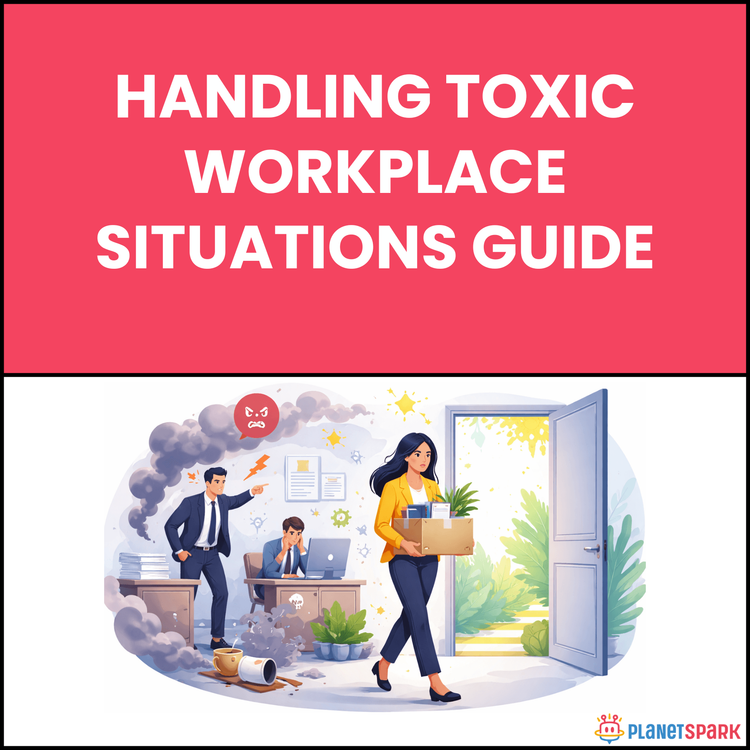
Handling Toxic Workplace Situations Guide
Handling Toxic Workplace Situations: A Practical Guide to Protect Your Career, Wellbeing, and Professional Power
If you’ve ever felt drained, undervalued, or quietly anxious because of your work environment, you’re not imagining it—and you’re definitely not alone. Many professionals find themselves navigating difficult managers, unclear expectations, or subtle workplace politics that slowly erode confidence and performance.
The real challenge? Most people either tolerate these situations for too long or react emotionally in ways that backfire professionally.
That’s exactly why the resource “Handling Toxic Workplace Situations” exists. It provides a structured, practical playbook to help you recognise toxic patterns early, respond strategically, and protect both your mental health and career trajectory—without burning bridges.
Who Is This Resource For?
This resource is especially valuable if you are:
- A working professional (0–15 years of experience) dealing with difficult workplace dynamics
- A career switcher entering unfamiliar or politically complex environments
- A consultant or specialist navigating multiple stakeholders and power structures
- A manager trying to protect your team while managing upwards
- Someone feeling stuck, undervalued, or unsure how to handle toxic behaviour professionally
- A professional who wants to respond with clarity—not emotion—in high-pressure situations
If you want to handle workplace challenges with confidence, composure, and strategy, this guide is built for you.
What Does This Resource Contain?
This is not a generic workplace advice guide—it’s a structured, actionable system designed for real-world application.
Inside the resource, you’ll find:
- A clear definition of what actually constitutes a toxic workplace (vs. normal friction)
- A Toxicity Spectrum framework to assess the severity of your situation
- Reflection worksheets to evaluate your current environment and personal impact
- The SHIELD Framework (See, Hold, Identify, Engage, Limit, Decide) for step-by-step response
- Documentation strategies to protect yourself professionally
- Guidance on identifying allies and navigating workplace power dynamics
- Ready-to-use scripts for difficult conversations (credit theft, workload issues, public criticism, etc.)
- A 3-Part Response Formula for handling situations in real time
- Mental health protection strategies grounded in occupational psychology
- Tactical approaches for different types of toxic managers
- A structured HR escalation pathway and preparation checklist
- A professional exit strategy plan to leave on your terms
- A real-world case study demonstrating how to apply the framework effectively
- Common mistakes professionals make—and how to avoid them
- A quick-reference cheat sheet for immediate decision-making
Everything is designed to be practical, actionable, and immediately usable—not theoretical.
Summary of the Resource
“Handling Toxic Workplace Situations” is a comprehensive, action-oriented guide that equips professionals with the clarity, tools, and strategies needed to navigate difficult workplace environments.
It helps you accurately diagnose your situation, respond with structure instead of emotion, protect your mental health, and make informed decisions—whether that means resolving the issue, adapting strategically, or exiting professionally.
If you’re looking for a clear, step-by-step approach to handling workplace toxicity, this resource gives you exactly that.
How Will This Resource Be Useful?
This resource helps you move from confusion and frustration to clarity and control.
You’ll gain:
- The ability to accurately identify toxic behaviour and patterns
- A structured approach to responding instead of reacting impulsively
- Confidence in handling difficult conversations professionally
- Tools to document, protect, and strengthen your professional position
- Strategies to maintain your mental health and performance under pressure
- Clarity on when to escalate, adapt, or exit
- Greater control over your career decisions and outcomes
Most importantly, it helps you reclaim your professional power—so you’re no longer navigating difficult environments blindly or passively.
How Should You Use This Resource?
To get the most value, approach this resource in phases:
First, read through the entire guide to understand the frameworks and overall structure. This gives you a strategic overview.
Next, complete the reflection worksheets to assess your current situation honestly. This step builds clarity and direction.
Then, apply the SHIELD Framework step-by-step. Start with observation and documentation before moving into engagement and action.
Use the communication scripts and response formulas to handle real-time situations with confidence and professionalism.
As your situation evolves, revisit relevant sections—whether it’s escalation, mental health protection, or exit planning.
This is not a one-time read. It’s a toolkit you return to whenever new challenges arise.
Action Steps
After accessing this resource, take these steps immediately:
1. Set aside 2–3 uninterrupted hours to go through the guide
2. Complete the personal assessment worksheet honestly
3. Identify your current position on the Toxicity Spectrum
4. Start documenting incidents (even if they seem minor)
5. Map your allies and workplace power dynamics
6. Apply one communication script in a real situation this week
7. Decide your short-term strategy: resolve, adapt, or prepare to exit
Taking even a few of these steps can dramatically shift how you experience and handle your workplace.
Workplace challenges are inevitable—but feeling powerless within them doesn’t have to be. The difference between professionals who struggle and those who navigate effectively often comes down to one thing: having a clear, structured approach.
This guide gives you that structure.
Use it to think more clearly, act more strategically, and protect what matters most—your career, your wellbeing, and your professional identity. Over time, these skills don’t just help you survive difficult environments—they help you lead, influence, and grow despite them.