
How to Avoid Becoming a Generalist Without Direction

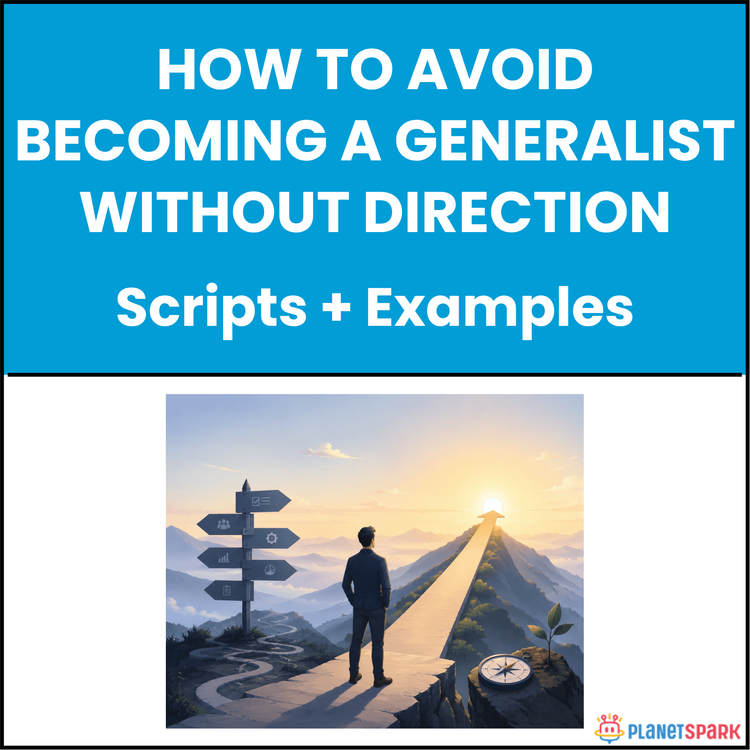
How to Avoid Becoming a Generalist Without Direction
Avoiding the Trap of Being a Directionless Generalist: A Career Positioning Playbook for Professionals
In today’s professional world, being adaptable is often seen as a strength. Professionals are encouraged to learn new tools, take on cross-functional work, and say yes to multiple opportunities. While versatility can absolutely accelerate growth, there is also a hidden downside that many ambitious professionals experience without realizing it — becoming a generalist without direction.
You work hard. You stay busy. You keep adding skills. Yet when someone asks, “What exactly are you known for?” the answer feels unclear.
This is where many professionals get stuck.
They become capable of doing many things but struggle to communicate a clear professional identity. Recruiters become confused about where to place them. Clients hesitate to hire them as specialists. Promotions become harder because their value feels broad but undefined.
The resource “How to Avoid Becoming a Generalist Without Direction” was created to help professionals solve exactly this problem. It is a practical, action-oriented playbook designed to help working professionals identify their core expertise, sharpen their positioning, and build a career that stands for something meaningful instead of trying to stand for everything.
Who Is This Resource For?
This playbook is especially useful for:
- Early and mid-career professionals trying to build a clearer career path
- Career switchers who want to reposition themselves strategically
- Consultants and freelancers looking to strengthen their niche
- Managers handling multiple responsibilities but lacking a defined specialty
- Professionals who feel scattered despite being highly capable
- Job seekers struggling to explain their expertise in interviews
- Professionals with broad resumes spanning multiple industries or skill sets
- Individuals who want stronger LinkedIn positioning and personal branding
Whether you have 2 years of experience or 12, this resource helps you move from “I can do many things” to “I am known for delivering specific value.”
What Does This Resource Contain?
The playbook is structured as a step-by-step career positioning framework that combines reflection exercises, strategic guidance, practical templates, and communication tools.
Here’s what readers will find inside:
1. Diagnosing Generalist Drift
The resource begins by helping readers identify whether they have unintentionally drifted into directionless generalism.
It covers:
- Common drift signals
- Hidden professional costs of unclear positioning
- The difference between healthy breadth and scattered expertise
- Reflection exercises to identify career patterns
This section helps readers recognize where confusion in their professional identity may be coming from.
2. Finding Your Zone of Genius
One of the strongest sections in the playbook focuses on identifying a professional “Zone of Genius.”
The framework helps readers discover the intersection between:
- Skills they are exceptional at
- Work that energizes them
- Skills the market actively values and pays for
The playbook also includes practical exercises such as:
- Peer feedback prompts
- Skill identification methods
- Market validation strategies
Instead of randomly collecting skills, readers learn how to identify capabilities that truly strengthen their positioning.
3. Building a Professional Positioning Statement
Many professionals struggle to explain their value clearly. This section solves that problem through a structured positioning framework.
Readers learn how to define:
- Their target audience
- Their professional domain
- Their unique value
- The outcomes they consistently deliver
The playbook even provides a fill-in positioning template that professionals can immediately adapt for:
- LinkedIn profiles
- Resumes
- Networking conversations
- Consulting pitches
- Interviews
4. Designing a Strategic Skill Architecture
This section shifts the focus from random upskilling to intentional skill development.
Key concepts include:
- The difference between reinforcing skills and distracting skills
- Building a career around a strong core expertise
- The 70-20-10 learning investment framework
- Creating a deliberate learning roadmap
This is especially valuable for professionals overwhelmed by endless certifications, courses, and trending skills.
5. Communicating Value With Precision
A major reason professionals remain overlooked is not lack of capability — but lack of clarity in communication.
This section teaches readers how to:
- Create a compelling verbal pitch
- Improve LinkedIn headlines
- Write stronger resume summaries
- Communicate outcomes instead of listing tasks
- Avoid vague self-description
The playbook emphasizes that precision creates confidence while vagueness creates confusion.
6. Real-World Case Study
The resource includes a detailed transformation case study showing how a professional moved from scattered positioning to strategic clarity.
This makes the concepts practical and relatable while helping readers see how repositioning can create measurable career opportunities.
7. 30-Day Action Toolkit
The playbook closes with a structured action plan divided into weekly implementation steps.
Readers receive:
- Reflection prompts
- Career audit exercises
- Positioning checkpoints
- Communication updates
- Learning prioritization tasks
This turns the resource from a passive reading experience into an actionable career development system.
Summary of the Resource
“How to Avoid Becoming a Generalist Without Direction” is a practical career positioning guide for professionals who feel capable but professionally unclear.
Instead of encouraging people to narrow themselves artificially, the playbook teaches readers how to organize their breadth around a strong professional core.
The resource helps professionals:
- Understand what they are truly known for
- Build clearer positioning
- Make smarter career decisions
- Develop strategic skills
- Improve professional communication
- Attract better opportunities
Most importantly, it helps readers move from reactive career growth to intentional career direction.
How Will This Resource Be Useful?
This playbook delivers practical value because it addresses a challenge that affects many high-performing professionals but is rarely discussed clearly.
Here’s how readers benefit from using it:
Improved Career Clarity
Readers gain a stronger understanding of:
- Their professional strengths
- Their unique value
- Their ideal positioning in the market
This clarity reduces confusion and improves decision-making.
Stronger Personal Branding
The frameworks inside help professionals communicate their expertise more confidently across:
- LinkedIn
- Interviews
- Networking
- Resumes
- Consulting conversations
Better Career Opportunities
When positioning becomes clearer:
- Recruiters understand your fit faster
- Clients see your expertise more clearly
- Opportunities become more aligned
- Professional credibility improves
More Strategic Skill Development
Instead of chasing every trending skill, readers learn how to invest in capabilities that strengthen their long-term career direction.
Reduced Professional Overwhelm
Many professionals feel exhausted trying to be everything for everyone. This playbook helps simplify focus and create intentional growth paths.
Increased Confidence
One of the biggest transformations comes from finally being able to answer:
“What do you specialize in?”
with clarity and confidence.
How Should You Use This Resource?
This resource works best when approached as both a guidebook and a workbook.
Here is the recommended approach:
Step 1: Read Through the Entire Playbook
Start by reading the resource from beginning to end without rushing.
Focus on:
- Recognizing patterns
- Identifying areas of confusion
- Reflecting on your current positioning
This creates awareness before action.
Step 2: Complete the Reflection Exercises
The exercises are where the real transformation happens.
Take time to:
- Audit your previous roles
- Identify recurring strengths
- Analyze your skills
- Gather external feedback
Do not skip these sections.
Step 3: Draft Your Positioning Statement
Use the provided framework to create a first version of your positioning statement.
Remember:
- It does not need to be perfect immediately
- Clarity improves through iteration
- Feedback helps refine positioning
Step 4: Apply the Communication Frameworks
Update your:
- LinkedIn headline
- Resume summary
- Professional bio
- Elevator pitch
Consistency across platforms strengthens professional identity.
Step 5: Revisit the Resource Regularly
Career positioning evolves over time.
Return to the playbook during:
- Job searches
- Career transitions
- Promotion cycles
- Consulting expansion
- Skill-building decisions
The frameworks become more valuable as your career grows.
Action Steps
If you want to immediately apply the ideas from this resource, start with these steps:
1. Write down your last five roles or major projects
Identify the common thread connecting them.
2. List your strongest and most energizing skills
Focus on skills that are both valuable and enjoyable.
3. Ask three trusted colleagues what they associate you with professionally
Look for patterns in their responses.
4. Draft your first positioning statement
Keep it simple and outcome-focused.
5. Update your LinkedIn headline
Lead with the value you create, not just your job title.
6. Review your current learning priorities
Remove or reduce activities that scatter your professional direction.
7. Practice explaining your expertise in one sentence
Clarity improves with repetition.
Building a successful career today is not about becoming the person who can do everything. It is about becoming the person who is clearly known for something valuable.
That does not mean abandoning versatility. It means giving your versatility a strong foundation and direction.
The professionals who create lasting career momentum are not always the most talented people in the room. Often, they are simply the people who communicate their value with the most clarity and intention.
This playbook provides a structured system to help professionals do exactly that.
If you have ever felt professionally scattered, uncertain about your positioning, or unsure how to stand out despite having strong capabilities, this resource offers a practical roadmap forward.
Career clarity is not something you wait for. It is something you intentionally build through reflection, positioning, and consistent action.
Book your free session today!