
How To Avoid Emotional Decision-Making With Money

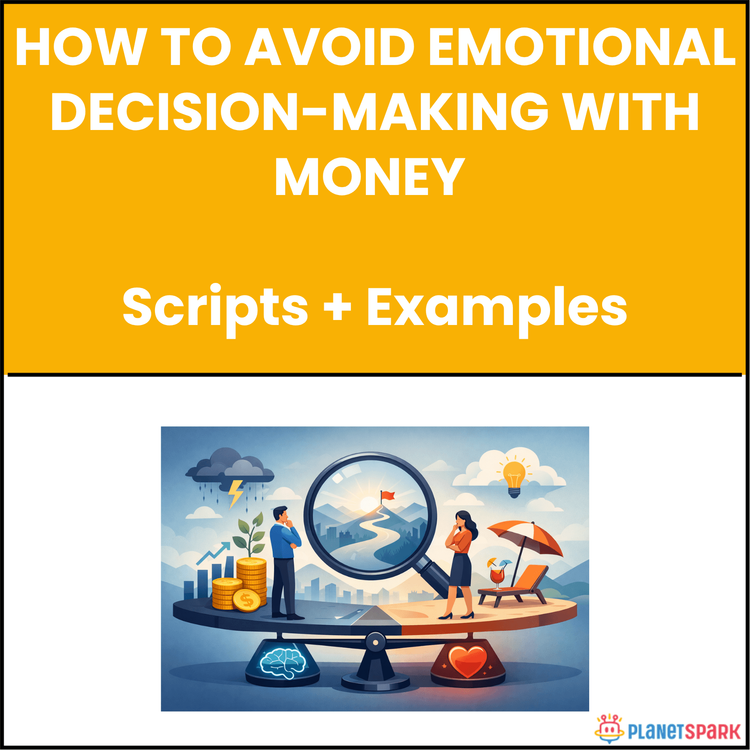
How To Avoid Emotional Decision-Making With Money
How to Avoid Emotional Decision-Making With Money: A Practical Guide
Money decisions aren’t just about math—they’re about mindset. The “Emotional Decision-Making Guide” helps professionals build awareness, reduce impulsive choices, and align financial actions with long-term goals.
Who Is This Resource For?
This guide is designed for:
- Career switchers facing financial uncertainty
- Early-to-mid career professionals (0–15 years experience)
- Consultants balancing irregular income
- Managers making high-stakes financial choices
- Anyone who feels emotions often override financial logic
If you want to make calm, confident money decisions, this resource is built for you.
What Does This Resource Contain?
Inside the guide, you’ll find:
- Introduction: Why emotions drive money choices
- Frameworks to identify emotional triggers
- Worksheets for tracking decision patterns
- Reflection tools for building awareness
- Case studies showing emotional vs. rational outcomes
- Common mistakes and fixes
- Practical strategies to pause, reflect, and redirect
- Key takeaways and immediate action plan
Summary of the Resource
The “Emotional Decision-Making Guide” is a structured toolkit that reframes money management as emotional awareness. It ensures professionals can identify triggers, pause before reacting, and make intentional financial choices.
How Will This Resource Be Useful?
By applying this guide, you’ll gain:
- Clarity on your emotional spending triggers
- Confidence in pausing before big decisions
- Awareness of patterns that block wealth
- Tools to redirect impulses into planned actions
- Strategies to build resilience against stress-driven choices
- Long-term confidence through consistent practice
How Should You Use This Resource?
Follow a phased approach:
1. Audit your past 90 days of financial decisions.
2. Identify emotional triggers (stress, boredom, social pressure).
3. Apply the “Pause-Reflect-Redirect” method before spending.
4. Use worksheets to track decision outcomes.
5. Review weekly to spot recurring patterns.
6. Build accountability with a partner or coach.
Action Steps
After accessing this resource, take these immediate steps:
1. Write down your top three emotional spending triggers.
2. Set a 24–48 hour rule for all non-essential purchases.
3. Redirect one emotional expense into savings or investments.
4. Schedule a weekly 10-minute reflection on money decisions.
5. Share your insights with a trusted accountability partner.
Money decisions made in calm clarity compound into wealth. With this guide, you can move from reactive emotion to intentional design, ensuring your career trajectory reflects both financial stability and confidence.
Book your free session today!