
How to Balance Deep Work and Recovery for Long-Term Sustainability

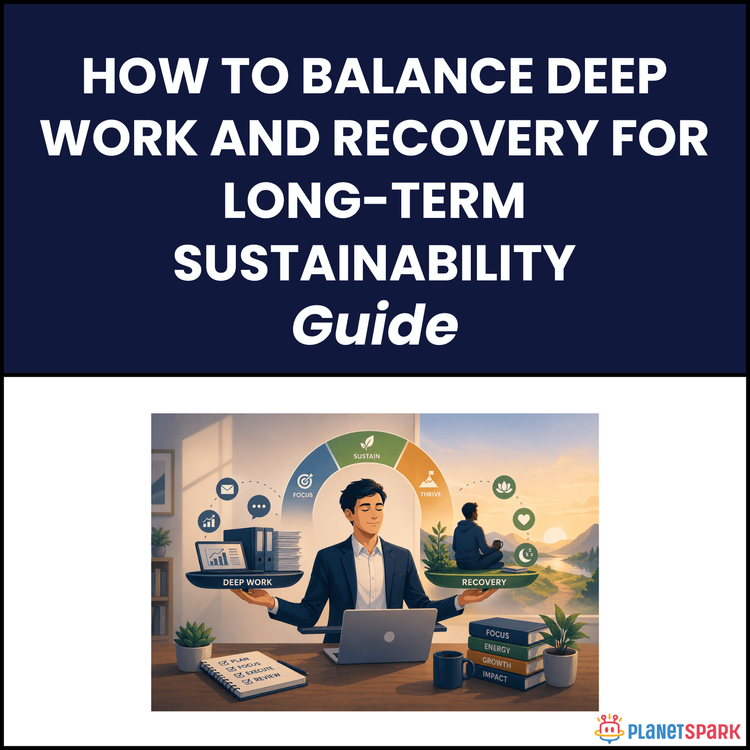
How to Balance Deep Work and Recovery for Long-Term Sustainability
Achieving a Balance Between Deep Work and Recovery for Lasting Success: A Framework for Professionals
In today’s high-paced professional world, many professionals struggle to strike a balance between deep, focused work and the necessary recovery time to sustain that level of performance. Often, the default is to push harder, but what if the key to long-term success is not about doing more, but about doing the right things at the right times—and then genuinely stopping? The "How to Balance Deep Work and Recovery for Long-Term Sustainability" resource offers a practical framework to help you protect your focus, honor your recovery, and create a sustainable, high-performance career.
Who Is This Resource For?
This resource is designed for:
- Career changers, early- to mid-career managers, and consultants with demanding schedules
- Professionals who are time-poor and need a structured way to balance focus and recovery
- Individuals looking to boost their productivity without sacrificing their well-being
If you’re ready to maximize your cognitive performance while avoiding burnout, this guide is tailored for you.
What Does This Resource Contain?
This resource provides a comprehensive system for balancing deep work and recovery. Key components include:
- The Deep Work-Recovery Cycle: Learn why combining deep work with recovery is the key to sustainable performance and how ignoring recovery results in cognitive drain.
- The Focus Audit: A self-assessment to understand where your focus is going, what interrupts it, and where your energy is being depleted.
- Energy Architecture Mapping: A tool to identify your peak energy window and how to schedule your most demanding work accordingly.
- Deep Work Block Setup: Instructions for designing a work schedule that prioritizes deep work and aligns it with your personal energy rhythm.
- Recovery Strategies: A detailed guide on integrating recovery practices such as micro-recovery, sleep, and leisure activities into your routine.
- Shutdown Ritual: A powerful tool to signal the end of your workday and prepare your mind for recovery.
By implementing these strategies, you’ll be able to maintain high performance, improve focus, and prevent burnout.
Summary of the Resource
The key to long-term professional success lies in balancing periods of deep work with intentional recovery. This resource introduces the concept of a deep work-recovery cycle, emphasizing the importance of working at your cognitive peak and actively recovering to reset your mental capacity. With actionable steps, worksheets, and tools, this guide helps you implement deep work and recovery rituals into your routine, creating a sustainable, high-performance work life.
How Will This Resource Be Useful?
By using this resource, you will:
- Learn to schedule your most demanding work during your peak energy windows, ensuring maximum focus and efficiency.
- Understand how to incorporate intentional recovery throughout the workday and week, preventing cognitive saturation and burnout.
- Develop a structured system that enables you to switch between deep work and recovery seamlessly.
- Create a sustainable routine that allows for high performance and rest, ensuring you perform at your best without burning out.
How Should You Use This Resource?
Follow these steps to get the most out of this resource:
1. Conduct Your Focus Audit: Complete the Focus Audit to identify your current work habits, distractions, and productivity blockers. This will give you a baseline for understanding where your focus is going and what needs to be adjusted.
2. Map Your Energy Architecture: Use the Energy Architecture worksheet to identify your personal energy rhythms and pinpoint your peak performance windows.
3. Design Your Deep Work Blocks: Based on your energy rhythm and focus audit, schedule deep work blocks during your highest-energy periods. Protect these blocks from distractions and interruptions.
4. Integrate Recovery Strategies: Schedule regular recovery practices such as micro-breaks, leisure activities, and sleep to ensure mental and physical restoration. The goal is to have recovery integrated into your workday.
5. Implement a Shutdown Ritual: Develop and implement a shutdown ritual at the end of each workday to signal the transition from work to recovery.
Action Steps
Here are your immediate next steps:
1. Complete the Focus Audit to assess where your energy and focus are currently going.
2. Map your energy rhythms and identify your personal peak performance window.
3. Schedule your deep work blocks during your peak energy times and integrate them into your workday.
4. Incorporate recovery into your routine with short breaks, leisure activities, and consistent sleep.
5. Implement a shutdown ritual at the end of your workday to ensure mental detachment from work and prepare for recovery.
By following these steps, you’ll be able to balance deep work and recovery, ensuring long-term sustainability and higher-quality work.
Your Next Step: Start by completing the Focus Audit today, and then map your Energy Architecture to design your optimal workday.
Book your free session today!