
How to Balance Empathy and Accountability in Leadership

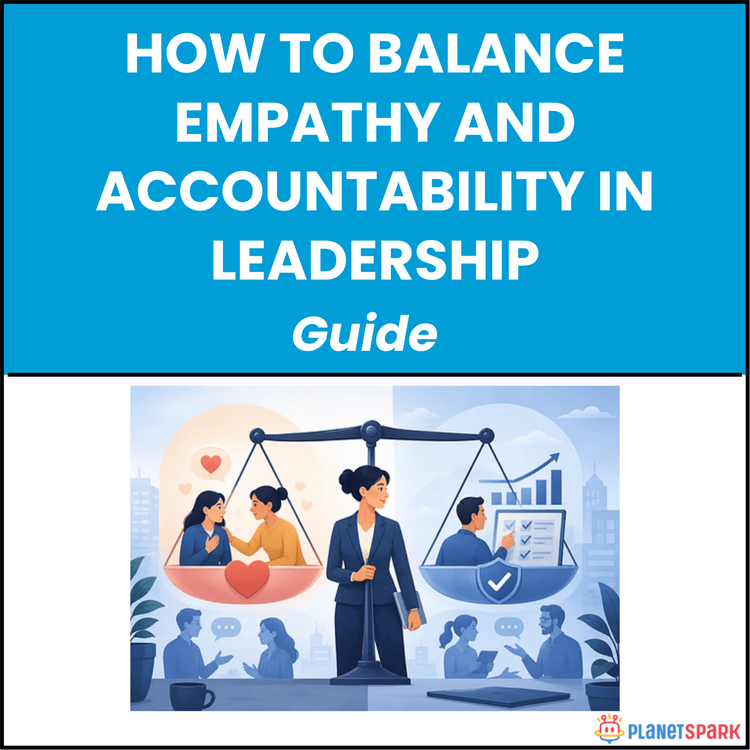
How to Balance Empathy and Accountability in Leadership
How to Balance Empathy and Accountability in Leadership: A Practical Guide for Managers and Team Leaders
One of the hardest parts of leadership is knowing how to be supportive without becoming permissive.
Most professionals eventually find themselves pulled toward one extreme.
Some become so focused on performance, deadlines, and accountability that their leadership starts feeling cold, transactional, or intimidating. Others care deeply about their team’s wellbeing but struggle to enforce standards, give direct feedback, or address performance issues consistently.
Both approaches create problems.
Without empathy, accountability feels like pressure and surveillance.
Without accountability, empathy slowly turns into confusion, inconsistency, and declining standards.
The most effective leaders understand that these are not opposing forces.
Empathy and accountability are meant to work together.
That is exactly what the resource “How to Balance Empathy and Accountability in Leadership” helps professionals learn in a practical, structured, and highly actionable way.
Designed for managers, team leads, aspiring leaders, and working professionals, this guide provides real-world leadership frameworks, communication tools, reflection exercises, and conversation models that help leaders build high-trust, high-performance cultures without sacrificing either humanity or standards.
Whether you are leading your first team or managing experienced professionals under pressure, this resource helps you lead with both care and clarity.
Who Is This Resource For?
This guide is designed for professionals who are responsible for leading people, managing performance, and building strong team culture.
It is especially valuable for:
- Managers leading small or growing teams
- First-time team leaders
- Mid-level professionals moving into leadership roles
- Consultants managing people and project outcomes
- Professionals struggling with difficult performance conversations
- Leaders who avoid conflict or direct feedback
- Managers trying to improve team trust and morale
- Professionals balancing business targets with people management
- Leaders working in high-pressure or fast-paced environments
If you’ve ever wondered:
- “Am I being too soft?”
- “Am I being too harsh?”
- “How do I hold people accountable without damaging relationships?”
This resource directly addresses those challenges.
What Does This Resource Contain?
This guide is structured like a practical leadership toolkit rather than a traditional management book.
It combines:
- Leadership psychology
- Communication systems
- Reflection exercises
- Conversation frameworks
- Ready-to-use scripts
- Weekly checklists
- Real-world case studies
Everything is designed for practical workplace application.
1. Understanding the Empathy–Accountability Balance
The guide begins by addressing one of the biggest myths in leadership:
that empathy and accountability are opposites.
Instead, the resource explains that the strongest leaders integrate both.
Readers are introduced to the Empathy–Accountability Matrix, which helps professionals identify where they naturally operate under pressure.
The framework explains different leadership patterns, including:
- High empathy, low accountability
- High accountability, low empathy
- Low empathy, low accountability
- High empathy, high accountability
The goal is helping professionals move toward becoming an “Empathetic Accountable Leader.”
The Empathy–Accountability Leadership Model
One of the central concepts in the guide is the idea that strong leadership requires both care and standards operating together.
The guide reinforces that empathy is not weakness, and accountability is not aggression. Together, they create trust, clarity, and stronger performance.
2. Building Psychological Safety First
Before accountability can work effectively, teams need psychological safety.
This section explains why employees avoid transparency in fear-based environments and how leaders can create safer communication cultures.
The guide teaches practical behaviours such as:
- Responding to mistakes with curiosity
- Encouraging early problem reporting
- Separating performance from personal worth
- Listening before immediately solving problems
- Sharing personal leadership mistakes openly
These small behaviours create environments where team members feel safe being honest, which improves accountability naturally.
This section is especially valuable for leaders trying to reduce defensiveness, silence, and disengagement within teams.
3. Setting Expectations With Radical Clarity
One of the strongest sections in the guide focuses on expectation-setting.
The resource explains that many accountability failures happen not because employees lack motivation, but because leaders communicate vaguely.
Readers learn how to create:
- Clear deliverables
- Specific timelines
- Defined ownership
- Transparent quality standards
- Shared understanding of success
The guide provides side-by-side examples of vague versus clear leadership communication, making the concepts immediately practical.
This section is highly useful for managers dealing with:
- Missed deadlines
- Confusion around responsibilities
- Repeated misunderstandings
- Frustration caused by unclear expectations
4. The CHECK-IN Method for One-on-One Conversations
The guide introduces a structured one-on-one leadership framework called the CHECK-IN Method.
This practical conversation structure helps leaders stay connected to team members without becoming overly controlling or disconnected.
The framework focuses on:
- Human connection
- Progress updates
- Blocker identification
- Accountability tracking
- Clarifying next steps
The sequence itself is important because it helps accountability conversations feel supportive rather than threatening.
The CHECK-IN Leadership Structure
The resource presents a practical system for conducting balanced one-on-one leadership conversations.
This framework is especially valuable for managers trying to reduce micromanagement while still maintaining performance standards.
5. Handling Difficult Performance Conversations
One of the most practical sections of the guide focuses on empathetic accountability conversations.
Many leaders either:
- Avoid difficult conversations entirely
or
- Approach them too aggressively
The guide introduces a six-step conversation framework for addressing performance issues respectfully and clearly.
Readers learn how to:
1. State observations objectively
2. Explain business impact
3. Invite the employee’s perspective
4. Explore root causes collaboratively
5. Create a path forward together
6. Clarify consequences professionally
This framework helps leaders approach difficult conversations with more confidence and structure.
6. Ready-to-Use Leadership Scripts
A standout feature of this resource is its collection of real-world conversation scripts.
The guide provides practical language examples for situations such as:
- Missed deadlines
- Underperformance
- Feedback resistance
- Boundary-setting conversations
- Accountability follow-ups
These scripts are especially helpful for:
- New managers
- Conflict-avoidant professionals
- Leaders preparing for difficult discussions
Instead of generic advice, the guide gives readers communication structures they can adapt immediately.
7. Reflection Worksheets and Self-Assessments
The guide includes multiple leadership reflection tools that help readers evaluate:
- Their default leadership tendencies
- Emotional responses under pressure
- Accountability habits
- Team communication quality
- Areas where they overcompensate
Readers are guided through:
- Empathy audits
- Accountability audits
- Leadership spectrum self-evaluations
- Weekly leadership reflection checklists
These exercises help professionals build stronger self-awareness over time.
8. The CARE Framework for Difficult Moments
One of the most practical tools in the guide is the CARE framework.
This model helps leaders respond effectively during emotionally charged situations.
The CARE Framework
The CARE model provides a structured response system for handling difficult leadership situations calmly and professionally.
This framework helps leaders regulate emotional conversations while still maintaining expectations and accountability.
9. Real-World Leadership Case Study
The guide also includes a practical case study featuring a manager named Maya.
The case study demonstrates:
- How empathy without accountability affected her team
- Why high performers began disengaging
- The leadership changes she implemented
- How structured conversations improved performance and trust
The example makes the frameworks feel realistic and highly relatable for professionals navigating similar workplace dynamics.
10. Weekly Leadership Checklists and 30-Day Practice Plan
The final sections of the guide help professionals turn leadership concepts into daily practice.
Readers receive:
- A weekly empathy-accountability checklist
- A 30-day leadership implementation plan
- Self-reflection prompts
- Weekly accountability habits
- Behaviour tracking systems
This transforms the guide from passive reading into an active leadership development system.
Summary of the Resource
“How to Balance Empathy and Accountability in Leadership” is a practical leadership guide that helps professionals build stronger teams, clearer communication habits, and healthier accountability systems.
The resource helps readers:
- Lead difficult conversations more confidently
- Improve team trust and psychological safety
- Set clearer expectations
- Hold people accountable respectfully
- Reduce conflict avoidance
- Create stronger leadership habits
- Improve communication consistency
- Build high-performance team cultures
The guide combines leadership psychology with highly practical implementation tools designed for real workplace situations.
How Will This Resource Be Useful?
This resource is especially valuable because it addresses one of the most common but least-discussed leadership struggles.
Professionals using this guide can benefit in several ways.
Improved Communication
Leaders learn how to communicate expectations, feedback, and accountability more clearly.
Stronger Team Trust
The empathy frameworks help teams feel psychologically safe and respected.
Better Performance Conversations
The structured conversation models reduce avoidance and improve clarity.
Reduced Leadership Stress
Having systems and scripts makes difficult situations easier to navigate calmly.
Higher Team Accountability
Clear expectations and follow-through improve consistency across teams.
Improved Emotional Intelligence
The guide helps leaders respond thoughtfully rather than react impulsively.
More Sustainable Leadership Growth
Professionals develop repeatable leadership behaviours instead of relying on instinct alone.
These are skills that become increasingly important as professionals grow into senior leadership responsibilities.
How Should You Use This Resource?
This guide works best when used actively rather than simply read once.
Here’s a practical approach for using it effectively:
Step 1: Complete the Self-Evaluations
Identify whether you naturally lean more toward empathy or accountability under pressure.
Step 2: Audit Your Current Team Dynamics
Reflect honestly on where expectations, trust, or communication may currently be unclear.
Step 3: Start Using Structured One-on-Ones
Apply the CHECK-IN method consistently during team conversations.
Step 4: Practice Difficult Conversation Frameworks
Use the scripts and conversation structure before high-stakes discussions.
Step 5: Apply the CARE Framework
Use the CARE model during emotionally difficult leadership situations.
Step 6: Track Leadership Behaviours Weekly
Use the leadership checklist to build consistency over time.
Step 7: Revisit the Guide Regularly
Leadership development happens through repetition and reflection, not one-time learning.
Action Steps You Can Take Immediately
If you want to improve how you balance empathy and accountability starting today, begin with these steps:
1. Identify your default leadership tendency under pressure
2. Complete the empathy and accountability self-audit
3. Clarify expectations for one active project immediately
4. Schedule structured one-on-one conversations with team members
5. Address one delayed performance conversation within the next 48 hours
6. Practice separating behaviour from personal judgment
7. Use the CARE framework during your next difficult interaction
8. Start documenting commitments and follow-ups consistently
9. Ask one team member for honest leadership feedback
10. Review your leadership behaviours weekly instead of reactively
Small behavioural improvements create significant long-term leadership change.
The strongest leaders are not the ones who choose between compassion and standards.
They are the leaders who understand that genuine care includes honesty, clarity, follow-through, and accountability.
“How to Balance Empathy and Accountability in Leadership” gives professionals a practical roadmap for building exactly that kind of leadership style.
Instead of relying on personality or instinct, the guide helps readers develop repeatable behaviours that improve communication, strengthen trust, and create healthier team cultures over time.
Leadership is not about becoming softer or tougher.
It is about becoming more intentional in how you support people while still helping them grow, perform, and succeed.
And that balance is a skill every professional can learn with deliberate practice.