
How to Build a Long-Term Personal Branding Strategy

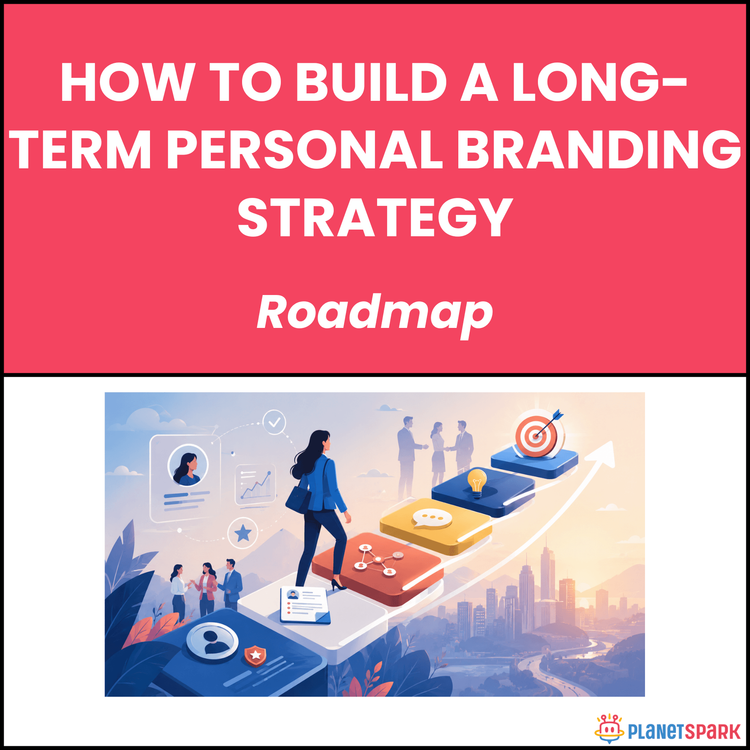
How to Build a Long-Term Personal Branding Strategy
Build a Long-Term Personal Branding Strategy: A Practical Roadmap for Career Growth, Visibility, and Professional Authority
Most professionals do not struggle because they lack skills. They struggle because the right people do not clearly understand what they stand for, what they are great at, and why they should be trusted.
You may have strong experience, impressive results, and valuable expertise, but if your LinkedIn profile is unclear, your professional story feels scattered, your network cannot describe what you do, or your online presence does not reflect your current goals, your personal brand may be working against you.
That is exactly why the How to Build a Long-Term Personal Branding Strategy resource exists.
This premium roadmap template pack helps working professionals move from random visibility to intentional brand-building. Instead of treating personal branding as a one-time LinkedIn update or a rushed bio rewrite, it gives you a structured system to define your identity, clarify your positioning, improve your digital presence, build authority, strengthen relationships, and review your brand over time.
Whether you are job hunting, switching careers, building a consulting practice, growing as a manager, or trying to become more visible in your industry, this resource helps you build a personal brand that is clear, credible, and sustainable.
Who Is This Resource For?
This personal branding strategy template pack is designed for working professionals who want to be more intentional about how they are seen, remembered, and recommended.
It is especially useful for:
- Job seekers who want to make a stronger impression on recruiters, hiring managers, and employers
- Career switchers who need to reframe their existing experience for a new industry, role, or function
- Consultants and freelancers who want to attract better-fit clients and build trust before the first conversation
- Managers and mid-career professionals who want to grow their authority and visibility inside or outside their organisation
- Early-career professionals who want to define their professional identity before opportunities become urgent
- Professionals with an underperforming LinkedIn profile who know their online presence does not reflect their actual expertise
- Anyone who feels unclear about what they want to be known for professionally
This resource is also helpful if you have been posting content, updating your profile, or networking without a clear strategy. It helps you stop guessing and start building your brand with direction.
What Does This Resource Contain?
The resource includes 10 practical templates that cover different stages and scenarios in the personal branding journey. Each template is designed around a real-world professional challenge, so you can either work through the full pack from start to finish or select the template that fits your immediate need.
1. Brand Identity Audit
This template helps you start with the foundation: who you are, what you value, what strengths you bring, and how others currently perceive you.
It includes prompts for:
- Your current role, industry, experience, and career goals
- Your top professional values
- Your key strengths and evidence behind them
- How colleagues currently describe you
- What you want to be known for
- The gap between your current brand and your desired brand
The main purpose of this template is to identify the single biggest gap between where your brand is today and where you want it to be. That gap becomes your strategic focus for the next 90 days.
2. Brand Positioning Statement Builder
Many professionals find it hard to answer the question, “So, what do you do?” in a clear and memorable way. This template solves that by helping you build a concise positioning statement.
It walks you through:
- Defining your target audience
- Clarifying what your audience cares about
- Identifying the problem they need solved
- Articulating your unique value
- Listing proof points that validate your expertise
- Writing a final positioning statement
The template uses a clear formula: I help [Target Audience] achieve [Desired Outcome] by [Your Unique Method or Approach] — unlike others who [Common Alternative or Limitation].
This statement can then be used across your LinkedIn headline, professional bio, elevator pitch, networking conversations, and personal website.
3. LinkedIn Profile Optimisation Roadmap
Your LinkedIn profile is often the first place people check before deciding whether to contact, hire, refer, or collaborate with you. This template helps you align your LinkedIn profile with your personal brand goals.
It covers:
- Your headline
- Profile photo
- Banner image
- Location and contact information
- About section structure
- Experience section storytelling
- Top skills to pin
- Featured section content
- Content cadence
- Quarterly profile review
Instead of simply listing job duties, the template helps you turn your LinkedIn profile into a clear brand asset that communicates who you help, how you create value, and what opportunities you are open to.
4. Thought Leadership Content Planner
For professionals who want to build authority through content, this 90-day planner creates structure around what to post, where to post, and why it matters.
It helps you define:
- Your brand niche
- Your content audience
- Your content goal
- Primary and secondary platforms
- Three to four recurring content pillars
- A 90-day content calendar
- Content formats and publishing status
The resource also includes a practical quality rule: every piece of content should make your target audience smarter, more confident, or better equipped. This keeps your content focused on value, not vanity metrics.
5. Career Transition Brand Pivot Roadmap
Career switchers often face a branding challenge: they have experience, but it may not immediately make sense to their new target audience. This template helps bridge that gap.
It includes sections for:
- Previous role or industry
- Target role or industry
- Reason for transition
- Timeline for the pivot
- Transferable skills mapping
- Old brand language versus pivoted brand language
- 30, 60, and 90-day brand pivot actions
This is especially valuable for professionals changing industries, functions, or career tracks. It helps you explain your transition confidently without making it sound like you are starting from zero.
6. Networking & Relationship Capital Tracker
Personal branding is not only about what you publish. It is also about how people experience you in conversations, meetings, communities, and professional relationships.
This template helps you manage your strategic network by tracking:
- What you want your network to know you for
- What opportunities you want your network to send your way
- Quarterly networking targets
- Dormant contacts to re-engage
- Events or communities to join
- Relationship tiers
- Last touchpoints
- Next actions
- Brand opportunities
The key idea is that your network should be able to describe what you do, what you are working on, and how to introduce you without confusion.
7. Personal Brand Visibility Audit
This template helps you assess whether your current visibility is actually supporting your goals.
It audits both digital and offline visibility, including:
- LinkedIn profile
- Personal website or portfolio
- Twitter/X
- Industry newsletter or blog
- Podcast or YouTube presence
- Google search results for your name
- Speaking or panel appearances
- Industry association involvement
- Internal visibility within your organisation
- Referral network strength
- Published work or bylines
The template helps you identify your biggest visibility gap, choose the top three priority actions for the next 30 days, and define a measurable success metric.
8. Speaking & Media Opportunity Tracker
If you are ready to amplify your personal brand through public speaking, podcasts, panels, webinars, or media features, this template gives you a clear tracking system.
It includes:
- Your speaking or media niche
- Target audience for your talks or features
- A 100-word speaker bio
- Signature talk title or concept
- Available talk formats
- Media kit status
- Opportunity pipeline tracker
- Pitch or application dates
- Brand value or expected outcome
- Post-appearance brand leverage checklist
The post-appearance checklist is especially useful because it reminds you to reuse and amplify every opportunity. For example, you can share the recording, add it to your LinkedIn Featured section, request a testimonial, write a follow-up article, and continue conversations with engaged audience members.
9. Annual Brand Review & Recalibration Planner
A personal brand should evolve as your career evolves. This template gives you a structured way to review your brand every year or midway through the year.
It helps you evaluate:
- Inbound opportunities received
- LinkedIn follower growth
- Content pieces published
- Speaking or media appearances
- Referrals from your network
- Brand-related revenue or career impact
- Top brand wins
- Changes in target audience
- Changes in expertise focus
- Whether your positioning statement still fits
- Brand goals for the next 12 months
This template is useful because it prevents your brand from drifting. It gives you a repeatable review system so you can adjust your messaging, goals, and visibility strategy deliberately.
10. Client & Employer Brand Impression Scorecard
This scorecard is especially useful for freelancers and job seekers who want to understand how their brand is landing with clients or employers.
It helps you evaluate brand signals such as:
- LinkedIn headline clarity
- LinkedIn About section
- Portfolio or work sample quality
- Written communication quality
- Social proof
- Consistency across touchpoints
- Responsiveness and professionalism
- Content or thought leadership presence
Each signal is scored from 1 to 5, giving you a total brand impression score out of 40. The resource then encourages you to focus on the lowest two scores first instead of trying to fix everything at once.
Summary of the Resource
How to Build a Long-Term Personal Branding Strategy is a complete template pack for professionals who want to build a clear, credible, and consistent personal brand over time.
It helps you move through the full personal branding journey:
- Define your professional identity
- Clarify your positioning
- Optimise your LinkedIn presence
- Plan thought leadership content
- Reframe your brand during a career transition
- Build strategic relationships
- Audit your visibility
- Track speaking and media opportunities
- Review your brand annually
- Evaluate how clients and employers perceive you
The resource is not just about looking polished online. It is about building a professional reputation that accurately reflects your strengths, supports your goals, and creates better opportunities.
At its core, the pack is built around three important principles:
Clarity before visibility. You need to know who you are and who you serve before you publish, pitch, or promote yourself.
Consistency compounds. A steady, aligned brand across multiple touchpoints is more powerful than one impressive post or one polished profile.
Evidence over claims. Your brand becomes stronger when your statements are backed by proof, metrics, testimonials, case studies, and outcomes.
How Will This Resource Be Useful?
This resource is useful because it turns personal branding from a vague idea into a practical system.
Many professionals know they should “build their brand,” but they do not know where to start. This pack removes that uncertainty. It gives you structured prompts, tables, scorecards, trackers, and planning tools so you can take action without staring at a blank page.
Here is how it can help in real life.
It Gives You Clarity
The Brand Identity Audit and Positioning Statement Builder help you understand what you want to be known for and how to communicate it clearly. This is especially important if your current job title does not fully represent your expertise, values, or future goals.
It Helps You Communicate More Confidently
Once you have a clear positioning statement, it becomes easier to introduce yourself, rewrite your LinkedIn headline, update your bio, speak in networking conversations, and explain your value to the right audience.
It Improves Your LinkedIn and Online Presence
The LinkedIn Profile Optimisation Roadmap and Visibility Audit help you identify where your online presence is weak, inconsistent, or outdated. You can then make targeted improvements instead of making random edits.
It Supports Career Transitions
The Career Transition Brand Pivot Roadmap helps you connect your past experience to your future direction. This is valuable for career switchers because it helps you show continuity, not confusion.
It Helps You Build Authority
The Thought Leadership Content Planner and Speaking & Media Opportunity Tracker help you move beyond passive visibility. You can start sharing useful ideas, publishing content, pitching opportunities, and positioning yourself as a trusted voice in your area.
It Strengthens Your Network
The Networking & Relationship Capital Tracker helps you manage relationships intentionally. It encourages you to stay visible to the right people and make sure your network understands what opportunities are relevant to you.
It Helps You Make Better Career Decisions
The Annual Brand Review and Recalibration Planner encourages regular reflection. Instead of letting your brand become outdated, you can review what worked, what shifted, and what needs to change for the next stage of your career.
It Helps You Identify Quick Wins
The Client & Employer Brand Impression Scorecard helps you see where your brand may be losing trust or clarity. For example, your portfolio may show quality work but not business impact, or your LinkedIn About section may list responsibilities instead of outcomes. Once you know the weak signals, you can fix them in order.
How Should You Use This Resource?
You can use this resource in two ways: as a complete personal branding system or as a targeted toolkit for your current situation.
If you are building your personal brand from scratch, work through the templates in sequence. Start with the Brand Identity Audit, then move to the Brand Positioning Statement Builder, LinkedIn Profile Optimisation Roadmap, and Personal Brand Visibility Audit.
If you are switching careers, start with the Brand Identity Audit, then use the Career Transition Brand Pivot Roadmap, LinkedIn Profile Optimisation Roadmap, and Thought Leadership Content Planner.
If you are a freelancer seeking clients, begin with the Brand Positioning Statement Builder, then use the Client & Employer Brand Impression Scorecard, Networking & Relationship Capital Tracker, and Speaking & Media Opportunity Tracker.
If you are a mid-career professional trying to build authority, start with the Thought Leadership Content Planner, then move to the Speaking & Media Opportunity Tracker, Networking & Relationship Capital Tracker, and Annual Brand Review & Recalibration Planner.
If you are a job seeker improving your brand impact, begin with the Client & Employer Brand Impression Scorecard, then update your LinkedIn profile, audit your visibility, and revisit your identity audit.
Step 1: Start With Honest Reflection
Before editing your profile or posting content, complete the Brand Identity Audit. Be specific about your values, strengths, proof points, and current perception. The more honest you are here, the stronger the rest of your brand strategy will be.
Step 2: Clarify Your Positioning
Use the Brand Positioning Statement Builder to define your audience, unique value, and proof points. Keep your statement simple enough that someone can understand it in 10 seconds.
Step 3: Align Your Main Touchpoints
Update the professional touchpoints people are most likely to see first. This usually includes your LinkedIn headline, About section, profile photo, banner, featured content, resume, portfolio, bio, and email signature.
Step 4: Choose Your Visibility Priorities
Do not try to be everywhere. Use the Visibility Audit to decide where your time will create the most impact. For some professionals, LinkedIn may be the priority. For others, it may be speaking opportunities, portfolio improvements, industry communities, or referrals.
Step 5: Build Consistently
Use the Thought Leadership Content Planner, Networking Tracker, and Speaking & Media Tracker to create a rhythm. Personal branding works best when it becomes a repeatable practice, not a burst of activity only when you need a job or client.
Step 6: Review and Recalibrate
Schedule a quarterly or annual brand review. Your goals, audience, expertise, and opportunities will change over time. Use the Annual Brand Review & Recalibration Planner to keep your brand current and aligned with your next stage of growth.
Action Steps
Use these steps to get immediate value from the resource:
1. Complete the Brand Identity Audit first, even if you are tempted to start with LinkedIn or content.
2. Identify the biggest gap between your current brand and your desired brand.
3. Write or refine your positioning statement using the Brand Positioning Statement Builder.
4. Update your LinkedIn headline and About section so they reflect your positioning.
5. Audit your visibility across online and offline channels.
6. Choose your top three brand improvement priorities for the next 30 days.
7. If you are changing careers, map your transferable skills and rewrite your brand language.
8. If you are building authority, plan your first 30 days of thought leadership content.
9. If you are seeking clients or jobs, score your current brand impression and fix the lowest two areas first.
10. Add a calendar reminder to review your personal brand every 6 to 12 months.
The most important step is to start with clarity. A strong personal brand is not built by posting more, saying yes to everything, or copying what others are doing. It is built by understanding your value, communicating it consistently, and backing it with evidence.
Your personal brand is not just how you present yourself online. It is the professional reputation that follows you into interviews, referrals, client conversations, leadership opportunities, and industry spaces.
When you build it intentionally, it becomes easier for the right people to understand your value, remember your expertise, and connect you with the right opportunities.
Use this resource as a working roadmap, not a one-time exercise. Fill it in, apply it, revisit it, and update it as your career evolves. The professionals who build lasting brands are not always the loudest. They are the ones who are clear, consistent, credible, and willing to keep improving.