
How to Build a Personal Operating System for Work and Life

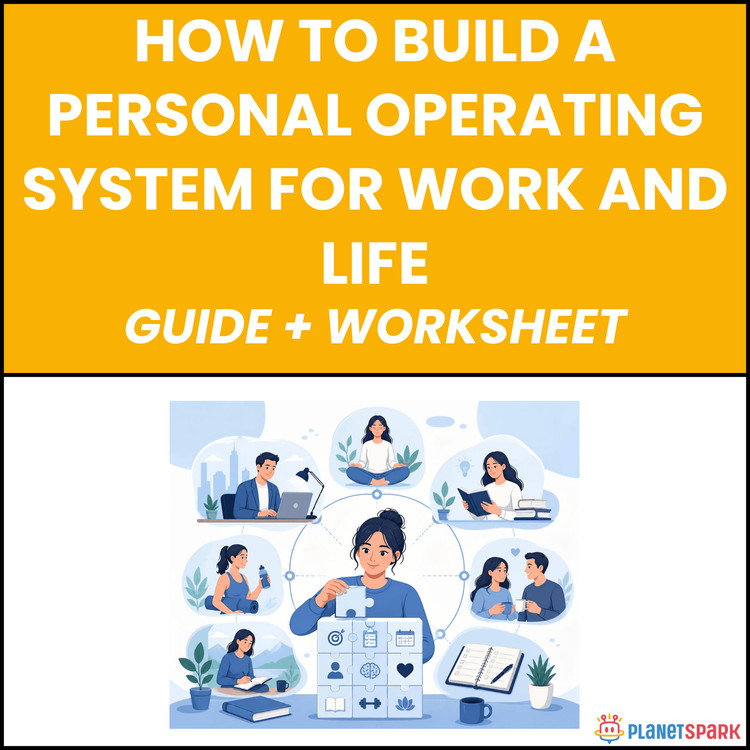
How to Build a Personal Operating System for Work and Life
Build a Personal Operating System for Work and Life: A Roadmap for Professional Success
As a working professional, do you ever feel like you're caught in a cycle of endless tasks, with little time to think strategically or focus on what truly matters? Many professionals default to a reactive way of working—responding to emails, attending meetings, and managing crises—without realizing that a lack of intentional structure is holding them back. The key to overcoming this cycle is building a Personal Operating System (POS)—a set of principles, rhythms, and frameworks that governs how you work, make decisions, and pursue your goals. This guide will help you design your operating system from the ground up, giving you control over your time, energy, and focus, enabling you to perform at your best without burning out.
Who Is This Resource For?
This guide is for time-poor, outcome-oriented professionals who want to work smarter, not harder. If you're tired of feeling overwhelmed by competing demands, this is for you:
- Career switchers who need to establish new systems and routines in a new role or industry.
- Managers juggling multiple priorities and looking for clarity in how they allocate their time and energy.
- Consultants looking to build a consistent work rhythm while balancing client demands and personal goals.
- Professionals at all levels who want to take ownership of how they operate and move beyond the default patterns of busy, reactive work.
If you’re ready to design your work and life on your own terms, this resource will provide you with the tools to build a sustainable and effective Personal Operating System.
What Does This Resource Contain?
This guide provides a comprehensive, step-by-step approach to building your Personal Operating System. Key modules include:
- Module 1: Understand Your Current Operating System: Audit your current habits, time usage, and work patterns to identify areas for improvement.
- Module 2: Define Your Core Operating Principles: Establish clear, actionable principles to guide your decisions and time allocation.
- Module 3: Design Your Rhythms and Routines: Build daily, weekly, and monthly rituals to create structure and reduce mental load.
- Module 4: Build Your Decision-Making Framework: Develop a framework for making decisions consistently and confidently.
- Module 5: Manage Your Energy, Not Just Your Time: Learn how to optimize your energy to perform at your best throughout the day.
- Module 6: Create Your Goal Architecture: Define long-term, medium-term, and short-term goals, and ensure they align with your values and priorities.
This guide includes worksheets, templates, and action steps that you can implement immediately to design a system that works for you.
Summary of the Resource
How to Build a Personal Operating System for Work and Life is a practical guide that helps you design a system for managing your work and life with intention. It provides frameworks for understanding your current work habits, creating principles that guide your decisions, and designing a set of rhythms and routines that make your best behaviors automatic. By implementing these principles, you’ll be able to increase focus, reduce overwhelm, and align your actions with your long-term goals.
How Will This Resource Be Useful?
This guide will help you:
- Take control of your time: By tracking your time and energy, you’ll gain insights into where your time goes and how to prioritize effectively.
- Make better decisions: With a clear decision-making framework, you’ll be able to make choices faster and with greater confidence.
- Reduce mental load: By creating rhythms and routines, you’ll eliminate the constant need for decision-making and free up cognitive bandwidth for important tasks.
- Optimize your energy: Understanding and managing your energy levels ensures that you perform at your peak when it matters most.
- Align your goals with actions: By building a goal architecture, you’ll ensure that your daily actions connect to your long-term vision.
This resource will give you the tools to build a system that will help you thrive professionally and personally.
How Should You Use This Resource?
To get the most out of this guide, follow these steps:
1. Audit Your Current Operating System: Start by tracking your time and energy over the course of a week. Identify where your time goes and what drains or boosts your energy.
2. Define Your Core Operating Principles: Establish clear principles for time, decisions, energy, and relationships to help guide your choices.
3. Design Rhythms and Routines: Create daily, weekly, and monthly rituals that automate your best behaviors, reducing cognitive load.
4. Build a Decision-Making Framework: Use the provided framework to make faster, more confident decisions, ensuring they align with your goals.
5. Manage Your Energy: Use the energy mapping worksheet to identify and optimize your peak performance windows.
6. Create Your Goal Architecture: Define your long-term, 90-day, and weekly goals, ensuring alignment across all levels of your personal operating system.
By following this progression, you’ll gradually design a personal operating system that enhances your effectiveness and well-being.
Action Steps
Ready to take control of your work and life? Here are your first actionable steps:
1. Audit Your Current Operating System: Track your time and energy for a week and identify where your time goes and what works best for you.
2. Define Your Core Operating Principles: Write down clear principles for time, decision-making, energy, and relationships.
3. Start with One Rhythm: Implement one rhythm from the guide, like the Weekly Review, to start creating structure in your week.
4. Build Your Decision-Making Framework: Define the criteria you’ll use to make decisions consistently.
5. Map Your Energy: Use the worksheet to identify your energy patterns and align your work with your peak performance windows.
By taking these steps, you’ll begin to build a personal operating system that will make your work and life more aligned and productive.
A Personal Operating System is the key to achieving more with less stress. It’s the invisible architecture that underpins everything you do, and when you build it intentionally, you’ll find more clarity, energy, and focus in your work. Start by applying these principles today, and you’ll see how a well-designed system can transform how you approach every task, decision, and goal.